
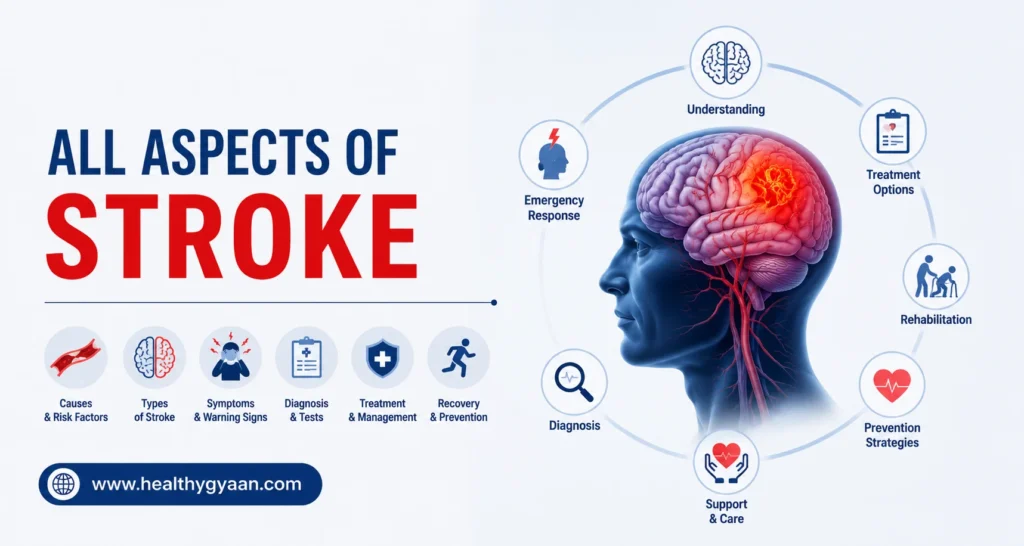
The overview of all aspects of stroke
Stroke remains the second primary cause of death and disability worldwide. Though there is a persistent decrease in the death rate of stroke cases due to the modernization of this case fatality management. It is one of the sole drivers of adult disability.
It certainly poses significant age variation as it tends to reach 61 million disability-adjusted life years which also covers almost 75% of total cases in individuals who are over 65 years. Among these patients, about one third of the patients die within a year after the onset of the disease. The economic burden of a stroke patient is considerable as the lifetime cost of the disease is huge in amount.
There are some modifiable risk factors like age, gender, ethnicity and some modifiable risk factors such as hypertension, cholesterol imbalance and physical activity. In this context we try to understand the whole concept of stroke and also provide the exact management protocol and outcome of this disease.
What actually is a Stroke?
Stroke happens when there is a significant decrease in the level of oxygen that is mandatory for normal brain function, there are some noticeable symptoms of stroke that include the drop of facial side, weakness of one arm or both arms and the patient also faces problems to deliver speech properly.
Experts always consider this case as a medical emergency.It occurs when there is significant blockage or hindrance in the supply of blood through the blood vessels normally. Due to this occlusion of the essential blood supply the brain itself cannot get enough oxygen as well as proper nutrient supply that also forces the brain cells to perform its normal function and unfortunately die ultimately.
Stroke is the combination of brain and blood vessel problems of the body which experts often term as a cerebrovascular disease. That is why the stroke mostly affects the body’s several blood vessels that are usually essential to feed the brain oxygen.
When any issue disrupts or temper this oxygen supply, it causes damage to the brain cells. With proper and timely intake at some measures, many strokes can be treatable whereas some teens can progress to disability and death ultimately.
What are the different types of stroke?
There are several types of stroke in accordance with their nature of development. Experts usually categorise stroke into three major types that comprises:
•Ischemic stroke: This type of stroke usually develops when there is some degree of obstruction to a specific part of the brain, that produces hindrance to the normal blood supply of the brain tissue due to a blood clot or significant fat deposition.
As the brain relies heavily on this blood flow that carries oxygen to the brain and helps the brain to junction normally. Short or brief interruption can lead the brain cells to die within the minutes.
This type of stroke also involve thrombotic stroke where clot formation occurs directly one of the arteries which supply the brain tissue and embolic stroke in which a blood clot or some portion of debris transmitted from another part of the body usually from the heart which help it to lodge it in a narrower artery of the brain.
After all, the majority of stroke cases demand immediate medical intervention to restore blood supply to the brain. The primary goal of this intervention along with certain medications is to minimise permanent damage of the brain tissue that further help preserve motor and cognitive functions.
•Hemorrhagic stroke: it occurs when there is weakness in the blood vessels in the brain that often ruptures and further bleeds into the nearby tissue. This whole abnormal condition of the brain usually creates a critical medical emergency.
There is certain differentiation between ischemic and hemorrhagic stroke as there is deprivation of oxygen-rich blood and the accumulation of blood in the brain creates excessive pressure that can further crush or cause distortion of the brain structures.
There are balloon- like bulges in the artery wall namely aneurysms and arteriovenous malformation (AVMs) which are abnormal enlargement of blood vessels and are very much prone to leak out.
•TIA (transient ischemic stroke): The new guideline often refers to it as a ministroke that- generally warns that there is some degree of- temporal disruption of blood supply to the brain tissue.In this type, there is obstruction to my blood vessels for a short period of time.
It is usually due to a small blood clot or narrowing artery which may resolve before damage of the cells strictly occurs.The identification of the root cause of TIA such as high blood pressure, atrial fibrillation or any kind of carotid artery disease is important for the prevention of more permanent neurological events.
What are the differences between ischaemic and hemorrhagic stroke?
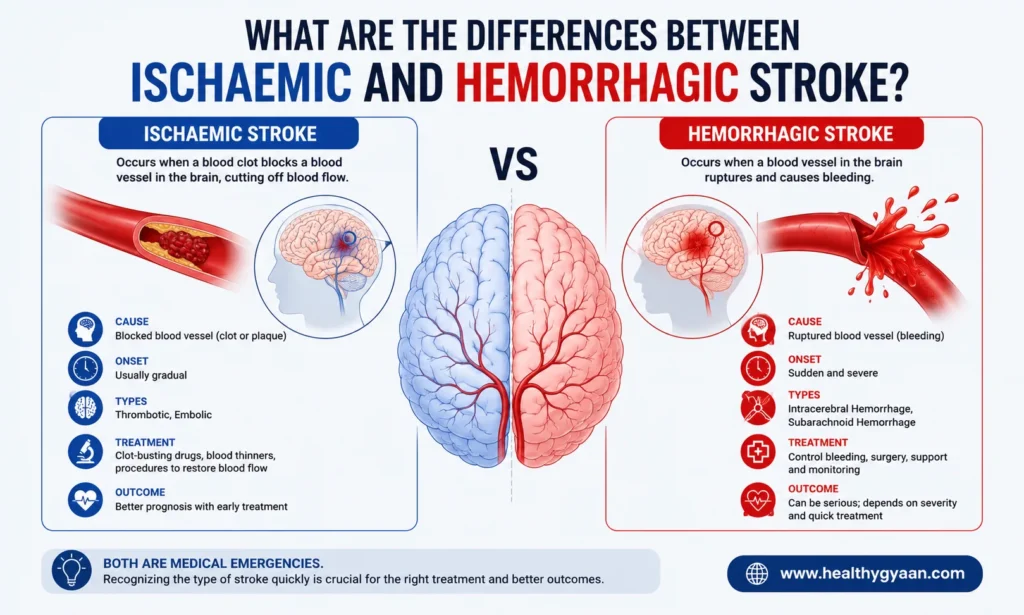
There are some certain differences between ischaemic and haemorrhagic stroke.These involve:
| Features | Ischaemic stroke | Haemorrhagic stroke |
| Definition | It is due to blockage in the blood vessel that reduce blood flow to the brain | It is due to rupture of blood vessels which induce accumulation of blood in the brain |
| Cause | Thrombosis or embolism is the principle cause | Hypertension, arteriovenous malformation and trauma are main cause |
| Incidence rate | It is most common which is almost 80-85% of all stroke | It is less common and possesses only 20%;of stroke |
| Time of onset | It often has a gradual development about minutes to hour | It has more sudden and severe onset |
| Initial features | It involves focal neurological features like weakness numbness, speech difficulties | It comprises sudden severe headache and decreased consciousness |
| Findings in CT -Scan | It remains hypodence or dark area in the affected region | It remains hyperdense that indicate blood accumulation |
| Treatment options | It demands thrombolytics introduction like ant-platelate,anticoagulants and supportive care | It often requires surgery to control blood accumulation with proper supportive care |
What are the symptoms of a stroke?
There are several symptoms or clinical features of a stroke that can appear without any kind of admonition, some of the main and core symptoms comprises:
• Confusion and it also involves difficulty when a patient tries to speak fluently and understand the speech as well.
• There may also be a headache which is possibly due to alteration of consciousness and the patient also experiences it when he vomits.
• There is also development of numbness or the patient may not be able to move parts of face, arm or leg especially one side of the body.There is also difficulty to walk alone that involves dizziness and a lack of co-ordination.
• Symptoms may vary and range in accordance with the severity. After all, the main thing is that if anyone faces these symptoms or features, they should immediately contact the emergency service.
What are the causes and risk factors of stroke?
A stroke happens when there is significant interruption or reduction of the blood supply to some part of the brain or also further deprives brain tissue of oxygen and nutrients. There are some reasons and risk factors behind this development of stroke.
The modern guideline categorises those factors into modifiable that anyone can change and non-modifiable that anyone can not change. Those comprises:
Excessive weight: when anyone is overweight or obese, it increases the risk of high blood pressure, diabetes and atherosclerosis that make the arteries hard. Adipose tissue produces excessive tissue, an inflammatory substance that can damage blood vessels in the course of time and also make them vulnerable to blockage or rupture. Furthermore obesity also increases the risk of heart disease that have close association with stroke.
Importance of age: Though stroke can occur at any age, the risk actually doubles every decade over 55 years of age. Elderliness can usually lead to some natural changes in the blood vessels where the vessels may become thick, stiffen and possess high likelihood of plaque formation.Moreover it can contribute to blockages in arteries that generally supply the brain.
Personal or family history of strokes: when anyone has a strong personal history of stroke or transient ischemic attack (TIA), it can significantly increase the risk of future stroke development. Moreover it also suggests a genetic involvement that can influence factors like blood pressure regulation, cholesterol metabolism and have tendencies of clot formation.
Tobacco ingestion or smoking: The use of tobacco can significantly increase the atherosclerosis process that damages the inner layer of blood vessels and thus it increases the tendency of blood to clot.
Smokers are also more prone to have high blood pressure as well as other cardio-vascular disease that further compound streak risk, unfortunately even secondhand smoke exposure can also augment streak possibility.
Imbalance of blood pressure: High blood pressure is the principal cause for stroke which is also a modifiable risk factor. It actually damages blood vessel walls and makes them more susceptible to rupture. It then aggravates the development of haemorrhagic stroke and it sometimes forms a lot that can ultimately lead to ischemic stroke.
If the hypertension remains in chronic phage, it also accelerates atherosclerosis which is the main culprit to narrow arteries and reduce blood flow to the brain.
Diabetes on imbalance of sugar: Diabetes mellitus can augment the risk of stroke. It is due to high blood sugar levels in the blood vessels that induce atherosclerosis formation and thus increases the chance of blood clots. Unfortunately diabetes patients have close tela association with other modifiable risk factors like hypertension and obesity.
Excessive cholesterol:There is excess cholesterol particularly LDL namely bad cholesterol in the body contributes plaque formation in the artery. It then helps narrow or block the blood vessels which usually supply the brain. These plaques can often rupture and induce clot formation which can travel a long way to the brain that ultimately cause ischemic stroke
Less physical activity:When anyone lacks adequate exercise in their daily life, it can indirectly contribute to stroke development. This is because it promotes obesity, high blood pressure and poor cholesterol level.
If anyone maintains physical activity regularly, it strengthens the cardiovascular system and improves the blood flow in the body. It also reduces the inflammation in blood vessels that can help lower the risk of clot formation.
Moreover when anyone is used to excessive alcohol consumption that can increase triglyceride level and contribute to atrial fibrillation which further augment stroke development.
Discover more here: All about Rheumatoid Arthritis
What modern modules and tests can help the diagnosis of stroke
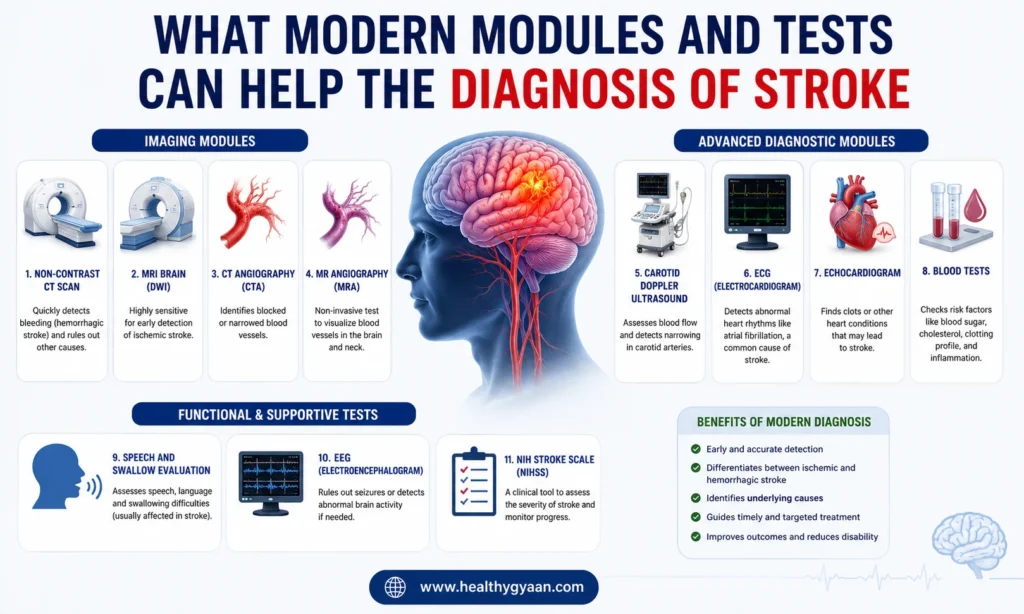
A stroke is an one type of condition that happens suddenly and injures immediate attention with dramatic symptoms. Family recognition and better treatment access are important for the minimization of brain damage that also increases the chances of rapid recovery. Here we can discuss the turtle medical assessment of the Aneka.
Early and initial medical assessment
to actually involve physical examination and Symptom history. At first the doctor will evaluate the vitals of the patient that comprises blood pressure, heart rate and oxygen levels. It is also important to examine neurological status of the patient that includes reflex of the muscle and muscle strength co-ordination, speech and vision.
Moreover medical professionals will also look for other notifiable suntoons like weakness or numbness, crop of facial side and vision problems with severe headache and dizziness. These overcall assessments of examination and suntoon history will help professionals to differentiate among the types of stroke and also help guide treatment priorities.
Some modern imaging modules and other essential tests with
It is always very important to confirm the existence of stroke and determine its type as well. Some modern and advanced imaging tests are available for these diagnoses. It involves.
CT Scan (Computed Tomography)
Non-contrast CT (NCCT) is usually the first-line imaging modality for the diagnosis and differentiation among different types of stroke.It is actually a fast, widely available, and highly effective module to detect intracranial hemorrhage.Early ischemic stroke may not always appear immediately, but CT helps rule out the presence of any amount of blood bleed in the brain cavity before the administration of drugs that is essential to dissolve the clot.
CT Angiography (CTA)
It can mainly provide visualization of blood vessels of the brain.Itfurther helps identify large vessel occlusions, aneurysms, or the narrowness of any kind of artery.It is also essential to plan the mechanical thrombectomy.
CT Perfusion (CTP)
It generally evaluates blood flow to brain tissue.It also can distinguish between the Core infarct (irreversibly damaged tissue) and Penumbra (salvageable tissue).Thus it helps determine whether advanced interventions are beneficial or not.
MRI (Magnetic Resonance Imaging)
MRI literally provides greater sensitivity than CT in case of the detection of early ischemic changes.There are some key mri techniques that involve:
- Fluid-Attenuated Inversion Recovery (FLAIR):It Helps estimate the time of onset of stroke.
- Diffusion-Weighted Imaging (DWI):It genuinely detects ischemia within minutes.
- Magnetic Resonance Angiography (MRA):It in fact Visualizes blood vessels without contrast.
Moreover MRI is especially useful in the identification of small or posterior strokes,transient ischemic attacks (TIAs) and unclear diagnoses.
Blood Tests (Laboratory Evaluation)
Blood investigations support diagnosis and guide the necessary treatment decisions.Essential Tests are available which can actually assist the diagnosis of a stroke.these comprises:
- Blood Glucose: Hypoglycemia can mimic stroke symptoms; hyperglycemia worsens outcomes.
- Complete Blood Count (CBC):It can detect anemia or infection.
- Coagulation Profile (PT, INR, aPTT):It is critical before the administration of thrombolytics to avoid the bleeding risks.
- Electrolytes and Renal Function:It can Identify metabolic disturbances.
- Cardiac Enzymes (Troponin):It is helpful to evaluate concurrent heart damage.
Electrocardiogram (ECG) and Cardiac Evaluation
Cardiac abnormalities are a major cause of stroke, particularly embolic stroke.
ECG (Electrocardiogram):It can detects atrial fibrillation which is the main cause of embolic stroke.It also help Identify arrhythmias, ischemia, or prior heart damage
Echocardiography:It Helps detect cardiac thrombi,valve disorders and patent foramen ovale (PFO).
Cerebral Angiography (Gold Standard for Vascular Imaging)
Expert Consider it as the gold standard for detailed visualization of cerebral vessels.It Involves administration of contrast dye into arteries.It is useful to Detect any degree of aneurysms and arteriovenous malformations (AVMs).It further can help Plan surgical or endovascular interventions and can guide procedures like thrombectomy or coiling.Although it is highly accurate, it is invasive and used selectively.
Acute Management of Stroke
Acute stroke management is a medical emergency.This is because it requires rapid and wise assessment with proper intervention at the same time. The management principle mainly emphasizes that delays in treatment lead to irreversible neuronal damage to the patient. Early recognition and prompt initiation of therapy can significantly improve the outcome of the patient.Some appropriate measures are beneficial.These are:
Initial Stabilization of the patient
The first step in the management of any stroke patient is the stabilization.It actually follows standard emergency protocols to save life.
Ensure adequate breathing and blood pressure
At first the doctors look for airway patency as many patients require intubation.It is due to the decline of consciousness or compromised airway reflexes.Then they ensure proper breathing by the access of oxygen saturation.The patients thereby maintain adequate ventilation.
Actually the patient needs to administer supplemental oxygen.Oxygen saturation of some patients may be below 94%.Furthermore they establish intravenous access and monitor cardiac rhythm for better circulation.Continuous care is essential.
We should try to avoid aggressive lowering of blood pressure in acute ischemic stroke.It can aggravate another stroke development.Blood Glucose Correction
Hypoglycemia can also mimic stroke.So,it requires correction immediately.We must manage Hyperglycemia because it often has worse outcomes.
Management of Ischemic Stroke
Ischemic stroke indeed accounts for the majority of cases.It also requires rapid reperfusion strategies to treat it perfectly.Some treatment procedures are:
Lysis of thrombosis within vein
Administration of recombinant tissue plasminogen activator (tPA), commonly Alteplase is drug of choice.It must be within 4.5 hours from symptom onset.It works by a way that usually dissolves the thrombus.Thus it restores cerebral blood flow.Then we should follow strict inclusion and exclusion criteria to minimize the risk of hemorrhagic transformation.
Mechanical Thrombectomy
Experts recommend it in those patients who possess large vessel occlusion.It is beneficial when occlusion occurs particularly in the anterior circulation.It need to perform within 6 hours.But in some cases we can perform it within 24 hours.Experts often use it in conjunction with thrombolysis when it is appropriate.
The appropriate use of Antiplatelet
We should initiate Aspirin (Aspirin) within 24-48 hours after stroke onset.But we must provide a need to exclude hemorrhage.Few doctors consider dual antiplatelet therapy in minor stroke for a short duration.
The benefits of Anticoagulation
The doctors do not routinely use it in the acute phase.Rather they indicate it in specific conditions such as cardioembolic stroke.It is due to presence of atrial fibrillation.They usually prefer Oral anticoagulants after a delay.This is actually depends on infarct size and hemorrhagic risk.
Management of Hemorrhagic Stroke
Hemorrhagic stroke requires a different therapeutic approach.Its main focus on the control of blood accumulation in the brain cavity.The control then reduces intracranial pressure.There are some measures to manage hemorrhagic stroke.These are:
Blood Pressure Control
It must be rapid with proper accuracy.Appropriate reduction of blood pressure is crucial to prevent hematoma expansion.Target levels largely depend on clinical guidelines and individual patient factors as well.
Necessity of a surgery
Experts indicate that Hematoma evacuation is beneficial in some patients.Because it is important to clear large intracerebral hemorrhages.In subarachnoid hemorrhage, aneurysm repair is essential to save life.
Manage extra pressure within cranium
If the ICP is above the normal level,It then can threaten the life of the patient.It also give rise to some complications.The proper use of Mannitol,Hypertonic saline (in some cases) with Ventricular drainage for cerebrospinal fluid diversion can effectively correct the pressure within the cranium.
Continuous care with support
Continuous care with comprehensive support are also beneficial.These comprise:
- Continuous neurological care and monitor Glasgow Coma Scale with NIHSS to access the current status.
- Temperature control is important in this case.It is essential to treat fever aggressively.
- Prevention of complications of stroke are essential.Appropriate control of aspiration, deep vein thrombosis and pressure ulcers can increase survival rate.
- Early nutritional support is beneficial for the betterment of the patients health.
Conclusion
Experts consider stroke as a critical global health issue.It is due to its distinct variation of consequences for individuals, families and healthcare systems. Its sudden onset can sometimes be potentially very harmful for the patient.Therefore its fatal impacts on human health make it one of the most critical medical conditions.
However, we can certainly prevent a significant proportion of strokes.This is very much achievable when the patient gets access to the proper management of the disease.They patients also need to adopt healthy lifestyle practices.When we are able to understand the overall aspects of stroke,it will be easier for us to prevent and manage stroke effectively..
Early recognition of symptoms with appropriate medical attention can save lives of the patient.It can also significantly reduce disability from different types of stroke. Advances in medical technology and treatment approaches are now very much available.This availability with proper rehabilitation can actually help improve survival rates.
Ultimately,we can not fight alone against stroke.This is because it requires a comprehensive approach.Public education, early diagnosis and timely treatment are among these approaches.Continuous care of the patient is also beneficial for the patient.After all proper practice of these measures can gift us a victory again stroke.