
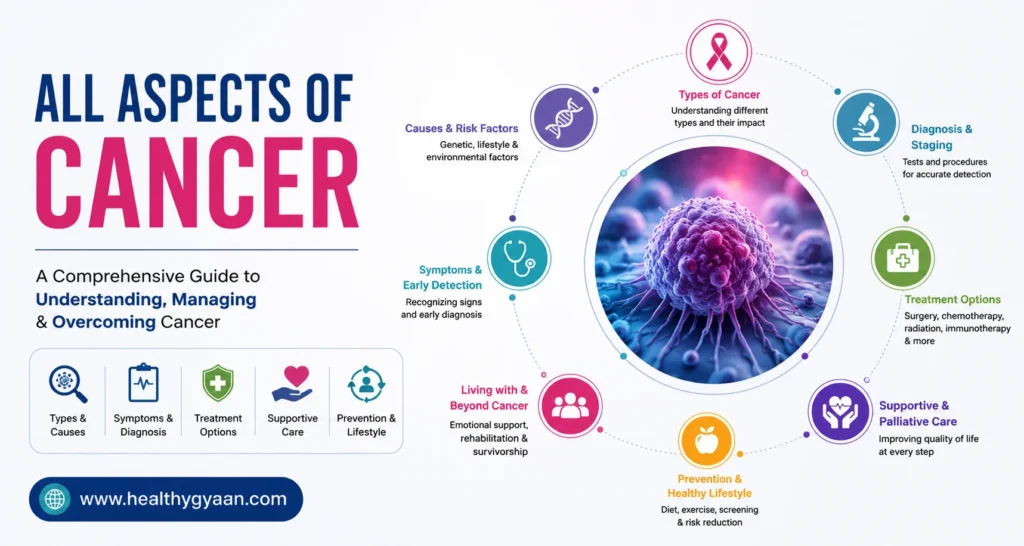
All aspects of cancer with its close relation to Nutrition
Scientists consider cancer as a complex group of diseases whose main manifestation is by the abnormal cell growth that our body fails to control. These abnormal cells have a tendency to invade nearby tissues and can also spread to other parts of the body through the circulation and lymphatic systems.

Cancer remains one of the top causes of death globally and causes a harmful impact on the health of millions of people worldwide.The scientists fail to identify the exact cause of cancer rather they state that it is a complex interaction of genetic,environmental and lifestyle factors.
People with unhealthy lifestyles and exposure to harmful chemicals significantly increase the development of cancer.The regular Tobacco use alone is responsible for a large number of deaths due to lung and esophageal cancer each year globally.
The cancer may have serious health impacts.But major advancement in medical sectors help early detection of the cancer and choose the appropriate treatment option. This measure eventually put a greater impact on cancer prevention.
Doctors are now easily diagnosing cancers early and become able to treat them effectively with the modern medical tool.Unfortunately ,cancer may become a long-term chronic condition in some individuals rather than a fatal disease.
However, the patient with cancer can have cancer a major emotional, physical, and economic burden that can also put pressure on families and healthcare system as well.On the whole Prevention through healthy lifestyle choices remains one of the most effective ways as we want get victory over cancer and prevent it effeciently.to reduce cancer risk.
The available ways to prevent Cancer
The American Cancer Society and the American Institute for Cancer Research emphasize on the fact that we can certainly prevent many cancers.The thing we need in this prevention of cancer is the proper adaptation of healthy lifestyle choices.In order to achieve this we should strongly encourage and promote Regular physical activity.moderate or vigorous exercise in every week can help maintain overall health of our adult and thereby can reduce cancer risk.
Healthy body weight maintenance throughout life can be significant in terms of prevention of cancer. Excess body fat in our body can lead to several cancers.That is why experts advise people to avoid unnecessary weight gain in active life. A healthy diet then eventually ensures cancer prevention.
Experts recommend especially more intake of a mix of fruits and vegetable.Wholegrains and foods of plant origin play a vital role in cancer prevention. Red meat and ready to eat are harmful for health as it can aggravate stomach cancer development.We should limit the use of sugary and salty food in our diet.
excessive consumption of soft drinks and alcohol can also increase the risk of cancer formation.We should use nutrient rich foods rather than supplements alone to meet up our daily energy requirement.Doctors also encourage excessive lactation to children because it benefits both mothers and children.
Newer studies also give such healthy lifestyle recommendations. These preventive and effective measures significantly help improve overall health and then lower the risk of cancer development.
Pathophysiology of cancer genesis
The genesis of cancer is the process by which normal cells transform into abnormal cells and then convert to cancer cells. It occurs solely due to internal genetic changes and they lose their function as well.Oncology is the branch of medicine and surgery that focuses on cancer prevention with its timely diagnosis and exact treatment.
Oncogenes are those types of genes that cause alteration and changes in their structure.They also further promote abnormal cell growth and prevent apoptosis which is the automatic death process of cell.This allows functionless cells to survive more and give them a chance to multiply. Tumor suppressor genes are normally the controller of cell growth and also help prevent cancer formation.
When these genes become inactive and functionless,the cell divides uncontrollably and in huge numbers. APC, BRCA1, and BRCA2 are among Important tumor suppressor genes that ensure only a small percentage of cancers go through genetic mutations.
Hereditary cancer syndromes usually affect multiple generations of those who have a positive Family history and early-age cancers. Carcinogenesis develops in three phases that comprises firstly initiation, promotion, and finally progression. During initiation, carcinogens such as chemicals and viruses damage cellular DNA at the initiation phase of cancer development.
In a nutshell when abnormal cells multiply and escape normal growth control mechanisms, it will end up with a formation of a neoplasm. The tumor becomes fully malignant and invasive to the other tissues at the time of progression .
Cancer cells may spread to distant organs with angiogenesis to survive alone, if the body permits cells to metastasize. These new blood vessels namely angiogenesis provide oxygen and nutrients to the cells that support rapid tumor growth and metastatic spread.
Carcinogenesis with its different phases
At the time of initiation of a cancer,some harmful agents damage the cell’s DNA. such as chemicals, radiation, or viruses are among these harmful agents.They also bring changes in the gene that help damage the cell .However these genetic changes may be latent for many years before its full activation.
The second phase of cancer genesis, namely the promotion phase, usually promotes the abnormal cells to multiply rapidly and make them huge in number. They generally find a way to escape the body’s normal control mechanisms that usually prevent this abnormal growth. This alteration function results in formation of a neoplasm.This neoplasm is totally a new cluster of tissues with no useful function.
In the final phase of cancer genesis , the tumor progressively grows larger and becomes fully malignant in nature.This progression phase also allows Cancer cells to become more aggressive and invasive. They may spread to nearby tissues that surround it and distant organs through metastasis.
But metastasis requires new blood cells of the tumor and so angiogenesis happens.This process of angiogenesis ensures necessary oxygen and nutrient support to the cancer cells to cover more area.
Foods that protect against cancer
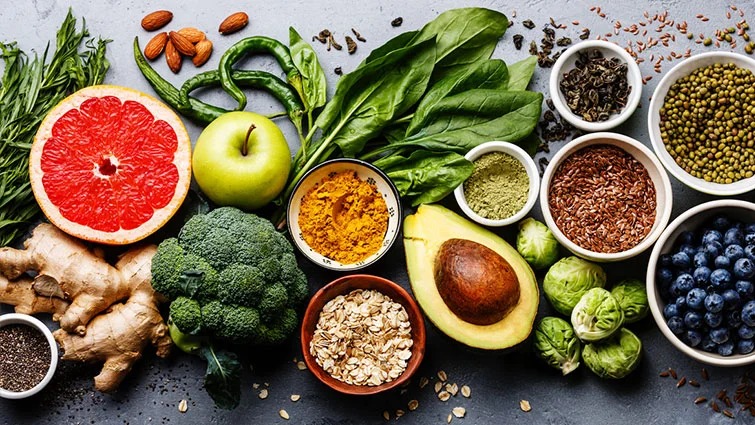
Red foods in our diet lycopene which is a nutrient component. Some red fruits like Tomatoes and tomato products with papaya and watermelon help protect against prostate cancer.Anthocyanins and polyphenols are nutrient components that are present in Red and purple foods in our diet.
Berries, grapes, and plums, purple cabbage effectively prevent cancer development in the body.These fruits and vegetables importantly, decrease inflammation as they provide antioxidant support.
Orange foods contain nutrient component α- and β-carotene.These nutrients give protection against oral, esophageal, larynx, and lung cancers.Carrots, mangos, pumpkin, and sweet potato are among these orange foods that contain α- and β-carotene and thereby help improve immune system.
Yellow and green foods contain lutein and zeaxanthin nutrient components.They usually provide protection from damage to the DNA of the cells. Kale, spinach, collard, mustard and turnip greens, asparagus are examples of these yellow and green foods.
Green foods contain sulforaphanes and indoles which increase their nutrition value.sulforaphanes and indoles usuallyhelp change DNA methylation that regulates cancer progression.Arugula, bok choy, cabbage, broccoli, Brussels sprouts, cauliflower, and watercress are among these foods that contain sulforaphanes and indoles and they help protect against stomach and colorectal cancer.
Explore more here: Workout routine for men
How What You Eat Impacts Cancer Risk
Nutrition is powerful enough to influence cancer development at every stage of the genesis of cancer. It may affect carcinogen metabolism and damage immune defense which alter the cell growth and promotes tumor progression. The World Cancer Research Fund estimates 31% of cancers in high-income countries are because of poor diet with physical inactivity and excess body weight.
Researchers study the relationship between diet and cancer through different studies.These studies are case-control, cohort, and cross-sectional studies. Epidemiologists compare populations in a large area to identify how diet and lifestyle affect the genesis of cancer. As diets contain thousands of compounds, it is very tough for researchers to find out the exact solution of cancer.
Some foods contain naturally harmful and toxic substances that may increase the chances of cancer development. Mycotoxins from molds and carcinogens at the time of food preparation are among those toxic substances.Moreover when we cook meat at high temperatures ,they produce polycyclic aromatic hydrocarbons which also help development of stomach cancer.
On the other hand, many foods contain protective substances for cancer.For examples, vitamin C, vitamin E, carotenoids, selenium, and zinc are the antioxidant that help neutralize free radicals.Some plants also contain Phytochemicals that may also reduce cancer risk.
Research in cancer development and prevention is often a complex one.Because of the slowness and latency of some cancer development ,it is very tough to identify the exact dietary cause.
Alcohol impacts on cancer prevention
Alcohol can be a major preventable risk factor for cancer though it is the sole cause of millions of deaths worldwide in each year.Alcohol causes changes in the epithelium of the mouth, throat and voice box or esophagus.

It also has harmful impacts on stomach, liver, pancreas and also breast with gallbladder that actually further increase the risk of cancer development. The risk becomes higher when an individual drinks it on a regular basis, especially two or more drinks daily.
Alcohol can also worsen the condition and outcomes in patients who eventually remain as cancer survivors. It also augments the recurrence chances and thereby lowers significantly the survival rate.it is more common and prominent in head and neck cancers with liver cancer, lymphoma, and breast cancer. If anyone drinks alcohol together with tobacco consumption ,it then increases the cancer development risk in two or three fold higher.
Heavy alcohol use may also result in poor nutrition status, which further increases the genesis of cancer. Health guidelines recommend least alcohol intake and it is not more than two drinks daily for men.In contrast it remains one drink daily for women only. However,complete avoidance of alcohol intake provides the greatest protection against cancer development.
Chemical Exposure and Cancer Risk
We generally work in various situations Every day.For this we come into contact with all kinds of chemicals through the air we breathe and the water we drink.We also get exposure to those chemicals via the food we eat and even the places we work.
Some of these chemicals possess the potentiality to develop cancer in our body.If we get Back in 1970, the EPA stepped in to try to shield and protect people from dangerous substances that they get the exposure daily in their workplaces.Then experts suggest Toxic Substances Control Act that pushes companies to share safety info and provide the risk management about new chemicals.
The National Institutes of Health noticed hundreds of things that can cause abnormal growth of normal cells of our body. Research shows that about 12% of cancers happen due to regular environmental exposures.
Among these exposures ,farmers remain at the top position as they regularly get close contact to harmful pesticides and chemicals that puts them in greater risk to develop cancer.They most have a risk of leukemia, non-Hodgkin lymphoma,and prostate cancer.They also have a greater tendency to develop lung cancer.
Doctors can do really a better thing as they can search for any history of environment exposure to rule out the causes of the disease.These informations also guide them to perform accurate tests and examination to diagnose the case.They generally ask about pollution, workplace risks and the use of heavy metals.If we want to avoid these factors we need to eat nutrient rich foods and vegetables and also adopt healthier lifestyle choices.
Chemoprevention effects in cancer prevention
The prevention through Chemotherapy refers to the use of drugs, a mix of vitamins or natural compounds to reduce cancer cell multiplication capability and thereby lower the cancer risk.It also works by the way that it delays cancer development process in the body. Healthy food habits can definitely play a key role in this process.
Some medicines like nonsteroidal anti-inflammatory drugs (NSAIDs) and metformin are prominent for their cancer-preventive effects.They are actually more effective in colon cancer.
We often ignore the importance of Natural food compounds as well as their value in cancer prevention. Various fruits contain polyphenols like vegetables, green tea,berries, and red grapes.They may help protect cells from cancerous transformation. Common polyphenols present in these foods are flavonoids, phenolic acids and lignans.
These substances may reduce cell inflammation and help block harmful cell growth inside a cancer tumor.They are capable of improving immune function and help detoxify carcinogens from the body.Scientists believe these compounds may work in a way as they try to influence the epigenetic changes that usually occur in cells.
Scientists consider these early changes in cancer development as a reversible processAfter all, we can say that a nutrient rich diet with a mix of vegetables and fruits can certainly boost our immune status and support the journey with cancer.
How Fruits and vegetables help reduce cancer
Nutritious fruits and vegetables can play a principal role in cancer prevention and also help reduce cancer risk. Fruits may have the potential to protect against cancers of the esophagus as well as lung, and stomach. Nonstarchy vegetables namely spinach, tomatoes, and peppers may significantly lower the risk of mouth and throat cancer.
These fruits can also give protection from lung, breast, and stomach cancers. Green, red and orange vegetables are especially beneficial to boost our immune system. Dietary guidelines now recommend the intake of about 2 cups of fruit and 2 1⁄2 cups of vegetables daily.
These foods usually contain antioxidants and phytochemicals and these compounds essential nutrients eventually support cancer prevention. Important compounds include vitamins C and E with selenium-carotenoids are among these nutrients compounds. They then help reduce inflammation of the tissues and also protect cells from damage.This is how it supports immune function and provides protection from cancer.
Foods with strong anticancer properties are also essential.These include berries, apples with carrots and tomatoes. garlic, cruciferous vegetables with legumes and whole grains also contain anticancer properties.We actually get the best outcome when we use these components in combination.
How Diagnosis and Staging Guide Cancer Therapy
Cancer remains a major and principal global health problem in spite of satisfactory advances in prevention and treatment of this disease. We want to win against cancer.Early detection of cancer remains the most important issue in this victory journey.
The main reason behind it is the improvement of treatment success and survival rates from this early detection.With the different variation of cancers ,it definitely can affect the food habit with digestion and nutrient absorption of the patient.
The American Cancer Society recently described and identified seven signs of cancer that demand treatment with caution. These noticeable signs include changes in bowel or bladder habits, sores that do not heal and unusual blood accumulation.It further comprises lumps in the body with difficulty swallowing and persistent cough or hoarseness which the patient belongs to.
When doctors suspect any cancer,they routinely perform several tests to confirm the diagnosis and also to choose the best treatment option. They used to review the patient’s medical, social and family history.There is also the necessity of a physical examination which the doctors usually conduct at the time of visit.
Laboratory tests generally include blood, urine or body fluid analysis to understand the current health status of the patient. AFP, PSA, CA-125 with CA 19-9, and CEA serve as indicators that can help recognize some types of cancer and thus help the proper diagnosis.
The modern Imaging procedures with accurate tissue biopsies from the abnormal tissues are also important in the detection process. Pathologists examine cells and tissues when they place it under a microscope as well as use flow cytometry and immunohistochemistry to confirm the stage and severity of the cancer.
The test to detect the stage of the cancer means how far the disease has spread to the other cells of the body. Stages typically range from I to IV where Stage I indicates that the cancer maintains its limit within its structures.On the other hand stage IV represents advanced cancer that went beyond the organ.Experts widely use The TNM system to evaluate tumor size with its involvement with lymph nodes and metastasis.
Classification and Common Types of Cancer
The classification of Cancer is not that much easy as it varies broadly into solid tumors and blood-related cancers. Solid cancers are clusters of cells in a capsule in different organs or tissues of the body. In contrast, hematologic cancers generally affect the circulatory system of the body that consist of blood, bone marrow, or lymphatic system. There are also Noncancerous tumors which are benign tumors because they can never transmit into cancerous conditions.
The Cancer types and variation may remarkably differ between children and adults. Childhood cancers are the cancers which often affect and act on tissues that have a tendency to develop further such as the brain, bones with tissues of muscles and connective tissues. Common childhood cancers can certainly vary in types that include neuroblastoma and medulloblastoma.The osteosarcoma which is a cancer of bone tissue, and soft tissue sarcomas like rhabdomyosarcoma are among common childhood cancers.
Adult cancers have strong potentiality to arise from epithelial tissues that usually line and cover up body surfaces and organs of our body. Experts consider these cancers as carcinomas which are usually more dangerous for the patient. Major types of carcinomas in our body are adenocarcinoma, basal cell carcinoma as well as papilloma and squamous cell carcinoma.These cancers may have toxic and harmful impacts on the skin, lungs as well as digestive and reproductive system of our body.
leukemia, lymphoma, and myeloma are among the common blood cancers of the body that affect mainly the haemopoietic cells of our body. Leukemia is the blood cancer that develops in the bone marrow and white blood cells. Lymphoma is actually a special type of cancer that affects only the lymph nodes and the lymphatic system of a human body. Myeloma is the cancer cell that originates in plasma cells of the bone marrow.It is also very more common in older adults. Diagnosis often involves blood tests and demands bone marrow biopsy to confirm the cancer.
infections can also be the cause of some cancer development . For instance ,liver cancer originates from hepatitis B virus and cervical cancer arises from human papillomavirus.Moreover stomach cancer can also be among these cancers as it generates from Helicobacter pylori infection.
Available Medical Treatment of Cancer
As we talk about the cancer treatment,it is still manageable by oncologists with National Comprehensive Cancer Network guidelines which mainly focuses on evidence. Treatment of cancer actually depends on the type as well as stage of the cancer.It also considers the fact that how much the cancer spread to the nearby tissues.
Experts mainly prefer a combination of treatment in case of cancer which involve chemotherapy, radiation therapy and surgery.It also sometimes demands hormonal therapy with biotherapy and stem cell transplantation.
Chemotherapy means the use of drugs that are able to destroy or slow the growth of cancer cells. These drugs can act significantly on different stages and phases of the cell cycle and prevent cancer cells from multiplication. Some medicines work at the time of specific phases of cell division of the cancer cells.On the contrary others usually affect cells throughout the cell cycle of cell division.
Some cancers require Biotherapy as it can boost the body’s immune system to fight with the cancer. Antiangiogenic therapy which helps block the formation of new blood vessels that tumors need for growth and thus help in multiplication.Hormone-sensitive cancers demand hormonal therapy to act on cancer cells and cure it fully such as breast and prostate cancer.
Radiation therapy is actually a high-energy radiation whose main focus is the destruction of cancer cells and then killing them. Surgery is the mode of treatment of cancer that can also remove cancerous tissue from the body.hematopoietic cell transplantation is one kind of treatment which acts on blood cells and thereby it is essential to treat leukaemia and lymphoma.
The ultimate Treatment response in cancer may be complete or partial and may sometimes be stable or very progressive. Factors that affect and diverse treatment response include tumor size, growth rate and drug resistance.The patient age with general health and other diseases are also a matter of consideration in cancer treatment.
Conclusion
Experts consider cancer as a major global health problem.The reason behind this consideration is that it generally affects millions of people every year. It develops at that time when the cells of our body grow abnormally which our body’s immune system can not control.Then it simply has a tendency to spread to other parts of the body.
There are many factors which scientists target as a risk factor of cancer.These factors involve unhealthy diet, obesity due to alcohol use and physical inactivity.There are also infections and exposure to harmful chemicals which can further help increase this risk. However,specialists take into account the fact that we can prevent many cancers when we adopt healthy lifestyle choices.
A nutrient dense diet which is rich in fruits, vegetables and often involves whole grains with plant-based foods may help protect our body from cancer. When we practice regular exercise, maintain a healthy weight and also avoid tobacco, it will definitely act as an important preventive measure in the prevention of cancer.
In contrast, high-fat foods with sugary diets and excessive red meat intake may increase cancer risk.Foods with Natural compounds like berries, garlic with green vegetables and tea may eventually support the body’s defense in the term of protection of cancer cancer.
Experts find that early diagnosis greatly improves treatment outcome and then augment survival ratio of cancer.Scientists evolve Modern treatments such as surgery, chemotherapy with radiation therapy and sometimes hormonal therapy with immunotherapy which importantly ensure better outcomes for many patients.
Although cancer is still able to cause significant physical, emotional and economic burdens, advances in prevention,modern equipment and continuous treatment can certainly help improve quality of life and survival rates of those fatal cancers worldwide.