
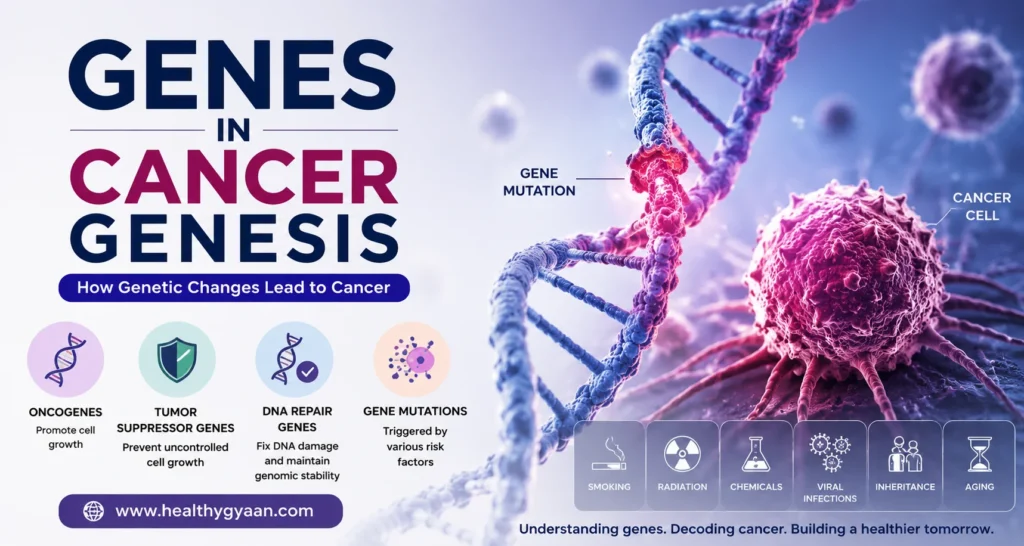
The actual relation of different genes in cancer genesis
Cancer develops due to some innate changes to the genes of the human body.These changes can have harmful impacts on normal cell growth and control of the cell divition.At the time of neoplastic transformation eventful alteration occurs in the genes that help them lose their normal function.
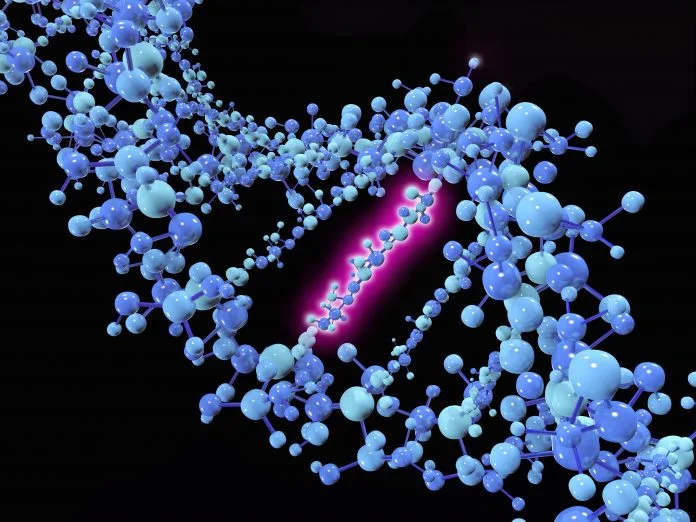
These genes of our body mainly form about two important groups of genes.Oncogenes are the first among these genes.Oncogenes have a tendency to promote cell growth and also help in cell division. Appropriate activation of these genes can push cells to grow in a reckless way. The second group usually consists of tumor suppressor genes.
The primary function of these genes is to control cell growth.They also help prevent abnormal proliferation as well.Improper activation of tumor suppressor genes may force cells to divide without proper regulation. DNA repair genes are also among important tumor suppressor genes.
They help repair those DNA that got some damage and prevent new mutations of DNA from the accumulation. DThe failure of DNA repair genes give mutations to build up quickly.Thus it increases the risk of cancer development.
This is how oncogene activation with inactivation of tumor suppressor gene can lead to malignant transformation.In this article, try to cover the aspects of different of genes with their close relation to cancer development and the ways to control it as well
How can we know oncogenes better
An oncogene usually covers the alteration and overactive form of a normal cellular gene which we know as a proto-oncogene.This gene solely helps promote cancer development.This is because it generally increases cell growth with proliferation and also promotes activities to form cancer.
The role of Oncogenes is vital in the neoplastic process. Normally, proto-oncogenes control cell growth and also rate of division. However,proper activation of these genes through mutation with gene amplification and chromosomal rearrangement actually promote cancer development.
As a result, the cell may receive continuous growth signals that are not necessary for the normal cell function. For example,mutations in genes encode tyrosine kinase growth factor receptors.Then it can make receptor activity uncontrollable without the proper ligand.
Oncogenes may also help produce growth factors and signal transduction molecules or transcription factors. Their activity can eventually stimulate cell proliferation and also prevent the normal processes of cell death.they can also support invasion to the nearby structures and contribute to malignant transformation.
Variation in Activation with sources of oncogenes
Oncogenes are those genes that can help genesis of cancer in a human body.The overactivity and abnormality in functions can lead to cancer development.According to COSMIC,there is strong evidence about 80 oncogenes to get involvement in cancer.Proto-oncogenes are normal genes that functionally control cell growth rate.Any amount of changes can transfer it into oncogenes.
The activation of Oncogenes can happen in different ways.Gene amplification is common among these ways. In this process, tumor cells can have multiple copies of a normal gene. This increased gene expression in this process can actually produce too much protein.
Mutation is another important way of gene activation.Point mutations or large rearrangements of genes can permanently make a gene active.This is why mutation in tyrosine kinase receptors may send growth signals even without EGF growth factors.
The origin of some oncogenes can also be from viruses. Viral proteins can ultimately disturb normal cell growth and make them tough for survival. The insertion of their genetic material from retroviruses into the host genome can have harmful impacts on nearby genes.
Colorectal cancer needs to cross several steps to develop cancer. Three major pathways of colorectal cancer genes are chromosomal instability with microsatellite instability and CpG island methylation.
The significant changes in APC, KRAS and BRAF genes usually occur in this pathway.After all these changes help normal cells progress into adenoma and then help transform into carcinoma.
The role of Oncogenic Growth Factors in cancer genesis
We know that Oncogenic growth factors are the proteins with a close relation to growth.It unfortunately helps cancer cells to grow rapidly and also divide abnormally.The expression of these factors at a higher level than normal can ultimately support malignant transformation.
There are several oncogenes that encode growth proteins. Wnt proteins and Sis proteins are among the examples of these growth proteins. The Sis protein encodes the alpha chain of growth factor (PDGF) that have the origin from platelets. PDGF normally helps cells to grow quickly and repair the tissues.
However,excess PDGF-like activity can eventually stimulate cell growth without proper control.The autocrine signal system also helps Cancer cells.this process, ensures cancer cells produce its own growth factor. Then the same cancer cell falls into this trap and responds to that signal. As a result, it keeps a continuous pace to its own growth.
Cancer cells may also have an impact on nearby supporting tissue which we know as stroma. They can force the stroma to produce extra growth factors that can stimulate the process. These factors then give the tumor a faster growth rate.
Cancer cells show commonly abnormal activity on growth factor receptors.The overexpression or dysregulation of some receptors also aggravate this process. This produces a continuous signal even without normal control of the cell.
the EGF receptor family remains a major family which scientist generally call ERBB1–ERBB4. in many gastrointestinal cancers the upregulation of These receptor tyrosine kinases usually occurs.This abnormal receptor activity promotes cell survival and also help proliferation with tumor progression.
Signal transductions impact on gene mutation
The process of Signal transduction is the changes of ligand-receptor binding into an intracellular signal. This process helps respond to a cell with growth signals within a very short duration of time.Gene Mutations in signal transduction method can ultimately cause cellular transformation and then into cancer.
The variation of oncogene has protein kinase activity.This feature also helps oncogenes encode proteins. Many GI tract tumors generally express these oncogenes. One example is Src is among those examples which is a non-receptor tyrosine kinase.Its usual location is near the inner surface of the plasma membrane.
The importance of G proteins in signal transduction is very crucial through GPCRs.G protein has a close relation to the Rat sarcoma gene family.They usually cause mutation to GI cancers. H-ras, K-ras, and N-ras are important members of the Rat sarcoma gene. Among them, K-ras mutations in GI malignancies are mostly prevalent.
About 90% of pancreatic cancers occur due to K-ras mutation.Moreover about 50% of colon cancers also possess the involvement of this gene.the active GTP-bound form actually help K-ras gene to bring about gene mutation.
As a result, the activation of downstream kinases happens in no time.Braf genes also follow the same pathway In some colon cancers without K-ras mutation.
The actual effects of Nuclear Oncogenes in cancer genesis
The entrance into the nucleus of the cell makes some cellular oncogenes very special. The proteins of the gene act as the final regulators of many signal transduction pathways.growth factor receptors may become the initiator point of signals on the cell membrane. Then K-ras, B-raf, PI3K and AKT importantly receive the key pass through these proteins.
The proper control of cell growth with proliferation and survival are the main features of these pathways.The mutation of these molecules make the signals remain active. This can further push cells to divide continuously.
Scientists found involvement of K-ras mutations in about 40% of total colorectal cases.In contrast , B-raf mutations occur in about 10% of the colorectal cases.Nuclear oncogenes can sometimes work as transcription factors.The main function of these factors are to regulate and control the cell proliferation rate.
They also end up with the reduction of normal cell differentiation. The myc proctogene family is an important example who have these factors.The appropriate control of cell proliferation with differentiation and transformation are the main manifestations of the MYC genes.They also result in gene activation as well.
In many gastrointestinal cancers, c-Myc is The overexpression or amplification of c-Myc occurs In many gastrointestinal cancers. This abnormal activity helps cancer cells grow more quickly and provide a long term survival.
Discover more here: High blood pressure causes
How Tumor suppressor gene help progression of cancer
Tumor suppressor genes are the main genes to control normal cell growth.There is a close association of mutations in these genes with all gastrointestinal cancers in the human body. The way of cancer formation of tumor suppressor genes is slightly different from the oncogenes.
They usually do this through loss-of-function mutations.The mutation of tumor suppressor may remain biphasic due to its effects on both alleles of genes.The studies of cancer-prone families bring forth the concept of tumor suppressor genes.
Hereditary colon cancer with gastric cancer, and pancreatic cancer syndromes are among the results of mutation of tumor suppressor in GI tract.These innate abnormal syndromes often increase the risk of cancer without major involvement of environmental causes.
The impacts of tumor suppressor genes may help the tumor appear at a younger age.There is always more than one primary tumor in this case.Scientists bring forth Knudson’s two-hit hypothesis to explain this process in a simple way.
The damage of both gene copies usually happens by somatic mutations in intermittent cancers.But in case of familial cancers, there is one innate defective copy of the gene.The other normal copy of gene damages due to A second somatic mutation. This step by step mutation ultimately leads to tumor formation.
However, there are exceptions where cancer develops with only one mutation of gene allele. The actual role of Tumor suppressor genes in this case is slightly different. APC, TP53, and SMAD4 are among the important examples of GI cancer.
The importance of DNA Repair gene in cancer genesis
The replication of agents can create genome errors with significant damage to DNA. Nucleotide mismatches, oxidative damage, and double-strand breaks are among the reasons for DNA replication.Cells frequently use their repair systems to prevent these errors and also bring interruption of permanent mutations.
The mismatch repair of the DNA segment plays a key role here.It corrects errors of repetitive DNA sequences in microsatellite regions. MSH2, MSH6, and PMS2 are the important examples of mismatched repair genes.Mutations in these genes can cause significant defective repair. The innate mutations of hereditary nonpolyposis colorectal cancer lead to Lynch syndrome.
Tumors accumulate many mutations due to loss of mismatch repair. This process can cause microsatellite instability with the production of many tumor-specific neoantigens.However the repair defect in the gene can not initiate cancer transformation.Rather it allows mutations to build up slowly in cancer specific genes.
After all ,Lynch syndrome can only give rise About 5% of colon cancers. On the other hand, Around 10% show similar defects without innate mutations. There are some repair defects that fail to proofread the errors and produce cancer.Other gene generally repairs the oxidative DNA damage of some cells.
These changes in the mutation cause an autosomal recessive polyposis syndrome similar to familial adenomyosis polyposis.
SMAD4 affects various cancer development
SMAD4 is one of the potent tumor suppressor genes in our body.The mutation or deletion can often happen in pancreatic adenocarcinoma.The alteration of SMAD family member 4 gene can also be the primary cause of some colon cancers.
This gene is one of the major sources of the Smad4 protein. This Smad4 helps transmit signals from the TGF superfamily in our body.It usually exists inside the cell and It can also works as a transcription factor.The partnership between smad and TGF can effectively help control cell growth.
The slight mutation of Smad4 loses these important functions as well as the control of cell growth. This can significantly reduce growth inhibition when it gets signal from TGF signals.This overall process results in abnormal cell proliferation.The mutation of Germline SMAD4 can be the major cause of juvenile polyposis syndrome.
The consequence of TP53 involvement in cancer
The mutation of TP53 gene is the most significant cause of cancer genesis in the human body.The alteration of this gene frequently happens in cancers of the gastrointestinal tract. About 50% to 70% of colon cancers which possess irregularity are due to Point mutations in TP53 gene.
In cancer development processes,there is a late appearance of these mutations.That is why they are unlikely to be created in early colonic adenomas.The p53 protein commonly appears from TP53 gene activation .This protein is actually nuclear phosphoprotein in nature.
The key role of this gene is to control cell cycle with the death of cell.The p53 protein help in DNA transcription in the nucleus.cellular stress can make these gene very active.radiation, loss of growth factors, and cytotoxic therapy are the primary cause of cellular stress.
P53 can actually stop cells after activation in the G1 phase of the cell cycle. This activation can then allow DNA repair to occur. It can also promote senescence or normal death of the cell.p21 and PUMA are the target genes that have an impact in this phase.
The mutation of TP53 mutations result in loss of one gene copy with mutation of the other. Some deletions may also definitely remove nearby tumor suppressor genes. Missense mutations of some genes may give p53 new cancer-productive functions.
Some autosomal dominant disorders increase the risk of several cancer development.Breast cancer, leukemia and brain tumors are among these disorders.
The significance of APC gene in cancer genesis
The usual location of APC gene is on chromosome 5q21. Familial adenomatous polyposis, or FAP, has a close relation to this gene. Later studies identified APC as the gene responsible for FAP.Some colon cancers that have irregularity in appearance are also due to Somatic APC mutations.
APC mutations appear at a very early stage in the formation of adenoma..It actually interrupt with cellular progression to adenoma and then cancer as well.There are 15 exons in the structure of APC gene. It can have the capability to encode a large protein that contains 2843 amino acids.
Most innate and somatic APC mutations create a premature stop codon at the cell transcription phage.This can result in production of a short and nonfunctional APC protein.APC normally suppresses the overall pathway gene activation.
After activation,it creates an abnormally active Wnt signal. This causes stabilization of catenin proteins and also causes activation of cancer-specific transcription. Mutations in catenin itself can also produce similar effects as they can prevent APC-dependent degradation.
How signal pathway help tumor metabolism
Oncogenic signaling pathways are important in GI tumor development. Single oncogenes or tumor suppressor genes usually act within larger pathways.Two major pathways are Wnt and Ras signaling. These pathways normally control tissue balance and cell growth.They become oncogenic when signals are abnormal or excessive.
Tumor cells usually have abnormal cellular processes namely metabolism. These distinct changes help them grow big and meet their energy demand.At first Otto Warburg observed that tumor cells use more glycolysis even in the presence of oxygen.
They also show significant reduction in mitochondrial respiration.Experts call this phenomenon the Warburg effect.Recent guideline consider It as a common feature of many cancers.Cancer-specific genetic changes can importantly drive these metabolic shifts. Several genes in GI cancers can also affect cellular processes or metabolism of cells.
P53, K-Ras and Myc are among these impactful genes for metabolism. Some innate mutations in metabolic regulators also increase tumor genesis.Mutations in succinate dehydrogenase subunits have a close association to pheochromocytoma and paraganglioma.
The excessive glycolysis may help cancer cells survive in presence of very low-oxygen. It also produces lactate as a byproduct. These can support other biosynthetic pathways of cellular respiration and nutrient supply. Because of this alteration in tumor metabolism,scientists now consider it an important target for future cancer therapy.
Can Microbes help in development of cancer
Over 100 trillion microbes are generally present in our human body. The gastrointestinal tract is the greatest container of these microbes. The interaction of these microbes with the host occurs very closely. This interaction actually plays an important role in autoimmune, metabolic disease and also in cancer.
The influence of the gut microbiome helps create a suitable environment for tumor development. There is also a great link between Certain bacteria and colonic tumors.The close association of Some bacteria with genesis of a tumor can even promote colon tumors in animal models.
Fusobacterium nucleatum is an important one among the examples.the oral cavity of human body usually contains this bacteria.However, colon tumors can also be the receiver of this bacteria. Studies suggest it may contribute to colon cancer development when it gets specific experimental models.
Biological features of how cancer spread in human body
Scientists consider Tumor metastasis as a complex process.This is mandatory for a Cancer cells to detach from the primary tumor in order to spread distantly.The entrance of tumor derivatives into blood vessels or lymphatic vessels is essential in this phase Then they can travel a long distance after initial entrances.
In order to invade new tissues ,they attach to the endothelium and cross the vessel wall. They must grow into a new tumor after an appropriate invasion.The formation of new blood vessels is mandatory for primary tumor growth as well as distant tumor growth.
Tumor cells become successful when they are able to escape immune cell destruction.Fortunate ,the success ratio of tumor invasion to other distant areas is very low. There exists only a few tumor clones who can gain the ability to spread distinctly from its site of origin.
How Angiogenesis and Lymphangiogenesis keep cancer alive
Scientists usually name the formation of new blood vessels as angiogenesis.The continuous tumor growth can have greater dependency on new blood vessel formation.The main reason behind this angiogenesis process is the necessity of proper oxygen and nutrients for the new cells of the tumor.
The central part of a tumor can face necrosis or cell death due to absence of new blood vessels.New vessels also ensure the spread of tumor cells to the nearby tissues or distant sites.The stromal cells along with tumor cells release factors that help form new blood vessels namely angiogenesis.
VEGF-A, basic fibroblast growth factor and TGF-α are among these important factors.Colorectal cancer especially need VEGF-A factors to grow big.The mutation of Ras gene with Wnt signal transduction can effectively increase VEGF-A expression.
The new blood vessel formation usually occurs in step ladder pattern.At first Endothelial cells break down the basement membrane and then migrate into nearby tissue.Secondly the formation of capillary sprouts take place. These sprouts further grow bigger to form tubes as well as capillary networks.cell movement, protein breakdown, and cell growth are among the steps of this process.
On the other hand,Lymphangiogenesis is the formation of new lymphatic vessels.The main function of this new formation of the lymphatic system is to help tumor spread. VEGF-C and VEGF-D stimulate lymphatic endothelial cells through the activation of VEGF receptor-3. This activation process creates new lymphatic channels that promote spread to regional lymph nodes.
Environmental factors are also among the key influencers of cancer development. Chemical carcinogens generally work through metabolic activation. The activation of these carcinogens can damage DNA and help cause mutations.Chronic Tobacco use can certainly increase the risk of several GI cancers.pancreatic and colon cancer are main examples of long term tobacco consumption.
Conclusion
The process of cancer development usually follows a step ladder pattern.The genetic and cellular changes are among the steps of this process.These changes actually hampers the normal control of cell growth with repair or even death and survival.
The overactivation of oncogenes pushes cells to divide recklessly.On the other hand it makes tumour suppressor genes lose their function.That is why they fail to stop abnormal growth of cells. The repair of DNA defects allow mutations to accumulate in the genes.
APC, KRAS and BRAF are among gastrointestinal genes that help mismatch repair genes.This role of these gene paly a major setback in gene function.The APC mutation in colon cancer can be often an early event.KRAS and BRAF mutations activate growth pathways of the cells.
Though TP53 mutations usually occur later,it definitely augments cancer progress. SMAD4 loss also has an important impact on growth control.This is more prevalent especially in pancreatic and some colon cancers.
Cancer also depends on the signals with larger pathways.Ras, MAPK, and COX-2 pathways usually support tumor growth and help in angiogenesis and invasion of the tumor cells.This pathways also increases the survival period of tumors. Tumor metabolism also changes over the course of time.
The alteration of energy pathways by cancer cells eventually supports rapid growth of the cells.The tumor microenvironment plays a key role in the genesis of cancer.Blood vessels and lymphatic vessels effectively influence tumor behavior.
Immune cells, stromal cells, and microbes can also have the similar impacts on cancer genesis.Angiogenesis and lymphangiogenesis help tumors grow big and also help spread to the nearby tissues.
Overall, cancer is the accumulator of multichange events to occur. It ultimately results from many interlinked factors.genetic, metabolic, environmental, and tissue-level changes are among the important factors in cancer development.
На нашем ресурсе есть возможность обнаружить много ценной знаний.
https://kart1na.ru/entry/374-na-ulitse-lenina-v-stavropole-netrezvyy-voditel-bez-prav-vrezalsya-v-marshrutku/