
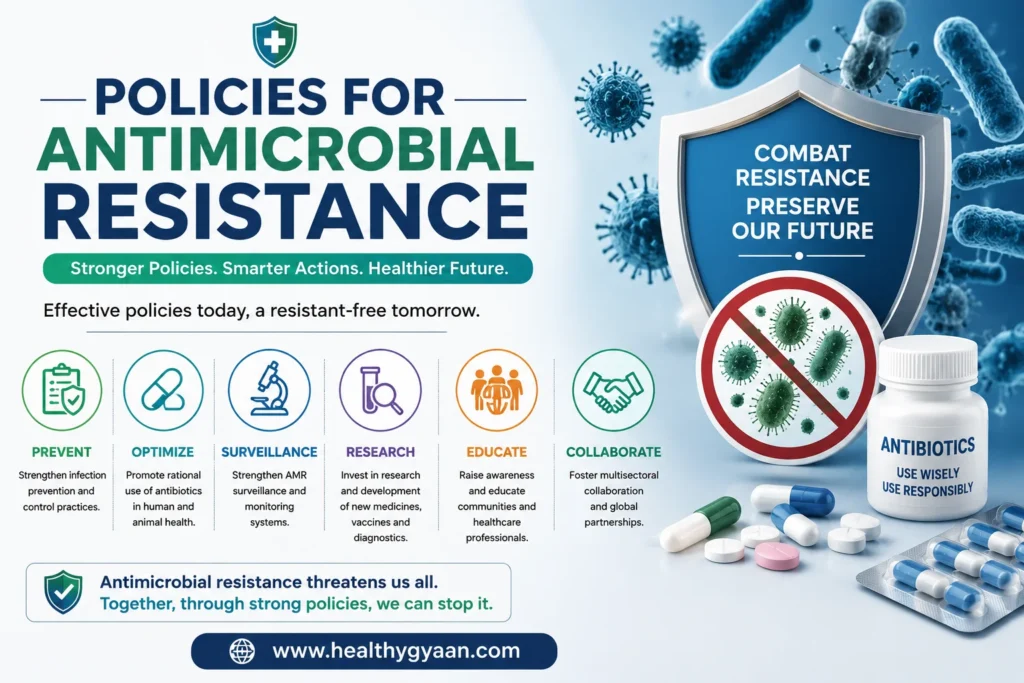
The Implications of Global Health Policies and Practice for Antimicrobial Resistance
Modern medicine actually changed human life in many powerful ways. In the past, a small cut with a simple infection and normal delivery or childbirth, or surgery could ultimately threaten life. Today,we can treat many infections with proper medicines such as antibiotics, antifungals or antivirals, and antiparasitic drugs. These medicines are in fact antimicrobials because they fight against harmful microbes like bacteria, fungi, viruses, and so many various parasites.
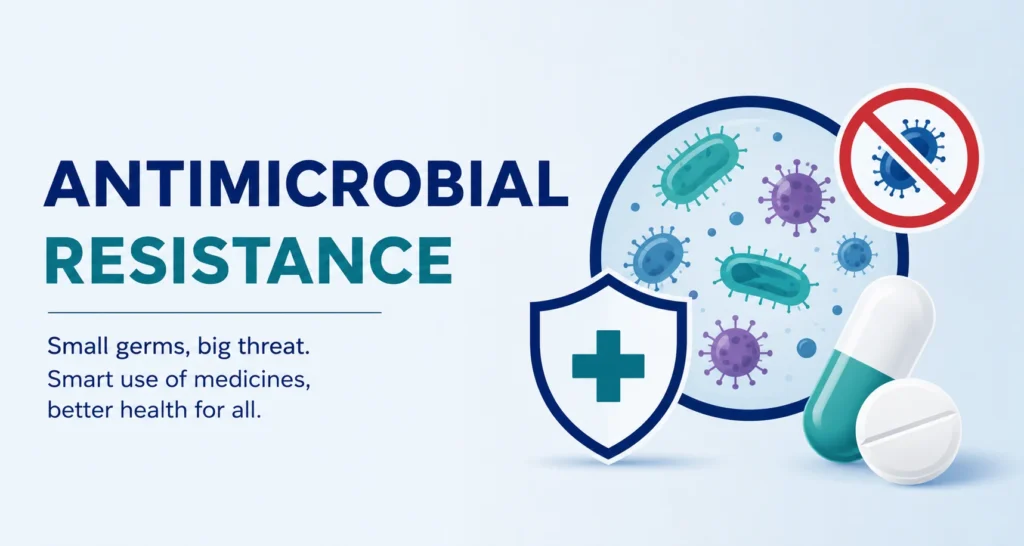
But there is certainly a problem that increases over time. Some microbes continuously change in ways that allow them to survive the medicines which we design to kill them.Experts call or name this problem antimicrobial resistance, or AMR. The World Health Organization describes AMR as one of the top global public health and also development threats. In 2019, bacterial AMR directly involved and caused almost 1.27 million deaths and this was about nearly 4.95 million deaths worldwide.
Scientists often consider AMR as a “silent threat” because it does not spread fear like a sudden outbreak rather it slowly weakens the power of modern medicine. If we do not act in time properly, infections that are easy to treat today may become dangerous once again.
The Basics of Antimicrobial Resistance
Antimicrobial resistance happens when microbes change over time and no longer respond accurately to medicines. This means the medicine becomes less effective, or sometimes it stops its proper impact on microbes completely. As a result, infections become harder to treat that last longer, spread more easily, and increase the risk of serious illness or ultimately cause death.
Many people think AMR only means “antibiotic resistance,” but that is solely one part of it. Antibiotic resistance only happens when bacteria become resistant to certain antibiotics. Similarly Antifungal resistance happens when fungi become harder to treat. Resistance can also affect medicines which we usually use against viruses and parasites.
For example, if a person has a bacterial infection and the bacteria are resistant to the usual available antibiotic, the doctor then may need to use stronger, more expensive, or even rare-to-find medicine. In some cases, there may be very few treatment options that we can implement to treat the actual disease.
Antimicrobial Resistance: Implications for Public Health
AMR is not only a problem for one patient or one hospital; rather, it is actually a major public health issue because resistant infections can spread from people to people through health-care settings, through food, through animals, and even through the environment as well. CDC calls antimicrobial resistance an urgent and emerging global public health threat. In the United States alone, more than 2.8 million antimicrobial-resistant infections in fact occur each year.
Public health is about the protection of whole communities, not just about the treaty of one person at a time. AMR affects communities because it can make common infections harder and costlier to control. It can also make routine medical care more dangerous for the patient. Surgeries, cancer treatments, organ transplants with dialysis, and intensive care often mostly depend on effective antimicrobials to prevent or treat infections.
If these medicines stop to have its exact impact properly, many medical procedures become riskier. This is why scientists describe AMR sometimes as a threat to the foundation of modern medicine.
The Development Process of Antimicrobial Resistance
Resistance is actually a natural process. Microbes can change through mutation, or they can share resistance traits with other microbes alternatively. When we try to use antimicrobial medicines, they ultimately kill sensitive microbes, but resistant ones may also survive. These microbes that survive in this process can then multiply and spread.
The problem becomes worse when we need to use antimicrobials too often or use it in an incorrect way. WHO states that misuse and overuse of antimicrobials in humans, animals, and plants are solely the major drivers of drug-resistant pathogens.
For example, resistance can truly grow when people take antibiotics for viral infections such as colds or flu. Antibiotics never work against viruses. Resistance can also grow when patients stop antibiotics too early with a short duration course, share leftover medicine, or take medicine without professional medical advice.
In the farm,we usually use antimicrobials to treat sick animals, but overuse or poor control can also increase or induce resistance. Resistant bacteria can move from animals to humans through food and sometimes through direct contact, or the environment. CDC notes that resistant bacteria can spread from food animals to people, and responsible antibiotic use is vital for the prevention against resistant infections.
Core Causes of Antimicrobial Resistance
Unreasonable Use of Antimicrobial Agents
One of the major causes of AMR is the factor that we use antibiotics carelessly when we actually don’t need them to apply or to cure the disease. The primary cause of many common illnesses such as colds, flu, and most sore throats are actually viruses in nature. Antibiotics do not even kill or destroy viruses and can not cure viral infections. When people use antibiotics unnecessarily and senselessly, they eventually give bacteria more chances to become resistant which further help them to live longer.
Senseless and PoorPractice of Medications
Misuse can include the intake of the medications with wrong doses or stop the treatment too soon.It also include the use of someone else’s medicine carelessly or sometimes people usually buy antibiotics without proper guidance and safety. These actions may not fully kill the harmful microbes that cause the disease and it also helps and also allows stronger ones to survive a long duration of time.
Ineffective Infection Control Strategies
In hospitals and clinics, resistant germs can spread if hand hygiene, disinfection methods, and infection control are weak. Patients who are already sick are more likely to develop serious infections.
Regulation and Use of Antimicrobials in Animal Agriculture
We also need to use antimicrobials in animals and agriculture. When we use them without strong rules, they can encourage resistant germs to develop. These germs may then spread to humans through food, water and soil, or even through direct contact.
Failure to improve Drug Development Efforts
Another challenge in the newer world is that we fail to develop new antibiotics and other antimicrobials fast enough. WHO’s study on AMR data portal warns us that only few replacement products are in the pipeline which can ultimately lead to an era without urgent action where common infections could once again become deadly.
The hidden health Impacts of Antimicrobial Resistance
AMR does not always look dramatic at first sight. It may begin with one patient whose infection does not improve fully or the patient did not take the drugs appropriately. Then doctors instead need to try another medicine.Thus it makes the hospital stay longer and it also increases the cost as well. The patient may eventually require stronger drugs which can induce more side effects to the patient. In some cases, the infection ultimately spreads to others who get the contact to the patient.
This quiet pattern of drug resistance happens in many places at the same time. Because it is not always visible to the public, AMR can definitely grow and develop without enough attention from the public as well as the professionals. Unlike a sudden outbreak, AMR builds slowly in the population and develops over a long period of time. But its impact can be dangerous and deadly for the human being.
It is also silent because many people do not understand how their everyday choices can eventually impact drug resistance it.It may seem like small things when people generally ask for antibiotics when they do not need that and do not complete treatment correctly.Moreover they use the leftover medicine carelessly. But when millions of people do these things simultaneously, the result becomes a global health threat and creates a bigger impact.
Health and Societal Burden of Antimicrobial Resistance
The human cost of AMR is actually very serious. Resistant infections can lead to longer illness with more hospital visits or expensive treatment, and higher death risk. The 2019 global burden study indicated that bacterial AMR was directly responsible for 1.27 million deaths and further associated almost 4.95 million deaths worldwide.
AMR can eventually affect anyone, but some groups are more vulnerable. These include newborn babies, older adults as well as people with weak immune systems, people with chronic diseases, and patients in hospitals. People who live in areas where there is minimal access to clean water with proper sanitation, good health care, and quality medicines may also face higher risks.
Low- and middle-income countries are often hit harder.This is because health systems may have fewer resources for diagnosis, infection control, and safe treatment in those countries. WHO has warned that AMR affects all age groups and all regions.Moreover it actually affects the low- and middle-income countries more.
Discover more here: Care for Mother and Children
Economic Externalities of Antimicrobial Resistance
AMR is not only a health problem. It is also an economic problem. When infections become harder to treat,it then actually forces people to spend more time in hospitals where they need more expensive medicines, and miss work or school as well. Families may further lose income, and health systems may face higher costs.
The World Bank notified that drug-resistant infections could cause major economic damage. By the end of 2050, global health-care costs could rise by $300 billion to more than $1 trillion per year because of AMR.
AMR can also affect food production and trade which are the integral part of our life on earth. If resistant infections spread among animals, farmers may lose livestock by which food prices may rise, and the economy may suffer. This shows that AMR has a close connection to health, agriculture, trade, poverty, and development.
AMR in the Context of Modern Medical Care
Many people do not realize how much modern medicine depends on effective antimicrobials. The medical professionals not only use antibiotics to treat infections after they happen but also they use them to prevent infections at the time of major medical procedures.
For example,we require antibiotics in the course of surgery to prevent wound infections. Cancer patients may need them because chemotherapy can weaken the immune system. Organ transplant patients may take them to prevent rejection because that procedure actually undermines their immune systems.
If antimicrobials lose their power, these treatments will become more dangerous. A routine surgery could even carry more risk. A simple urinary tract infection could become harder to cure. A skin infection could then spread to the blood as well. This is why AMR threatens medical progress.
AMR in Institutional and Community Contexts
Hospitals are important places in the fight against AMR. Patients in hospitals are often weak who are continuously recovering from surgery, or using devices such as catheters and ventilators. These conditions can make infections more likely to happen.
However, AMR does not have its limitation only to hospitals. Resistant infections are also common in communities. CDC has expressed concern about aggressive and emerging resistant infections outside hospitals and the spread of new forms of resistance.
This means AMR prevention must happen everywhere.It ultimately involves the hospitals, clinics, homes, schools, farms, pharmacies, and communities
Essential Participation of Community and Patient
Everyone can play an effective role that can really slow down the process of antimicrobial resistance. Ordinary people can eventually help in this way in the prevention of AMR if they appropriately use medicines with proper safety and responsibilities.
People should not demand antibiotics when a doctor says they are not necessary at this stage of your illness. They should never use leftover antibiotics or share them with others. They should follow the instructions that the medical professional gave them in accordance with their prescription. They should also keep vaccinations up to date, because the prevention of infections through them can reduce the need for antibiotics.
Good hygiene is also important. When we wash our hands properly, prepare our food safely, cover ourselves at the time of coughs or stay home when sick, and also keep our wounds clean,it then eventually can reduce the spread of infections. Fewer infections mean fewer antimicrobial medicines are necessary.
How can Healthcare Providers and Systems integrate in AMR control
Health workers always remain on the front line when it is about the prevention of AMR. Doctors and nurses in fact must carefully prescribe antimicrobials as people nowadays use antimicrobials carelessly. This actually means the proper and timely choice of the right medicine with appropriate dose.It also involves the correct length of treatment that is essential in the prevention of antimicrobial resistance.
Hospitals can also arrange programs namely antimicrobial stewardship programs which is important to implement proper use of antimicrobials. These programs help the health care providers make sure that they use exact antimicrobials only when it is mandatory to use and in the correct way. They also support them to test as well as track the diseases.It will also provide proper education to health professionals to effectively use antimicrobials.
The appropriate laboratory tests are also very important which also demands a correct way to implement. When doctors know exactly which microbe is the culprit or the sole cause for an infection and which medicines will work against it or are able to kill it, they can then try to avoid unnecessary or ineffective treatment. Strong infection prevention with clean facilities and safe medical procedures are also key factors in this prevention of antimicrobial resistance.
The Responsibilities of a state in Policy Implementation
Governments actually have a major responsibility to implement the policies as they can effectively help fight against AMR. They can create national action plans and also improve surveillance as well as regulate medicine sales.Moreover they can eventually support laboratory systems and also educate the public about their responsibilities in this field.
Governments can also make rules for how people can appropriately use antibiotics in the farm as it is very important to protect animal health which can further help eliminate microbial resistance. They can also invest in clean water production with proper sanitation and vaccination that can effectively control infections . These basic and genuine public health tools can ultimately reduce infections and further help decline the need for antimicrobials use.
We can not actually solve AMR when we can control and protect one hospital or one country at a time. Resistant germs can certainly travel across borders through people, animals .They can also transmit along with food and the environment as well. This is why international cooperation is very much helpful and necessary to overcome this journey to protect us from antimicrobial resistance.
Cross-Sectoral One Health Initiative
AMR has actually a close connection to humans, animals, plants, food, and the environment. Because of this, experts often use the One Health approach. One Health means that we always connect human health, animal health, and environmental health.
For example, antibiotic use in animals can definitely affect humans. Waste from hospitals, farms, and factories can certainly have impacts on water and soil. Resistant microbes always can move through these pathways.
A One Health approach brings together doctors, veterinarians, farmers as well as environmental experts, researchers, and policymakers. If they all work together,it will certainly give a better chance to control AMR.
Strategies to Mitigate the Impact of Antimicrobial Resistance
Antimicrobial resistance, or AMR, is in fact a serious public health problem. It happens when germs such as bacteria, viruses, fungi, and parasites stop their usual response to medicines. This makes infections very much hard to treat and can also put many lives at risk. To get out of the AMR bubble, everyone must play a vital role.
First,we should only use antibiotics when a doctor prescribes them. People should not take antibiotics for normal colds or flu because these illnesses are usually due to viruses, and antibiotics do not work against viruses. Patients should also complete the full course of medicine as the health professional directs them to use.
Secondly, hospitals and clinics must follow strong hygiene and disinfection rules.Proper Handwashing practices, clean equipment, and safe treatment practices can actually stop resistant germs from its transformation to others.
Thirdly, farmers and animal health workers should use antibiotics carefully in animals as well. Overuse of antibiotics in the animals can also increase AMR.
Fourthly, governments should appropriately educate people, control the sale of antibiotics, and support research for new medicines and vaccines in order to stop drug resistance.
In conclusion, we can reduce AMR only when we are able to use medicines wisely, prevent infections, improve cleanliness, and spread awareness. AMR is a global problem, but careful action can ultimately protect our future.
Antimicrobial Resistance Prevention: Policy and Practice
The Prevention AMR does not actually mean that we need to stop all antibiotic use in our life. These medicines can save our lives when we use them in a correct way with proper doses and use them in appropriate duration. The goal is to protect them for future use so they remain potent to work against microbes and able to kill them.There are some Important prevention steps and policies that comprises:
Practices to prescribe Antibiotics carefully
We should use antibiotics only for bacterial infections when a qualified and skilful health professional prescribes it to cure the disease along with proper doses and duration .We must not use them in case of viral infections like colds or flu.
Ensure the Full Therapeutic Compliance or Doses
Patients should only strictly follow medical instructions carefully and strictly. They should never stop or change as well as modify or save medicines without proper advice and guidance from a health professional.
Implementation of Effective Hygiene and Sanitation Measures
We must clean our hands properly or clean our toilets, and maintain proper waste management with safe water use that eventually helps stop infections before they start.
Boost up Vaccination Initiatives
Vaccines can prevent many infections. When fewer people get sick, it means fewer people need antibiotics to save them from infections.
Food Safety Enhancement Strategies
We must cook our food properly, wash our hands before we prepare food.Moreover we should try to prevent contamination and reduce foodborne infections.
Upgrade our Diagnostic Systems
Fast and accurate tests for the diagnosis of disease can help doctors choose the right medicine instead of their assumption.
Support the Development of Novel Medical Therapies
New antibiotics, antifungals as well as vaccines, and diagnostic tools are certainly essential for our survival on earth. But we must protect new medicines from misuse.
The Relevance of Education
Public education is one of the most important and effective tools against AMR. Many people still believe antibiotics can alone cure all infections. Some people stop the intake of medicines as soon as they feel better and become well. Others casually and irrationally keep leftover antibiotics for future use.
These habits may seem harmless at first impression , but they can eventually help resistant germs grow further. Clear education can change this behavior. Schools, clinics as well as media, and community leaders can certainly all help spread the message.
The message should be easy and simple: antimicrobials are precious medicines and so always use them carefully and rationally.
Future Health Risks in a Post-Antibiotic World
A “post-antibiotic era” does not actually mean that all antibiotics will suddenly disappear. It means many antibiotics may not be able to fight against common infections. In such a world, simple infections could become very once serious again. It can also make routine surgery more dangerous. Hospital care could become more complex as well as complicated.
We can not fully guarantee this future , but it will certainly be possible if action is weak. The good news is that we can surely slow the processes of AMR development . Better hygiene, safe prescription of the drugs, vaccination, surveillance with research, and global cooperation can make a real difference in this case.
Conclusion
Antimicrobial resistance became one of the most serious public health threats of modern medicine worldwide. It remains silent because it grows slowly over a period of time and often goes unnoticed until certain treatment failure occurs. But its primary impacts are already visible in hospitals, communities or in farms and health systems around the world.
AMR actually makes infections harder as well as costlier to treat as it increases medical costs, threatens modern health care, and puts vulnerable people at greater risk. There are many factors that are the actual culprits that mainly include overuse and misuse of antimicrobials, poor infection control with weak sanitation, and also the limited development of new medicines.
The fight against AMR in fact needs action from everyone in our entire health system such as patients, doctors, nurses, pharmacists or farmers, governments, researchers, and communities.If we rationally use antimicrobials responsibly, prevent infections properly, improve hygiene as well as support the vaccination programme and also invest in better health systems, we can certainly protect these emergency aids or medicines that can save our life for future generations.
AMR may be silent, but our response must be strong, urgent, and united to fight against AMR.