
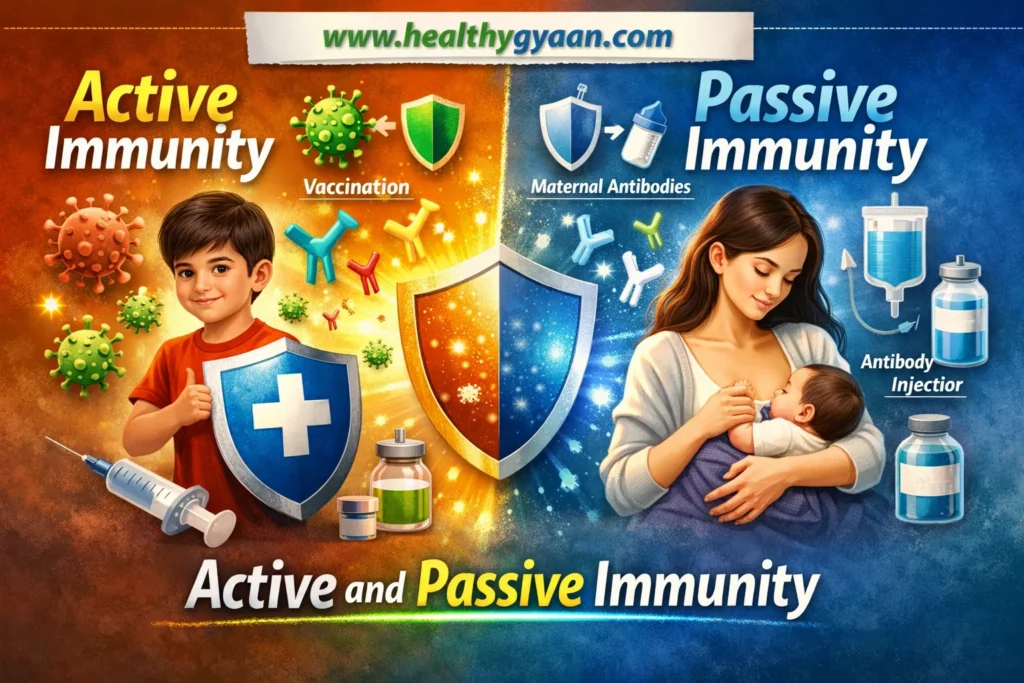
The overall concepts of active and passive immunization
Vaccines(active immunization) and biological products will always be the bridge between the knowledge about the organisms that initiate diseases , the diseases themselves, and the way our bodies react and heal. Many vaccines are now currently under clinical trials.However a major change has occurred recently where several vaccines that include the mRNA and protein-based ones, have jumped straight from the phase 3 trials to FDA approval and general usage. Nowadays, these are simply one of the main components of the healthcare system in the U. S. guided by scientists who continually revise them to keep up with the newly evolving strains of viruses. In this article we try to provide you the overall concepts of active and passive immunization with their types,indications and examples.
What is active immunization?
Active immunization means the body’s own immunity that can last for a long time and provide natural protection from the pathogens.In this process,the human body consumes some antigen which further stimulate the body to recognise, attack and remember the same pathogen when it enters into our body.
What are types of active immunity?
There are two major types of active immunity. These comprises:
1.Natural immunity:This happens when a person gets infected with a live pathogen, falls sick, and then gets immunity to the disease (e. g. getting immunity after chickenpox).
2.Artificial immunity:It is by vaccination. This one is the clinically safer way of getting protection without the risks of a serious illness or other complications.
What is passive immunity?
Passive immunity is a situation in which someone gets antibodies for a disease without its production by the body’s own immune system. Actually the body receives antibodies externally. As the body of the individual plays no part in the production of these antibodies or there is no need to remember the pathogen, the passive immunity is almost instantaneous, though it also fades rapidly typically in a matter of weeks to months.
Types of passive immunity
There are mainly 3 types of passive immunity that involve :
1. Natural passive immunity: It is a format of immunity in which the antibody’s baby gets the antibodies from its mother.
The IgG antibodies pass through the placenta to the fetus before the birth of the baby. In contrast, the baby gets IgA antibodies mainly from mother through breast milk, Thus it provides natural protection to the baby from pathogens.
2. Artificial passive immunity: It is a type of immunity where an individual consumes antibodies from an immune person or animal. It is the fastest way that can provide protection against infection. For examples: Rabies treatment after an animal bite, antivenom for snake on spider bites and tetanus prophylaxis treatment.
Difference between active and passive immunization
There are some die similarities between active and passive immunization. These include:
| Traits | Active Immunization | Passive Immunization |
| Source | The individual produces it by its own immune system. | The individual consumes it from an external source (human or animal). |
| Mechanism | The person gets exposure to antigens through an infection or vaccine. | It is the transformation of immunoglobulins into the body |
| Onset of Protection | It delays the protection onset and takes weeks to develop antibodies. | It provides protection immediately after the administration. |
| Duration | It can remain years or lifetime due to memory cells. | It remains in a short span of time (weeks to months) as antibodies degrade. |
| Memory Cells | Stimulates the production of memory B and T cells. | Does not involve or produce memory cells. |
| Common Use | Experts use it as routine prophylaxis to prevent future infections | It is mainly effective when we use it for emergency treatment or post-exposure prophylaxis. |
| Examples | MMR vaccine, Hepatitis B vaccine. | Tetanus antitoxin, Rabies immunoglobulin, or breast milk (IgA). |
The available Vaccines as active immunization
There are so many vaccines or materials that have got the approval to use in humans.These include:
DTaP(Diphtheria, Tetanus and Pertussis) vaccine
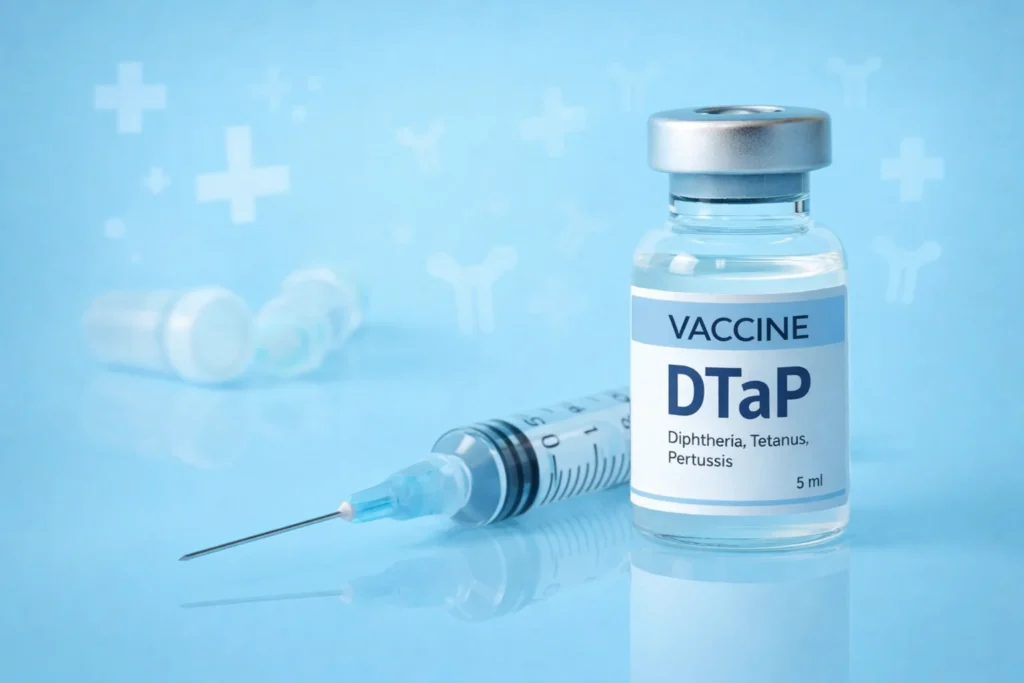
It consists of toxoids and inactivated bacterial components. People usually can take it through the intramuscular route.It has no booster dose and is mandatory for all children.
Hib (Haemophylus Influenza type b)vaccine
It is actually a bacterial polysaccharides with conjugated protein.People should use it through intramuscular route.There is no recommendation of any booster dose of it.One dose of this vaccine is enough to provide primary immunization in children.
Vaccination guidelines recommend a three-dose series for all children, with specific adjustments for those in high-risk categories. Persons with asplenia or other conditions that put them at risk require special schedules, whereas persons who have hematopoietic stem cell transplant (HSCT) demand a three-dose series at intervals of 4 weeks, and vaccination starts 6 to 12 months after the transplant when the recovery is successful.
Hepatitis A vaccine
It is a dead (inactivated) virus vaccine.The health professionals give it through an intramuscular shot. You should get the vaccine at least 2 to 4 weeks before you travel to the places where the virus is prevalent. It ensures your protection.
Although vaccine guidelines recommend the inclusion of it in childhood vaccination programs, it is not for adults who are naturally immune or do not have any particular risk factors.
It is advisable to get a hepatitis A vaccine for children and adults with higher risk.
Residents on returnness to endemic areas, homeless men who have sex with men,
drug users, people with liver and coagulation disorder and some occupationally, exposed individuals are among the risk individuals.
Vaccine guidelines also recommend this vaccination to the family members with acute hepatitis A infection and those who are in close contact with international adoptees from countries with high hepatitis A epidemicity.
The Hepatitis B vaccine
It is a recombinant (man-made) shot that requires administration through an intramuscular injection to provide long-lasting immunity. Typically, adults would have to take three doses (at 0, 1, and 6 months), but two doses are also available for certain vaccines.
Usually, the vaccination is not necessary for everyone however it is the standard for children and individuals at risk. A subcutaneous injection is an alternative for people with bleeding disorders.
Current Vaccination guidelines suggest hepatitis B vaccine for all new-borns and also for adults who have certain risk factors in their disease histories (e. g. HIV infection, chronic liver disease, end-stage renal disease, or diabetes under age 60). It is necessary to vaccinate the individuals with occupational, lifestyle and environmental exposure.
The Human Papillomavirus (HPV) vaccine
It consists of virus-like particles (VLPs) that possess a link to major capsid protein. Experts suggest its administration through an intramuscular injection and apart from normal precautions (like history of severe allergic reactions) with no other contraindications.
The vaccination schedule comprises a three-dose series for females from 9 to 26 years of age who have not got the vaccination yet. As for males, the vaccination schedule applies to unvaccinated boys who are 9 to 21 years, only if the individual starts the series after 14 years of age. Also, men who have sex with men (MSM) up to the age of 26, as well as immunocompromised individuals demand this vaccine.
What are the other important active immunization materials(vaccines)
The inactivated influenza vaccine
It contains either whole dead viruses or parts of them.It demands yearly administration to protect people against newly emerging flu strains. A number of people need only one dose of the vaccine.In contrast, kids between 6 months and 9 years who start vaccination for the first time must have two doses at least 4 weeks apart.
Normally the vaccine requires administration by an intramuscular injection though there is an intradermal version for adults who are between 18-64 years.Moreover, high-dose or adjuvanted versions are available for seniors of 65+ years.The target demographic includes all adults over the age of 18, children and adolescents between 6 months and 18 years of age.
Discover more here: The overall aspects of Gastritis
The live influenza vaccine (LAIV)
It comes in the form of a nasal spray and vaccine guidelines suggest to give it as half-and-half doses into the two nostrils. It demands new formulations every year in order to be effective against the latest circulating strains. In principle, it targets healthy people, adults between 19-49 years and children between 2-18 years only.
Nevertheless, kids who are 2-9 years of age and get this vaccine for the first time require two separate doses at least 4 weeks apart. However, this vaccine is not advisable in people with asthma and in children 2-4 years old who have had episodes of wheezing in the last 12 months.
MMR (measles, mumps, and rubella) vaccine
It is a live-virus shot that is necessary to use under the skin and doesn’t require any adjuvant. Its primary target is young children as a new guideline includes it in the routine immunization schedule. At the same time it may also be useful to adults who are born after 1956 who do not have any documented evidence of immunity to these diseases and in other high-risk situations.
Meningococcal ACWY conjugate vaccine
It is an intramuscular injection that combines a bacterial polysaccharide with a diphtheria toxoid. Its purpose is to shield the human body from Neisseria meningitidis infection. Generally, one or two doses constitute the vaccination course, and individuals who remain at great risk demand a booster shot every 5 years.
It is a part of routine vaccination programs for teenagers, new military recruits, and college freshmen who live in dormitories, in addition to people who travel to highly endemic areas of the disease. Besides that, it is highly essential for those with HIV asplenia complement deficiencies, and laboratory microbiologists who work with these bacteria on a daily basis to get vaccinated.
Pneumococcal vaccine
It is a conjugate shot that demands deep muscular administration. The vaccine contains bacterial sugars with the attachment to a protein. It is standard practice to give this vaccine to all children and some adults at high risk, such as people with weak immune systems, without spleen, with chronic kidney or heart diseases.
It also covers those individuals who had CSF leaks, and also to adults who are 65 years old or older who have never obtained vaccination before.
The Pneumococcal Polysaccharide Vaccine (PPSV23)
It offers protection against a total of 2-3 serotypes of pneumococcal bacteria.People should get it through an intramuscular or subcutaneous injection. The typical program is just one shot, but for those at high risk, require a booster after 5 years. This vaccine is necessary for all adults of 65 years and older, besides those who are more vulnerable to pneumococcal disease or its complications.
The Inactivated Poliovirus Vaccine (IPV)
It consists of inactivated viruses from each of the three serotypes.The people should obtain it as a subcutaneous injection. Generally, it is a part of the childhood vaccine regimen for all kids, and in the case of adults who are at an increased risk due to travel or their job.
They need to have a three-dose primary series: two shots to get 48 weeks apart and then a third 6-12 months later.It also demands possibly a one-time booster if their immunity wanes.
Rabies vaccine
We can prevent rabies prevention through an inactivated vaccine.The individual should get it intramuscularly. Pre-exposure prophylaxis involves a three-dose schedule on days 0, 7, and 21 or 28 for individuals at risk of rabies virus contact.
It also requires serologic tests every 6 months to 2 years in high risk individual.If anyone get the exposure of the virus,he must get postexposure prophylaxis a four-dose series on days 0, 3 , 7, and 14.Moreover immunosuppressed individuals require a fifth dose on day 28 for post exposure prophylaxis .
It is important for those individuals who never got this vaccine before must receive this postexposure treatment along with rabies immune globulin for immediate protection.
Tetanus-diphtheria (Td or DT) vaccine
It contains toxoids and needs to be obtained by an injection through an intramuscular route. Those who require the primary series will get 2 doses and the gap between them is 4 to 8 weeks with the third dose to get about 6 to 12 months after the second one.The individual demands a booster dose in every 10 years to sustain immunity in adult life.
What are the materials for passive immunization?
There are some materials that can provide passive immunization to an individual. It involves:
Anthrax immune globulin (AIG)
The new immunization guideline recommends it as an adjunctive therapy along with suitable antibiotic treatment for inhalational anthrax. As dose timetables are changeable for respective conditions and vary by clinical factors,it is important that you check from the latest package leaflet to obtain accurate drug doses and administration instructions.Thus it ensures the safety of the patient and effectiveness of the treatment.
Equine antivenin
It is important for the treatment of a black widow spider bite (Latrodectus mactans).Immunization guidelines recommend it to symptomatic patients only. The usual dose in such cases is one vial that contains 6,000 units by either IV or IM. Some patients might need another dose to fully control their symptoms.But it depends on how they respond.
Immunoglobulin (IVIG)
It can prevent infection, interstitial pneumonia, and acute graft-versus-host disease in adult bone marrow transplant patients. The dosage of intravenous immunoglobulin (IVIG) is 500 mg/kg. The schedule consists of administration on days 7 and 2 before transplantation, then weekly IVIG treatments until day 90 post-transplant.
Heptavalent botulism antitoxin
Doctors who generally manage the cases of symptomatic botulism treatment should acquire heptavalent botulism antitoxin.It is potent against toxin types A B C, D E F, and G and has less than 1% of equine-derived serum reaction. In the case of infant botulism which is due to toxin types A or B, the proper dose therapy of Intravenous Botulism Immune Globulin(BIG-IV) is100 mg/kg.
Immunoglobulin
The recommendation is for the patients with chronic lymphocytic leukemia (CLL) and who also have a history of at least one serious bacterial infection.The immunoglobulin intravenous dosage is 400 mg/kg every 3 to 4 weeks.
But if the patient still experiences bacterial infections after such therapy,the healthcare provider can consider an extra dose for better clinical protection.
Cytomegalovirus (CMV) immune globulin
The guidelines suggest it intravenously to prevent CMV disease in organ transplant patients such as kidney liver lung, pancreas, and heart recipients, also in bone marrow transplant patients.
As the dose regimen of this drug can vary on patient and transplant specific.You have to check official manufacturer’s information for latest dosage and administration instructions.
Diphtheria antitoxin (equine-derived)
The main use of diphtheria antitoxin (equine-derived) is for the emergency treatment of respiratory diphtheria. The dosage for this medication is variable that ranges from 20,000 to 120,000 units and the individual can administer it either by IV or IM contingent on the severity and duration of the illness of the patient.
Even though the antitoxin is obtainable through the CDC, healthcare providers should cautiously manage severe allergic reactions, especially anaphylaxis.It can occur in 7% or more of adults as well as serum sickness that happens in 5-10% of adults.
Hepatitis A immunoglobulin
The hepatitis A vaccine has almost entirely phased out the use of immune globulin (IG) for pre-exposure prophylaxis.However, the amount of IG which is necessary for pre-exposure is dependent on the length of travel: 0. 02 mL/kg for up to one month, 0. 06 mL/kg for up to two months, and 0. 06 mL/kg every two months for longer trips.
For post-exposure prophylaxis, one should receive a 0. 1 mL/kg dose via intramuscular injection as soon as possible, and no later than 2 weeks from the date of exposure. The individual does not need Hepatitis immunoglobulin if administered the vaccine at least one month before.
Intravenous immunoglobulin(IVIG) for HIV
For children with HIV,he should get intravenous immune globulin (IVIG) at 400 mg/kg every 28 days. This treatment is helpful mainly for HIV-infected children with recurrent serious bacterial infections or those who possess hypogammaglobulinemia.
To treat Kawasaki disease, intravenous immune globulin (IVIG) can prevent coronary artery aneurysms effectively when we start within 4 days after the onset of illness. Clinicians may use either a daily dose of 400 mg/kg for 4 days or a single dose of 2 g/kg IV over 10 hours.
Moreover health professionals should limit the treatment in those who do not fulfil the strict criteria for diagnosis of Kawasaki disease.Immune globulin administration for post-exposure prophylaxis by intramuscular route (IM) is necessary for non-immune contacts within six days of exposure to an acute measles case.
Normal hosts should receive 0. 25 mL/kg, whereas immunocompromised hosts need 0. 5 mL/kg, with a total maximum of 15 mL for all patients.
Passive immunization for Rabies,Snake bite and Tetanus
Rabies immune globulin (RIG)
It demands a dose of 20 IU/kg only to individuals who have not achieved immunisation as a part of the postexposure prophylaxis. It requires the whole dose administration locally to the wound and its nearby tissues for the protection of the wound.
If there is still some volume left after the wound infiltration, it is wise to give it intramuscularly (IM) at an anatomical site different from the site of the rabies vaccine injection. Very importantly, the individual who gets RIG must acquire a rabies vaccine along with RIG so that it can provide immediate passive immunity as well as the initiation of active immunity.
In case nonimmune pregnant women who have close contact with rubella virus for some reasons refuse to have therapeutic abortion require immune globulin (IM) 0. 55 mL/kg. Though this remedy may alleviate mother symptoms, it can not stop virus transmission to fetus and the congenitally affected rubella syndrome (CRS).
Snake envenomation
In order to treat snake envenomation in North America, the main focus of the treatment is to give the right antivenin for a specific snake species.For instance, two to three coral snake bite treatment involves the administration of a 3-5 vials excessive dose of equine Micrurus fulvius antivenin by intravenously within four hours.
However serum sickness is very common in cases when the number of the administered vials exceeds 7. On the other hand, pit viper bites demand ovine Crotalidae polyvalent immune Fab.The treatment starts with the initial infusion of 4-6 vials and then the maintenance doses of 2 vials in every 6 hours for as many as three doses once the condition is under control.
Tetanus Immune Globulin (TIG)
It is useful for postexposure prophylaxis in individuals who have not obtained fully immunization (less than two doses of tetanus toxoid or less than three doses if the wound is older than 24 hours).
The individual must get 250 units of Tetanus Immune Globulin (TIG) by deep intramuscular injection and double the dose to 500 units for serious or late wounds.In order to treat a case of active tetanus, it is advisable to administer a larger dose of 3000-6000 units IM.
Varicella-zoster immune globulin (VariZIG)
It is a treatment option for postexposure prophylaxis among susceptible immunocompromised individuals, some pregnant women, and newborns who have got the exposure to perinatal transmission. Ideally,the healthcare provider should give it within 48 hours and no later than 96 hours after the exposure.
The dosage depends on the patient’s weight and the administration route is intramuscular (IM).Those who weigh 2 kg or less should get 62. 5 units, 2. 1 kg to 10 kg with 125 units, 10. 1 kg to 20 kg with 250 units, 20. 1 kg to 30 kg with 375 units, 30. 1 kg to 40 kg with 500 units, and those who weigh over 40 kg with 625 units.
FAQs
When does a doctor choose passive immunization over a vaccine?
Firstly, passive immunization provides instantaneous protection whereas the body may need weeks to develop its own immunity to a vaccine. For instance, if a person got the exposure to rabies or snake venom, the individual is in need of antibodies immediately so as to neutralize the disturbance before it results in severe damage.
Does an active immunization guarantee I will never get disease?
Not always. Vaccines can be very effective but they function mainly by “educating” your immune system in how to battle a pathogen. It is possible that you will experience only a mild version of the disease.However vaccination will decrease the likelihood of having severe results, hospital stay, or dying to a very low level.
Is the immunity from natural infection better than from a vaccine?
A: It happens quite often that people believe that natural immunity is better. It is true that natural infection can be a good way to build immunity but there is always the big risk of actually getting the disease which may even lead to permanent damage or death. With vaccines, you get immunity but without the risk of the disease itself.