
The overall aspects of Gastritis
Gastritis is what happens when the inner lining epithelium of the stomach gets red, swollen and irritation also takes place here. These can produce a dull pain in the abdomen, make you feel bloated and sick to your stomach as well. It can happen very quickly or sometimes may occur very slowly over time. Though it is a mild problem, the people who smoke, drink alcohol, or take certain medications can make it worse here. In this article, we will go through some all about gastritis that includes its causes, symptoms, diagnosis, prevention and proper guidelines.
What is the explanation of gastritis?
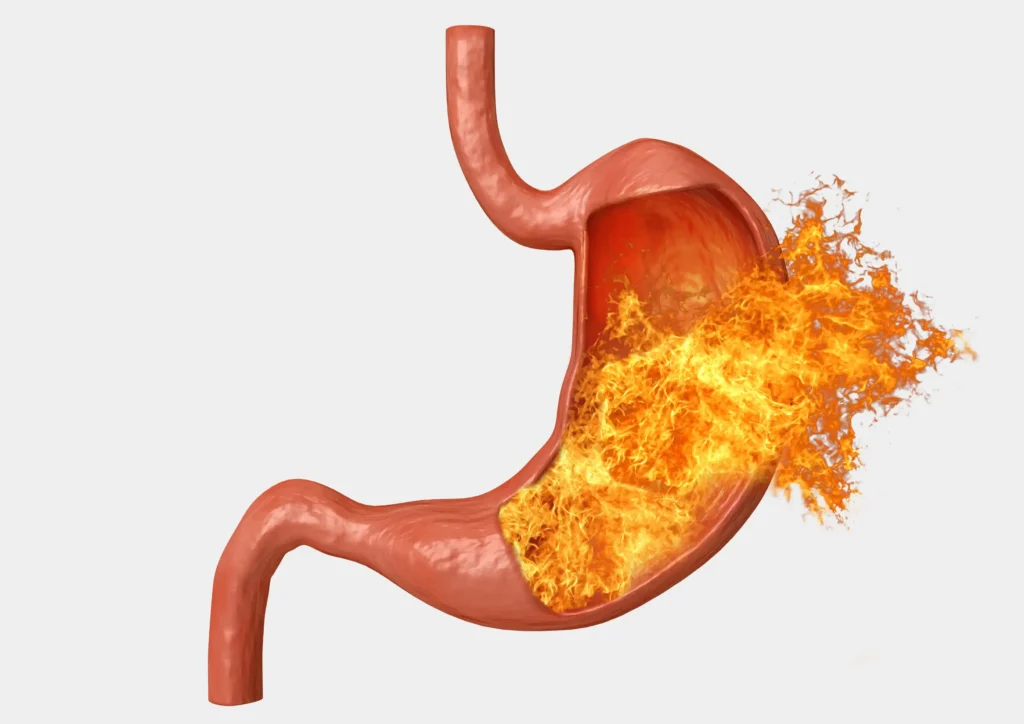
Gastritis occurs in our body when there is inflammation, irritation & erotion of inner lining epithelium of gastric mucosa or stomach that make it red, swollen.The lining epithelium of the stomach is a protective and mucous-coated barrier.
The barrier usually protects the wall of the stomach from its highly acidic digestive juice that is necessary to break down food. When there is some weakness or damage to this wall, the acid starts to irritate and inflame its own epithelium.
What are the variations of gastritis?
Gastritis happens in the stomach when the inflammation of gastric mucosa takes place. There are so many variations of gastritis that can be acute or chronic (on the basis of duration),infectious or noninfectious and there may be histological appearance which is erosive or non-erosive in nature.In broad-term there are mainly two types of gastritis that includes:
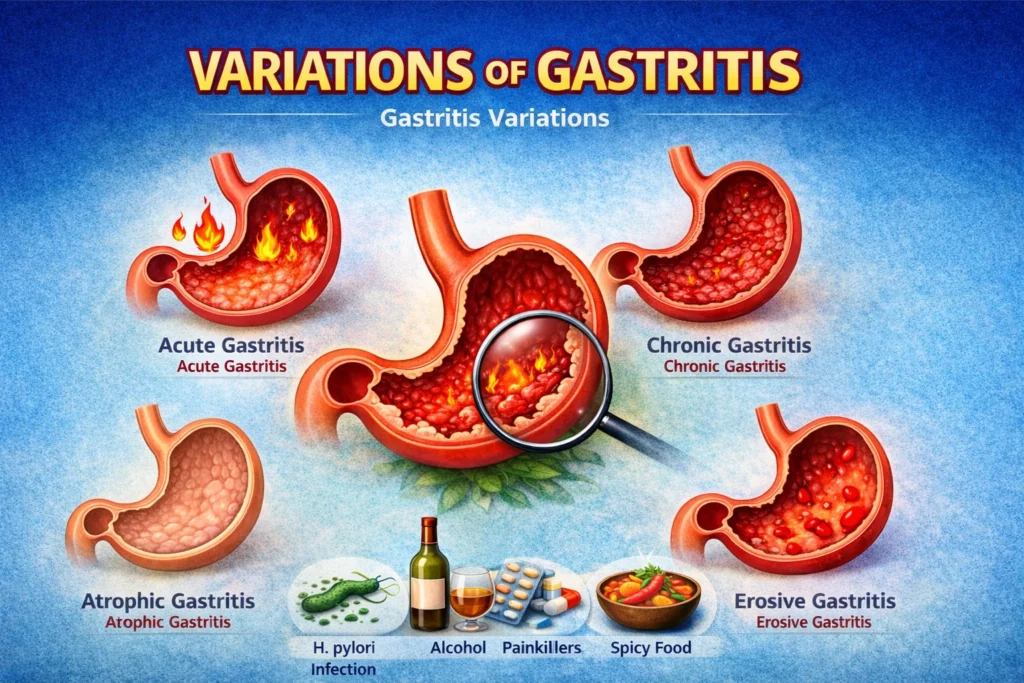
1. Acute gastritis: It is due to sudden onset of inflammation in the stomach. It may be temporary that extends from mild irritation to sevens form of erosion.
Acute erosive gastritis: It happens when a person consumes alcohol and NSAIDS for a long period of time undergoes some severe physiological stress like major burns namely as carling’s ulcer or head trauma namely as cushing’s ulcer.
Acute infectious gastritis: It is commonly due to bacterial causes like H. pylori or may be viral such as CMV in immunodeficient patients.
2. Chronic gastritis: It happens when long-term inflammation takes place that can lead to mucosal atrophy or intestinal metaplasia. It is again of two types. These involve:
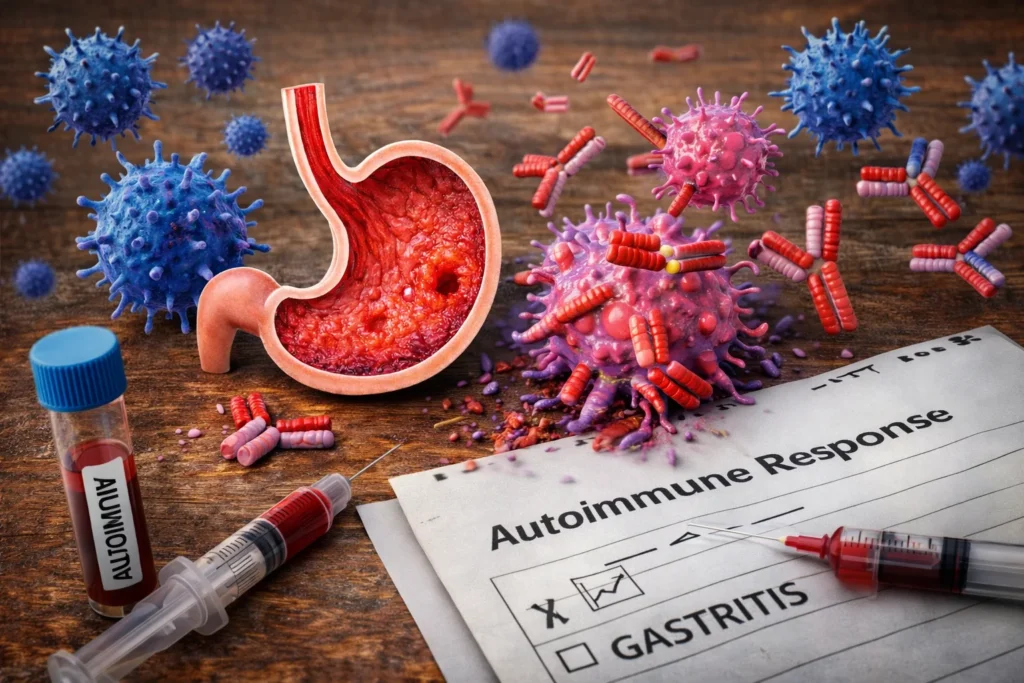
Autoimmune Gastritis (Type A): It actually affects the body and fundus of the stomach when the production of antibodies against parietal cell and intrinsic factor occurs at may lead to achlorhydria (Lack of stomach acid) and pernicious anaemia( B-12 deficiency)
H.Pylori gastritis( Type B): It initially involves an antrum but can cover the entire stomach over the course of time. It is due to H. pylori bacterium that creates an alkaline environment locally to survive and thus triggers a chronic immune response.
Morphological classification of Gastritis:
When doctors look through an endoscope,
they often categorise the condition as:
- Erosive: It shows visible shallow pits or erosions in living epithelium.
- Non-erosive: The epithelium may be thicker erythematous where the surface is intact.
- Atrophic type: the lining epithelium becomes so thin that doctors can see the vessels which underlie the epithelium.
What are the causes of gastritis?
There are a number of factors or causes that can augment inflammation, irritation of gastric mucosa and thus help gastritis.development. The causes of gastritis involve:
1.Infectious cause:
The main and primary cause of gastritis development is the bacterial infection (H. pylori).Though there is also some viral and fungal infection that can lead to gastritis.These involve:
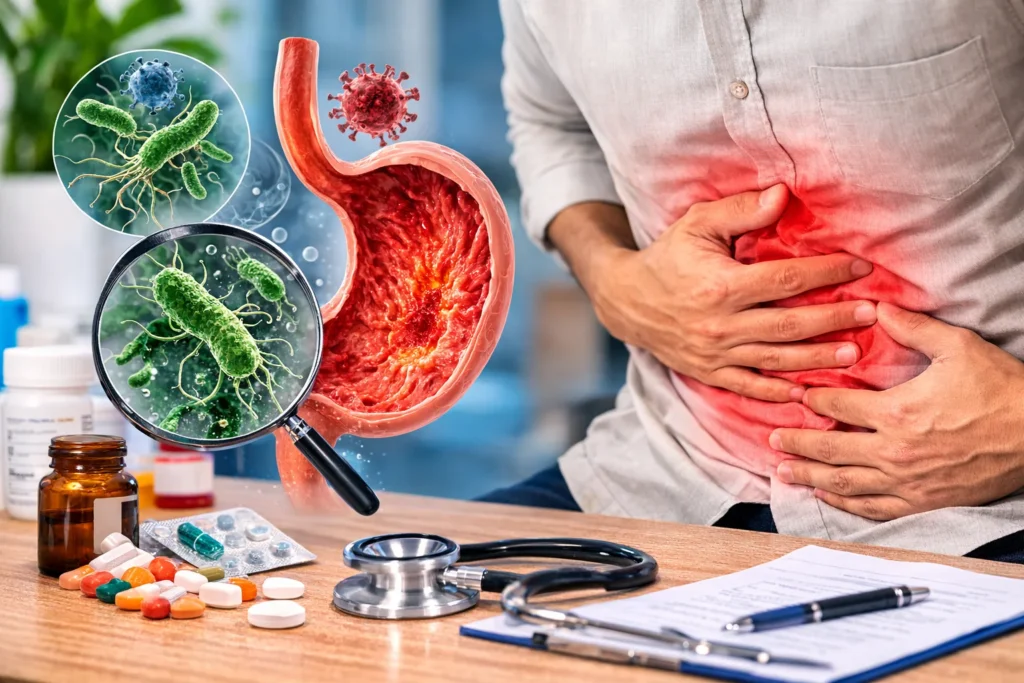
Helicobacter pylori: It is a spiral-shaped bacteria that has the adaptation capability to survive in the stomach acid.It mainly breaks down the protective mucous lining that allows stomach acid to reach out to the sensitive stomach wall. Thus it damages the wall that leads to chronic gastritis and peptic ulcers.
Viral and Fungal infection: The individuals who possess immunodeficiency are more prone to CMV on fungi like candida infection that can cause a special form of gastritis.
2. Certain medications and chemicals: Certain medications and substances can directly cause irritation of stomach lining and harm the body’s protective mechanisms.
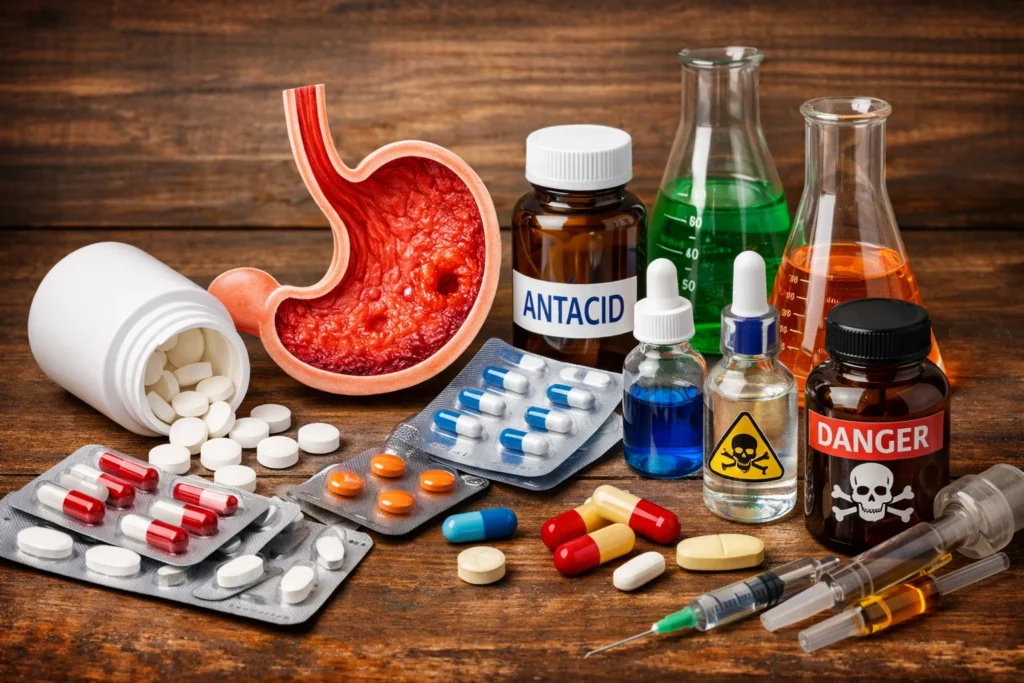
NSAIDs: When a person uses regular or excessive Non-steroidal Anti-inflammatory Drugs like (Ibuprofen, naproxen, aspirin). It can cause both acute and chronic gastritis.
Alcohol consumption: If anyone intake too much alcohol, it can burn, erode stomach mucosa and also makes it more susceptible to digestive juice that can result in gastritis development.
Bile reflux: In a normal physiological state, the bile flows into the intestine. But when any kind of blockage or obstruction occurs in bile ducts it backflows bile into the stomach and causes chemical irritation.
3. Physiological stress factor: When the body encounters severe trauma, it can reduce blood flow to the stomach mucosa that leads to stress gastritis. The conditions or factors involve major surgery, severe burn, severe head injury etc.
4. Autoimmune response: Sometimes the body produces antibodies against its own parietal cell of the stomach that produces Gastric acid and vit. B-12 production. However these damage then lead to gastritis and pernicious anemia due to vit. B-12 deficiency.
5. Some uncommon factors:
- Dietary factors: It is not the sole cause of gastritis. But foods that are highly acidic, spicy or fatty foods can assist or exacerbate gastritis development.
- Disease of digestive system: There is a disease namely Crohn’s disease that is the main culprit of granulomatous inflammation of the stomach.
- Cocaine intake: when an individual consumes excessive cocaine, it can cause severe vasoconstriction in the stomach and leads to damage or erosion of gastric mucosa.
How do I feel when I have gastritis?
The symptoms of gastritis can vary according to facts that depend on whether it is acute or chronic (develops gradually over a period of time). Though some individuals may remain asymptomatic until the condition progresses in a certain state. These symptoms involve:
1. Symptoms of dyspepsia : It is a very common sign of gastritis that is responsible for the irritation of the stomach and thus it hampers the digestive system.
Epigastric pain: It is one type of sensation which is burning in nature and the patient may feel it right in the middle part of the abdomen. Food intake may sometimes aggravate or relieve this pain temporarily.
Early satiety:Food intake may sometimes aggravate or relieve this pain temporarily.
The patient with gastritis can feel an abnormally full abdomen even though they take a few bites only.
Bloating sensation: The individual with gastritis may feel tightness on gas in the abdomen that may visibly swell up the abdomen.
2. Upper gastrointestinal features: As the inflammation of the stomach progresses, it may produce some symptoms that involve.
Nausea and vomiting: Nausea is a hallmark symptom in acute gastritis. The patients also vomit in acute phages and the vomit may be clear, green on yellow.
Frequent eructation: when excessive gas builds up in the stomach. It forces the patient to erupt the gas which may provide a temporary relief from pressure.
Indigestion: it is a general sense of discomfort in the abdomen that may create unpleasant taste in the mouth.
3. Symptoms of excessive emotions: When erosion of the stomach progresses further, it starts to manifest more severe symptoms that involve.
 Hematemosis: It happens when a person vomits fresh blood that is red, black in colour like coffee grounds.
- Melena:It means the passage of black, tarry stool that also smells foul. It indicates the digestion of blood that passed through the digestive tracts.
- Signs of Anemia: In case of chronic H. pylori gastritis or autoimmune gastritis , a person may develop iron-deficiency anaemia that often leads to shortness of breath, pale skin, fatigue,dizziness and lightheadedness.
4. Systemic features of gastritis
a)Loss of appetite: As people feel discomfort when they eat food, it reduces his desire to eat food further which can lead to unintentional weight loss over a certain period of time.
b)Hiccups: It is a less common feature, when persistent hiccups develop, it may indicate a sign of diaphragmatic inflammation in association with stomach inflammation.
When should I seek medical advice if I have gastritis?
As mild indigestion due to gastritis often resolves with rest and maintenance of a balanced diet. You should seek medical advice when the symptoms persist more than a week or longer or it can produce significant distress.
Immediate medical management is necessary if you face red flag symptoms that consist of severe abdominal pain that doesn’t ease up or if you vomit persistently. You can also experience black, tarry stool, due to GI bleeding that may look like coffee grounds.
Moreover unintentional weight-loss, difficulty in swallowing or fullness sensation in the abdomen after meal intake demands a professional evaluation to rule out more serious conditions or any kind of complication.
If you intake over-the-counter pain reliever or aspirin regularly with a notice of stomach irritation you should consult experts for safer alternatives and protective treatment.
Discover more here: Professional skin and care tips
How can doctors make a diagnosis of Gastritis?
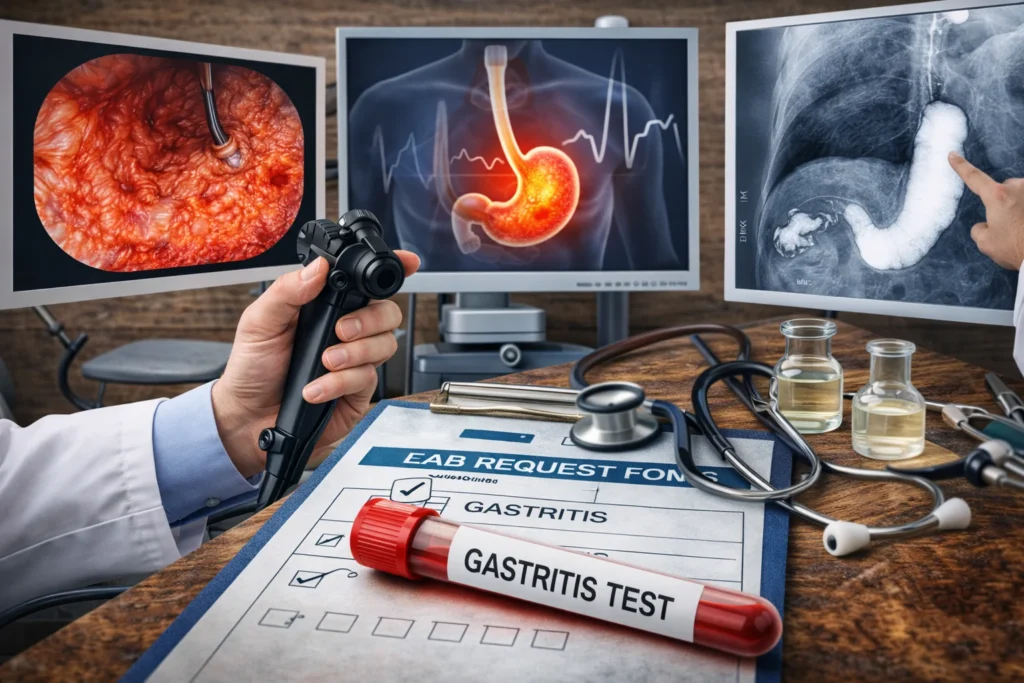
In order to diagnose gastritis, it typically involves a combination of clinical history, a physical examination and specific diagnostic test to confirm the inflammation of gastric mucosa. The more details of diagnosis includes:
1. Clinical evaluation:The first step is to go through the review of symptoms and potential factors that trigger gastritis.
Symptom pattern: onset of pain whether it is before or after food intake, alarming symptoms like weight loss, vomits persistently, passage of black tarry stool.
Risk factors: If there is history of NSAID use such as aspirin on ibuprofen, alcohol consumption or high stress levels.
2. Diagnostic tests: If the symptoms persist or alarming features exist, then several tests are necessary to reach a gastritis diagnosis.
These involve:
Test for H. Pylori :It is one kind of test that is non-invasive in nature like urea breath test and stool antigen test.It is a very useful tool to detect the bacterial cause of gastritis development.
Endoscopy:It is an invasive module that is helpful for the visualization of the stomach mucosa directly. This remains as the gold standard for gastritis diagnosis.
Biopsy:In order to perform biopsy,a small piece of sample is necessary. Doctors usually take this tissue sample when a patient undergoes an endoscopy. This sample then demands histopathological examination to detect the inflammatory cells and it can also rule out any kind of malignancy.
Blood test: A complete Blood test (CBC) may be helpful to check anaemia or to detect vit. B-12 deficiency due to autoimmune gastritis.
Importantly, the base of diagnosis doesn’t depend on symptoms only as many patients with histological gastritis become asymptomatic.In contrast, some patients with severe symptoms may have normal gastric mucosa appearance.
What measures should I take to treat gastritis?
The treatment of gastritis effectively requires two fundamental approaches. The first one demands the reduction of acid that irritates the stomach mucosa, and the second one focuses on the identification of the underlying cause like (H. Pylori infection, frequent use of NSAID such as Ibuprofen, aspirin). The overall treatment approaches involve:
1. Medicines for gastritis :There are some medicines that are helpful for the neutralization of stomach acid.However it also reduces new acid formation in the stomach which allows gastric mucosa to heal rapidly.
Proton pump inhibitors (PPIs): These are highly effective at switching off the cells that release acid to the stomach. It involves omeprazole, Lansoprazole, and pantoprazole.
H2-Blocker: It mainly focuses on the reduction of acid secretion by peptic cells into the digestive tracts that relieves gastritis pain and also encourages mucosa to heal rapidly. Examples include famotidine and cimetidine.
Antacids: It neutralises fuel gastric acid and provides immediate and short-term relief from gastritis.
Antibiotics: If a breath, stool.on blood test ensures the presence of H.pylori bacteria, it is better to complete a combination of antibiotic courses for 9-14 days which involve Clarithromycin and Amoxicillin.
2. Dietary modifications:
Any food that you can take either alleviates or aggravates the inflammation of gastric mucosa. You should avoid foods that irritate the lining epithelium of the stomach. These irritants include spicy food (chili powder, hot pepper), acidic foods (tomatoes, citrus fruits), Alcohol, Caffeine, Fatty on Fried foods that slows down digestion process.
In contrast, you should intake foods that can soothe the inflammation. These neutral foods involve high fiber foods (whole grains, beans, vegetables), low acid food(banana,water melons), probiotics like low tut yogurt, lean proteins (chicken breast, fish, eggs) moreover you should also take small meals frequently in the stomach.
3. Lifestyle measures:
Some habits are necessary to reduce inflammation. Implementation of these habits ensures long-term recovery. These habits or measures involve:
Review painkiller intake: If you regularly use NSAIDS, then you should consult a doctor and switch to acetaminophen (paracetamol which is generally not an irritant to the stomach).
Manage stress: High psychological conditions can produce excessive acid production. Mindful breathing practices and regular physical exercise is helpful to overcome stress.
Smoke free lifestyle:when anyone smokes,it actually destroys his stomach’s protective layer which is further responsible for gastritis development .
What complications may arise from Gastritis?
The inflammation of gastritis mucosa, namely gastritis starts with a simple case of indigestion.When it remains untreated, it can lead to more serious structural damage of the stomach. The complications that can arise from this condition involve:
1. Stomach ulcer: As the lining epithelium of the stomach acts as a protective shield, gastritis make this shield thin. When the acid in your stomach destroys the mucosa completely, it creates an open sore or ulcer and also causes sharp bunning pain especially in an empty stomach.
2. Internal bleeding:If an ulcer is severe enough to damage the vessels, it can bleed internally which can happen gradually or quickly (a medical emerges if you vomit fresh blood ok notice black tarry stool, you must consult a medical professional.
3. Pernicious anaemia: In chronic autoimmune gastritis, the gastric mucosa is so damaged that it becomes hard for your body to absorb Vit.B-12 from food and result in Vit. B-12 deficiency pernicious anaemia
4. Perforation: In some extreme cases, the ulcer can eat up the whole thickness of gastric mucosa and creates a condition namely as perforation. It can also allow bacteria and food to leak into the abdominal cavity that results in massive infection (peritonitis). It demands immediate surgery.
5. Gastric outlet obstruction: when long-term inflammation of gastric mucosa persists, it makes the inner thickness of the lumen due to excessive scar tissue formation. Thus it physically blocks the narrow passage where the stomach connects with the small intestine.
For this reason, food can’t pass through properly, which leads to vomiting frequently and patients feel fullness in the abdomen even after a few bites.
6. Malignant or cancer transformation: of gastritis is due to H. pylori infection, it makes the gastric mucosa atrophic and thus forces the stomach to change fair structure. Luckily most people with chronic gastritis do not get cancer rather it develops stomach tumors due to persistent brighter untreated inflammation.
The bottom line
Gastritis is a very common but painful condition worldwide that ranges from sudden sharp stomach aches to long-term discomfort. As things like infections (H.Pylori), certain painkillers and poor diet are the main culprits, the good news is that it is highly manageable.
In order to heal gastritis properly, it requires a combination of a balanced diet, better lifestyle habits, and most importantly the expert’s medical advice. If you try to fix this problem by yourself or ignore the pain, it can then lead to bigger health issues.
The smartest thing that you can do is to visit a gastroenterologist who can pinpoint what’s wrong and provide you a proper recovery plan. The adaptation of healthier daily choices with professional medical care can ensure you fast recovery and general well-being.