
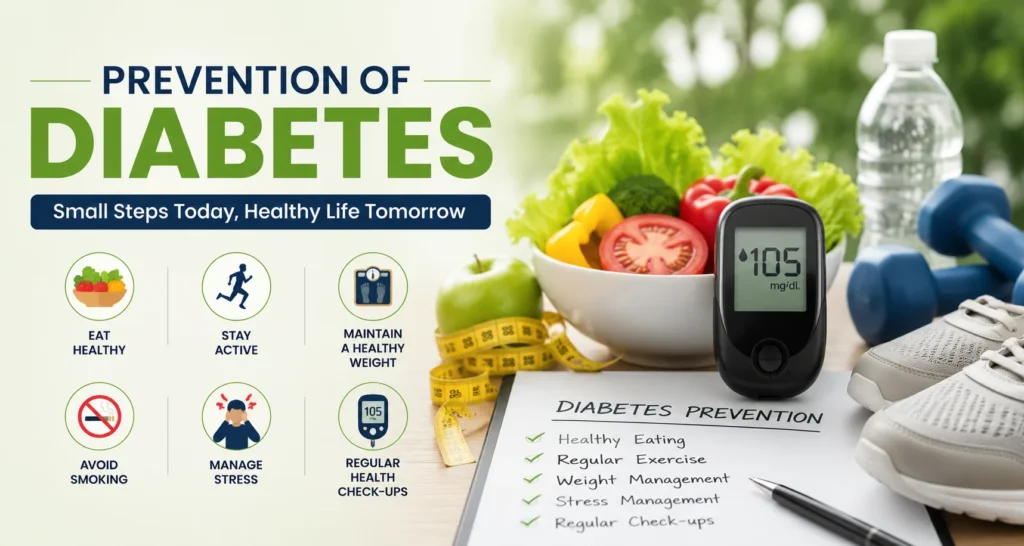
The New and Emerging Challenges of Diabetes prevention in public Health
Introduction: The reason behind the prioritization of Diabetes prevention in public health.
Diabetes truly is no longer only a personal health problem in our life. It has become one of the principal public health hurdles in the recent modern world. It not only affects families, workplaces, schools, hospitals but also our economics and entire community as well.

With the increase in the number of diabetes cases in a population, the pressure on the daily health system also surges as diabetes helps development of other major diseases such as heart disease, stroke, kidney failure and sometimes blindness with nerve problems.
The recent report from WHO indicates that there have been about 600 million increases in diabetes cases in the past 33 years which shows how it became a worldwide or global health problem.
The prevention of diabetes is mandatory in the modern world as we can delay or prevent the onset of type 2 diabetes through healthier lifestyle, sunscreen the disease early with supportive care and proper public health policies However prevention of this disease is not as simple as we think.
It is not enough to tell people to eat better and also have routine exercise on a daily basis. If we want to achieve the public health goals, we need to deal with preventies, food prices with proper urban closing for safe exercise and also try to improve the poor health education.
In this article we try to explain the challenges of diabetes prevention for the betterment of public health in a simple and easy way.
How simply we can describe diabetes
Diabetes is one. Kind of condition which can occur in long term duration that usually affects the body’s normal blood sugar uses. As we know glucose is an important source of energy, but It eventually needs a hormone, mainly insulin to enter it into the cells and thus control the blood glucose well.
When our does not properly manage the production and uses of insulin, it will then end up the rise of blood sugar. With the course of time, the rise of blood sugar, above normal. It gradually damages the blood vessels, nerves, pyes, kidneys and also the other important organs.
The simple look at diabetes explanation
The elevation model of diabetes preventions In order to understand the prevention of
diabetes, we can simply imagine public health,with five challenges that interlinks with,
one another.These are:
1. The contest of lifestyles It usually involves the facts that people nowadays eat-more
unhealthy foods and they move less as well.
2. The challenges of environments we fail to design our communities in such way that
ensures us a healthy life.
4.the dispute of inequality: there are higher risks for poor people and for these people.
whom our society marginaliCancer4. The awareness demand. Actually there man
people exist who do not understand that they are at high risk.
5. The policies obstacles: The prevention of diabetes demands actions beyond hospitals and clinics.
This framework or elevation models indicate that the prevention of diabetes is not only an individual approaches but also it is all about the conditions that associates this disease
development such as it involve how people live, work, study, shop, travel and receive the
proper care.
First challenge:The widespread problem of unhealthy diet
This unhealthy diet problem remains as one of the biggest hurdles of challenges in the prevention of diabetes that demands a modern food environment.There are so many unhealthy foods which are available.In many different communities that are cheap and thereby easy to consume.

In recent years sugary drinks, fast food, mini snacks and many other refined carbohydrates which are much more accessible than fresh foods, vegetables as well as whole grains.
The WHO clarifies unhealthy diets as a major factor for disease and disability development,
On the other hand, healthy diets ensure the protection from non-communicable diseases that involve diabetes, heart disease and stroke with cancer.This problem is not only about the individual choice per person. As a person may want to eat healthy food but he may encounter several barriers. Healthy foods can also be very expensive.
Moreover, work schedules can also force people to cook individually. The constant advertisement of sugary snacks also tunes children to eat them in some communities, people may find it very difficult to get nutritious food.
Second, physical inactivity became the new normal.
Another major hurdle or challenge nowadays is lack of physical inactivity. Modern life makes people move less as many people sit for long hours in schools, work, or at home. The main reason behind it is they depend on cars or motorcycles to move from one place to another.
Children spend too much time on the screen where the adult remains tiresome and unsafe to exercise after work. The WHO suggests adults to perform 150 minutes of moderate to intensity exercise each week.
Regular physical activity ensures our body to use insulin better, supports healthy weights with improvement of mood and thereby reduces the risk of type 2 diabetes.However it is not good enough to tell people to do exercise if the environment doesn’t allow them to do so.
There are many neighbourhoods that lack proper packs, sidewalks, sports, facilities with bicycle lanes. There also remains safety concerns for women, children or older adults, people with disabilities also lack exercise space as their demand.
Third challenges: obesity and weight gain remains a complex health issue.
The excess body weight stands as one of the important risk factors for type 2 diabetes. That is why we should discuss it carefully.Actually public health should not shame people.Many factors that comprise diet, physical inactivity, sleep, stress, genetics as well as cultures influence weight gain.
The WHO signifies healthy body weight, regular physical activity, healthy diet as well as avoidance of tobacco for the prevention of type 2 diabetes.But in the real life scenario, people find it difficult to maintain healthy weights as they live in an environment that encourages to eat excessively and conversely discourages tho movement.
A strong public health should focus solely on support, not on the blame of the factors that help people to be healthier when we can change the environment around them. For example schools can offer healthy meals, workplaces can provide walk breaks.
Clinics can also counsel weight management to the people. The most important thing is that the government can also improve and implement food policies.
The unawareness of the people about their risk involvement.
One of the most serious hurdles or obstacles of diabetes prevention is that it can develop silently in an individual. The possible features may sometimes be mild that can take longer time to appear, some people actually discover their diabetes involvement after the onset of its complications.
The WHO suggests that early diagnosis of diabetes is very much important with regular check ups and blood tests that can detect diabetes early. Prediabetes remains one of the major concerns as it means the sugar level in the blood is much higher than the normal requirement of blood glucase level to detect diabetes.
That is why people with prediabetes stay at higher risk to develop type 2 diabetes but luckily this progression is not fully inevitable. The public health programs need to screen the diabetes tests more easily as well as accessible.
Many places or organisations can offer screening such as clinics, schools, community centres and mobile health units. Eventually the health workers can also identify the high risk groups like people with family his excess weight, high blood pressure and older
age with a history of gestational diabetes.
The inequality barrier that makes prevention harder
Diabetes does not always affect all communities equally. Families with low income often face
higher risk as they possess less access to the healthy fuad, sate places to a exercise and
preventive health care as well.
Therefore it also lacks proper health education and affordable treatment. The WHO recently reported that the prevalence of diabetes has risen more rapidly in the low and middle income countries than in the high income countries and there also exists lowest treatment coverage in the middle income country.
This creates a major public health barrier as it makes people least ascessible who need
prevention the most. For example, a healthy wealthy person can be able to buy fresh food, join a gym and also visit a doctor regularly.
In contrast, a low income person may work for long hours,I live in an unsafe neighbourhood and rely mostly on cheap unhealthy food. Moreover they delay medical cane because of cost.This is why diabetes prevention must include equality.
The government and the authorities should prioritize vulnerable groups in rural areas, low-income neighbourhoods and ethnic minorities as well. Prevention should not only be available for those people who can not but also it should be accessible for everyone.
The Human toll of poor Prevention
When we can not fully prevent or control diabetes.It eventually can create serious hurdles or problems.Diabetes can actually damage blood vessels in the heart, eyes , Kidney as well as nerves. Moreover it increases the risk of heart attack, stroke,Kidney failure and vision loss with foot ulcers.
The human cost is not solely for the medical Cause,.A person with diabetes may face
obstacles to use daily medications, maintain proper diet control, doctor visit problem due
to financial problems.
Families may forcefully spend money on the treatment rather than invest on education, food and housing, the healthcare provider may become overwhelmed by some preventable complications.
prevention actually reduces the sufferings of these conditions before it begins. It is always
be wise to prevent type 2 diabetes first rather than treat the complications later.
Effectiveness of preventive strategies
Although the obstacles of challenges may be serious to overcome, but prevention is still
possible. The diabetes prevention programme showed us that the lifestyle intervention
can significantly reduce the risk of developments of type 2 diabetes among these people who are at high risks in the original trial.
It indicates that the intensive lifestyle intervention can reduce the incidence of diabetes upto 58% in comparison with the placebo.The CDC’S National diabetes association arranges a prevention programme whose main focus is evidence-based lifestyle change.
It mainly uses professional lifestyle coaches group support, healthier diet with stress reduction and also involves long-term behaviour change Instead of quick fixes.This evidence is much important as it indicates that prevention is not just an idea. It can only happen when people can receive support and realistic help.
The Five Domain approaches for diabetes prevention
There is a useful way that expert design diabetes prevention prevention is is among the five
domain approach model. Each domain approach represents one level of action. These comprises:
The Home: prevention first begins with the daily habits families (an support healthiest
meals, reduce sugary foods, limit screen time. Moreover they can be encouraged to walk
more, improve steep patterns and can talk openly about health. Importantly, parents can teach children healthy habits early.
The School: Schools can prevent future diabetes as they can offer physical education
healthy meals, limit the supply of fast foods and also provide nutrition education. Children
actually learn days, then they carry it to adulthood as well.
The workplaces: Adults usually spend much time on work everyday. Workplaces can support prevention by the way that they can provide breaks for a walk, healthier cafeteria choices and also they can arrange wellness programmes with stress management and regular health screening.
The community: Communities can easily create a group to walk everyday, health clubs, public awareness events and farmer’s markets with community gardens, and community health workers can eventually connect people to services.
The proper policy system: Governments can certainly create the conditions by the improvement of food labeling, control the unhealthy food courts for the prevention of diabetes. Moreover they can fund public health programmes and make preventive care affordable.
The overall five domain approach actually shows us that the prevention fully relies on one person rather it depends largely on every part of the society.
Importance of Health Education in diabetes prevention
Health education is one of the most important tools in the prevention of diabetes. However, the education should also be very simple, practical, and culturally appropriate as well. Many people actually don’t understand diabetes fully as they don’t know the causes, risk factors of it and also don’t know the ways how to reduce it.
By the achievement of proper health education, they can be aware of what diabetes actually is, what are the causes of it, when to seek professionals’ advice, and how families can easily support healthier habits.
Truly, health messages should always be free from fear and shame. Small changes during the delivery of messages and thus it can protect your health and your family’s future.
Community health workers’ value on public health
Community workers can play a vital and powerful role in the prevention of diabetes mellitus. This is because they can understand the local culture, language, beliefs, and the social barriers as well.
Moreover, they can visit homes, organize group sessions that help remind people about screening times, encourage physical activity and connect people with clinics. They are actually more useful in the rural area and the communities where doctors and specialities are not easily available and accessible.
Community health workers furthermore play a key role to reduce fears and mistrust as they can easily build relationships.However they need to train themselves properly with supervision, payment and supplies as well.
In a word, the public health system should not always expect the community workers to solve the problems and prevent diabetes alone.
Technology as a strategic tool in diabetes prevention
Technology can also support diabetes preventions Through the mobile, apps text reminders
telehealth and distal education system, These tools actually help people track steps monitor
Weight-receiving reminders can help them to join public health programs.
The CDC report suggests that we can deliveri diabetes lifestyle programs both in
person and online methods this mainly can make the support more flexible for different kinds of people.
However technology can also create inequality in the prevention programme. The main reason behind it is the every people in the society has not always have smartphone internet
access, digital skills or private time to use the online programs. This is why digital prevention should always be in Combination with community basis and face to face support.
Policies for better public health outcomes.
Diabetes prevention becomes more stronger when we support it by good policy some useful and effective public health policies comprises:
- The company must label a clean nutrition formula when they package their foods.
- Govt. should impose taxes or restrictions on glucose or sugar rich foods.
- Schools should always prepare healthy meal standards.
- Safe infrastructure to walk and ride bicycles.
- There should be adequate public parks and recreation spaces.
- The organization should regularly arrange workplace wellness programmes.Proper programs to train primary care workers.
In short, policies can be important because they reach the large population. A doctor may help one patient at a time, but strong public health policies can improve the overall health conditions for millions of people.
Intercultural Barriers and miscommunication
Culture can certainly influence food, body image, family rules, and health beliefs with treatment decisions. In some communities, we can see people with larger body size as a sign of health or prosperity.
In contrast,(women may have less freedom to exercise outdoors. Some people still believe that it is unavoidable if diabetes runs in the family.Public health programs must respect culture in order to promote health.
It is always wisest not to reject traditional food, rather programs can suggest healthier methods to cook it properly, eat the smaller portion and thus try to make it more balanced.
Instead of the acceptance of unfamiliar routine exercises, programs should focus on culturally acceptable exercises. It may involve walking in a group, arranging a group dance or community sports.In brief, prevention works better when it fits with people’s real lives.
The structural economic issues.
The prevention of diabetes also faces economic barriers. Healthy foods, gym access, medical check ups and transport to clinics may cost extra money. In case of low income – families, immediate needs like rent, food, school fees come first before preventive health.
At the same time, they don’t treat diabetes, it can become very expensive for families and for the health systems as well. Costs may comprise medicines, hospital visits, dialysis,
wound care surgery and lost work productivity as well.
This is why we should consider prevention as an investment, not in luxury. If we fund prevention today, it will reduce costs and complications in the future.
Prevention across all stages of life.
Diabetes should not always begin, when someone becomes overweight and older. It should start as early as possible in life and continue across the ages.
At the time of pregnancy, good maternal health can reduce the risks for both mother and child. In childhood, healthy food, physical activity, and less glucose rich food intakes can build strong-habits.
In case of adolescence Schools also can ensure young people to and their lundalistand nutrition, exercise body health as well. gr the adulthood, work-places and clinics can support to Screen the diseases, and lifestyle changes.
In the older age, community programs ensure people stay active and help connect- socially.
The life-course approach is powerful as it can prevent Tusk for diabetes development silently over many times or years.
Prevention that fits real life
One mistake in diabetes prevention can make health advice too strict. People may puzzle if they think they must completely change their life overnight. Public health messages should focus largely on small and realistic steps. These involves:
• People need a regular walk for 10 minutes after meals.
• They should always add one vegetable to their meal.
• Always try to choose smaller portions of food
• People should sleep better and also reduce tobacco use
• They should join a group for proper support.
Conclusion:
The new emerging hurdles of diabetes prevention is complex, but it is not fully hopeless. We can luckily prevent or delay type e diabetes through proper healthy diet, physical activity, healthy weight management with the avoidance of tobacco and a supportive environment.
However the prevention of diabetes can not rely on individual willpower. For this prevention, people can afford healthy food, safe places to move, clear health information and strong communities with fair public policies.
The future of diabetes prevention depends largely on the transition from a treatment only mindset to prevention-first mindset. Hospitals and proper medicines are important but they should not be the only response to handle this situation. Public hearty must act earlier and should be close to people’s daily lives with greater attention to inequality.