

An Overview of Depression and Anxiety
Depression and anxiety both are common mental health conditions in our day to day life. Almost everyone in his life faces some degree of depression and anxiety. As it hampers our quality of life. But proper treatment guidelines and counselling can treat or improve depressed and stressed mental condition.In this content, we try to cover all the treatable medical advice and proper guidance of depression and anxiety.

What actually depression is?
Depression may be defined as a mood disorder where the main symptom is a deep, persistent “bad” feeling or loss of interest in daily activities . This low feeling or loss of interest is often called dysphoria that covers being sad, down, lack of interest to distinguish the emotion from actual medical diagnosis.
Categories of Depression
According to DSM-5 Classification.The Categories of depression includes:
1.Major depressive disorder.
This is a major severe form of depression which is defined as the feeling sad, low or lack of interest in work most days at least for two weeks with sleep disturbance and change in appetite as well.
2.Persistent depressive disorder. It is one type of depression which is mild or moderate in severity and it may last for at least two years. It is a less severe form of depression quan major depressive disorder.
3.Disruptive mood dysregulation Disobedient
(DMDD). It actually consists of Chironic inevitability and anger problems in children that occur frequently. Home the symptoms begin before the age of 10.
4.Premenstrual dysphoric disorder (PMDD).
It is actually related to the onset of periods in women. Mood symptoms like extreme irritability, anxiety are present here that may improve after a few days from the onset of menstruation.
5.Depressive disorder due to medical reasons:
Some medical conditions can also be the cause of depression as it brings changes in the body and mind to some extent.Diseases like hypothyroidism, heart disease and parkinson syndrome are related to depression. However the treatment of underlying condition may bring improvement of depression as well
What are the symptoms of depression?
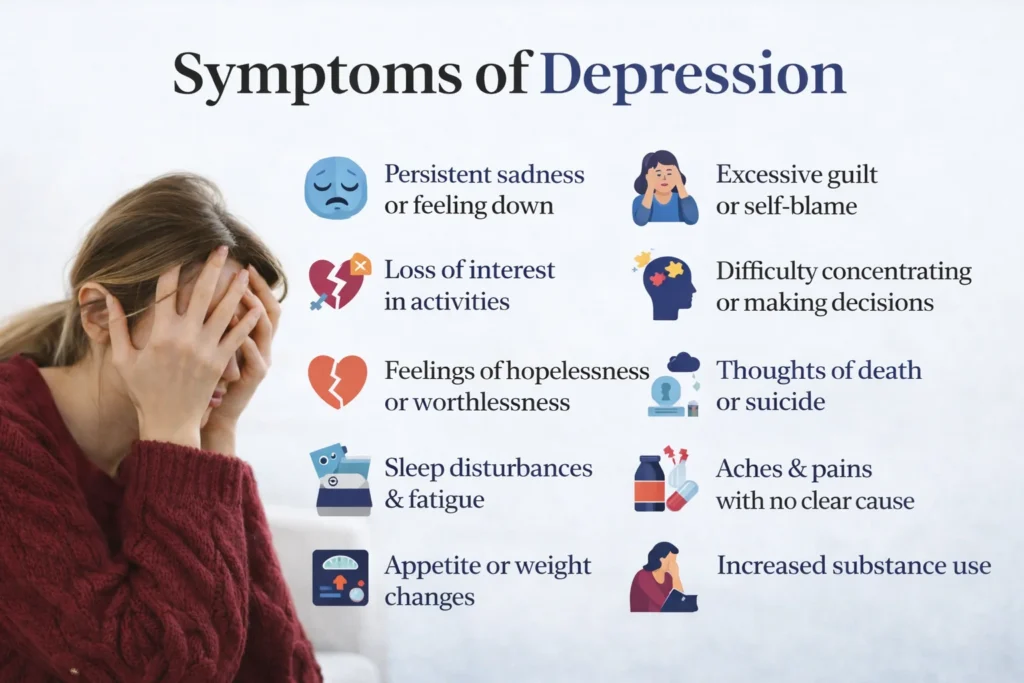
A depressed person may experience a variety of symptoms that mark a clear shift from their normal behaviour and it lasts at least two weeks. The main core symptom is a persistent low mood that remains with the person nearly most of the day.
The mood rarely changes or does not lift when the circumstances improve.It also consists of diurnal variation in mood and it becomes worse in the early morning and begins to improve with the progression of the day.
Anhedonia: It means diminished interest or pleasure severely in all activities of the day, (confirmed by the observation of others.)
Unintentional weight transformation occurs as you lose or gain a significant amount of weight and the change may be more than 5% of your total body weight in a month.
Disturbed sleep: Lack of sleep, namely insomnia and prolonged sleep pattern (hypersomnia)is relatively present in atypical depressive episodes.
Psychomotor agitation or retardation: It is actually observed by the other people that it consists of slowness of movement and restlessness sometimes.
-Fatigue or loss of energy.
-Reduced libido.
-Guilty feelings and occasionally feel worthlessness in a delusional state like guilty of being ill.
•There is also a reduction of thinking capability and concentration.
• Recurrent thoughts of death or suicide—(not ‘fear of dying’), which may or may not have been acted upon. Somatic symptoms Also called biological, melancholic (DSM-5), or vital. Include:
• Loss of emotional reactivity.
• Diurnal mood variation.
• Anhedonia.
• Psychomotor changes may also occur in depression.
What are the psychotic features of depression?
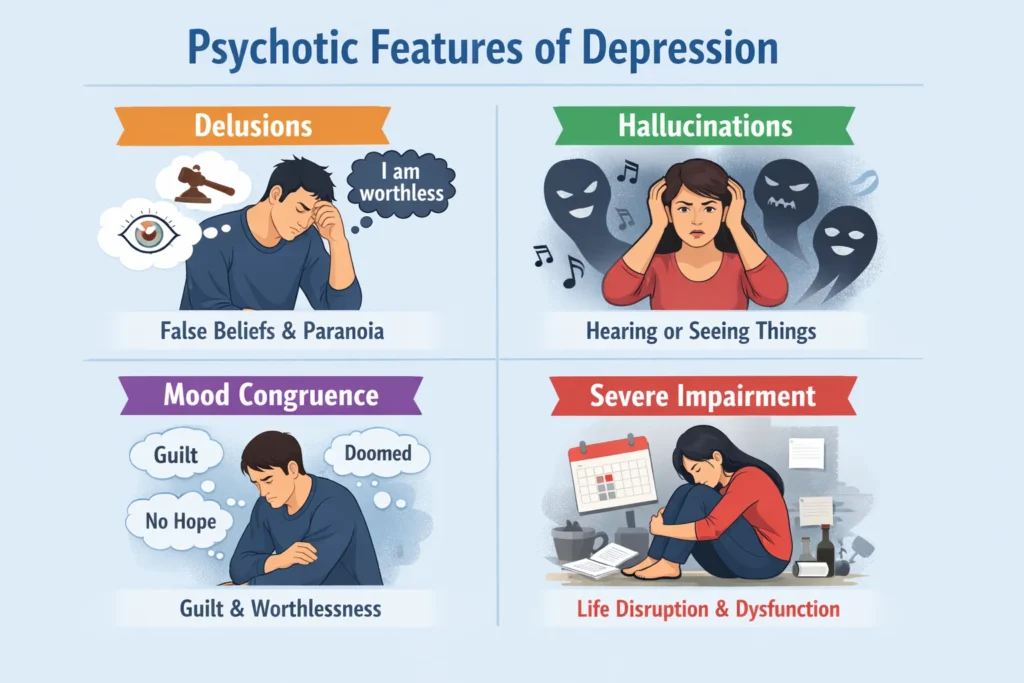
psychotic symptoms/features consists of:
Symptoms of Delusion: It involves- the patient thinks that he is poor; sometimes he feels of personal inferiority,guilty sensation over misdeeds; he thinks to be responsible for natural calamities like tornado, cyclone and flood,Think to be a cause of war and liable to punishment for this wrong deeds etc.
Symptoms of Hallucinations:It includes- auditory features like the patient thinks that he hears the sound of someone’s crying and screaming , sometimes olfactory symptoms such as he experiences the bad smell of stale foods,faeces.
Visual features like he sees demons,devil and tormentors in front of him.Moreover he frequently experiences nightmares. Thought of insertion/withdrawal, and delusions of control of nature are also present.
Other features involve:Significant anxious distress.,Catatonic symptoms, psychomotor retardation in severe form (depressive stupor).
What are the features of atypical depression?
There are some atypical or uncommon presentations of depression. These conditions state that the person’s mood may remain depressed but they are still reactive as they can temporarily feel better or positive experiences.
Physically this condition consists of hypersomnia(when a person sleeps more than 10 hours in a day) and hyperphagia that means the person overeats which ultimately leads to weight gain. Another important sign is laden paralysis that is a heavy, weighted down sensation in the arms or legs which lasts for several hours in a week.
Oversensitivity to perceived rejection, Other infrequent symptoms may include: initial insomnia, rather than EMW; reversed diurnal mood variation (better in the morning); severe motor retardation; and absence of feelings of guilt.
Sleep deprivation associated with depression
While sleep disturbances like lack of sleep namely insomnia and hypersomnia(prolonged sleep) are the main symptoms of depression,in about 60% of patients this sleep disturbance usually improves over time progression. However, these benefits are typically transient and die away,after the next full night of sleep.

To create a more long-lasting impact, the most effective strategy involves combining sleep deprivation with antidepressant medication or lithium, which helps sustain the mood-lifting effects and provide acceleration of the overall treatment response.
Risk factors for depression
There are some risk factors that triggeres the depression. These includes;
Genetic :heritability estimates range from 17% to 75% (mean 37%), and families also have high rates of anxiety disorders and neuroticism, suggesting a shared genetic basis.
Difficult early life events such as when a person loses his parents though it varies on different studies. Other significant factors involve a lack of proper parental care, the experience of childhood sexual abuse as well as the struggle to live with parents who drink alcohol and posses anti social behaviour.Note:. High intelligence and one good adult relationship are protective and increase resilience.
Several factors can influence the risk of the development of depression that include specific personality traits like high anxiety, impulsivity or possessive thoughts. Social and personal circumstances also play a major role such as men are often at high risk because of their divorce or separation compared to a married person or a woman.
As unemployment promotes the development of depression, it also emphasises that the lack of a close, trustful relationship is a more consistent risk factor. Moreover if a person experiences a major life loss, or suffers from long-term painful physical illness, it will significantly increase vulnerability of the development of depression.
Neurological disorders (e.g. Parkinson’s disease, MS, stroke, epilepsy) have higher risk (perhaps due to ‘shared’ pathology). Higher rates are also noted in post-MI, diabetic, and cancer patients, although family or personal histories of depression are important determinants of occurrence.
How can I diagnose depression?
The diagnosis of depression is mainly based on a good psychiatric history and physical examination of the patient.
In addition to focused questioning on mood ( Abnormal mood, Asking about depressed mood).It is useful to calculate the rating scale of depression different types of rating scale.
The people who deal with depression frequently find that they struggle with their memory or have a hard time to stay focused on work. When this condition and memory problem becomes serious, doctors may suggest more in-depth brain function tests to get a better outlook of the patient’s condition.
Course and prognosis points of depression
Depression may occur at any age, although late-onset depression may be milder, more chronic, more likely to be associated with life events, and more likely to have a subclinical prodrome.
Depressive episodes usually last between 4 and 30 weeks for mild and moderate cases and at around six months in severe cases. Almost a quarter of severe cases may last up to a year. If a person experiences recurrent depression, the episodes become shorter that typically last 9 to 16 weeks.
However a ‘ 10-20% of patients face chronic symptoms that persist more than two years.Most people who encounter one episode will have another later in Life. It also increases the risk of recurrence about 60% after 20 years, though it is hard to predict the exact time of future episodes.
Risk of recurrence is greater when there are residual symptoms after remission (about a third of cases), e.g. low mood, anxiety, sleep disturbance, reduced libido, and physical symptoms (headache, fatigue, GI upset).
There is good evidence that modern antidepressant treatments impact significantly upon all these quoted figures, reducing the length of depressive episodes; and if treatment is given long term, the incidence of residual symptoms is less, there are fewer recurrent episodes, and chronicity may be as low as 4%.
What is the rate of suicide in depression?
The people who deal with severe depression face a much higher risk of suicide rather than the general population. Especially those people who demand hospital care possess the highest rate between 12% to 19%. Though these risks are significantly lower for less severe cases, the overall death rate in all populations stays higher than the average rate.
However besides suicide tendency accidents, substance use and physical health condition like heart disease, severe lung infection or any fatal diseases also increases the mortality rate of depression.
Prognostic factors of depression
There are some prognostic factors related to depression. These include:
Good outcomes center on acute onset, endogenous depression, and earlier age of onset.
Poor outcomes focus on : insidious onset, neurotic depression, elderly, residual symptoms, neuroticism, low self-confidence, comorbid conditions like alcohol or drug problems, personality disorders, physical illness, reduction of social assistance.
Suicide risk actually increases in a depressed person when a patient starts to feel healthier.This happens due to regaining the physical energy that helps to carry out an attempt before their mood recovers fully.
Management of depression
Management principles and outpatient treatment involve Initial assessment, History: taking of Any clear psychosocial precipitants,Current social status.
When depressive symptoms are mild in nature and possess a history of recent onset of a more severe mood disorder, most guidelines suggest refraining from use of antidepressants. Close active monitoring is advised.
Sometimes it depends on the preference of the patient , use of individual guided self-help (based on CBT principles), computerized cognitive behavioural therapy (CCBT), or structured group physical activity programmes are essential in this case.
Antidepressants are generally necessary for those people who have a history of moderate to severe depression or for those who deal with symptoms long-term.
In case of failure of other treatment options in mild depression, the doctor may suggest the introduction of antidepressant. For more serious cases of moderate to severe depression, medications provide the best outcome when the patient takes it along with other therapies.
What does anxiety disorder mean with categories?
Anxiety is an uneasy, scared feeling with nervousness when a person gets worried about something that may happen in future. It also involves your body reaction like sweating palpitation even when there is no immediate and visible danger.
The categories of anxiety disorder involves-
Anxiety/phobic disorders consist of panic disorder, agoraphobia, GAD(generalised anxiety disorder), specific phobias of snakes, spiders, hypochondriasis, social phobia.
Stress-related disorders involve acute stress reactions, adjustment disorder, PTSD.
OCD. The unusual neuroses (i.e. outwith ‘normal’ experience)
Anxiety/phobic disorders: e.g. ‘non-understandable’ phobias (e.g. dirt, feathers), dysmorphophobia.
‘Hysterical’ conversion disorders.
Dissociative/depersonalization–derealization disorder.
Somatoform disorders.
Symptoms of Generalised Anxiety Disorder
Symptoms of GAD (present most days) • At least 6 months’ history of excessive anxiety and worry, with marked tension and apprehension about everyday events and problems (e.g. work or school performance).
DSM-5 criteria:In this criteria there must be at least three (or one in children) out of these symptoms involving Restlessness or feeling keyed up or on edge,Easy fatigue of behaviour, Concentration difficulties in work, Irritability, Muscle tension, Sleep disturbance.
ICD-10 criteria:This consist of at least four (with at least one from ‘autonomic arousal’) out of: these symptoms that include features of autonomic arousal like palpitations/tachycardia; sweating; trembling/shaking; dry mouth.,‘Physical’ symptoms—breathing difficulties; choking sensation; chest pain/discomfort; nausea/abdominal distress.
Mental state symptoms contain feeling of dizzy ness ,unsteady posture, fainting or lightheadedness, ; derealization/depersonalization features such as fear of losing control over oneself, ‘going crazy’ in behaviour , passing out, dying.
What are the general symptoms of GAD?
When a person encounters generalized anxiety, he may notice physical sensation like hot flushes, cold chills, numbness in arms and legs. It often invites physical tension that leads to muscle aches, pains and a constant sense of restlessness or an inability to relax.
The person often experiences agitation, mentally tense or permanently on edge sensation. Moreover he also feels a lump in his throat or faces difficulty in swallowing
Other—exaggerated responses to minor surprises/being startled, Concentration difficulties/’mind going blank’—due to worry or anxiety; persistent irritability; difficulty getting to sleep due to worrying.
How to treat Generalised Anxiety Disorder
In order to manage Generalized anxiety of disorder experts prefer a mix of therapy and medication. Psychological treatments often involve Cognitive Behavioral therapy (CBT) that helps people face their fears through exposure, learn relaxation techniques and the correction of negative thought processes.
Though therapy can be helpful, it is less effective for this specific disorder as the anxiety doesn’t always have a clear va initiation. To control the physical symptoms, the doctors may also suggest pharmacological treatment like Benzodiazepines that include lorazepam diazepam or alprazolam.
Mental symptoms are cured with buspirone. Here the effects may take 2-4 Weeks.
In depressive symptoms, SSRIs like Escitalopram and paroxetine and TCA like imipramine, trazodone are used.
Cardiovascular symptoms are managed with B-blocker. Sometimes Pregabalin and Antipsychotic drugs are used.
Physical: psychosurgery (very rare)—for severe/intractable anxiety.
What is panic disorder?
panic disorder is when a person faces panic attacks repeatedly and it occurs without any drug issue, health problem or any mental conditions. This process also initiates without any expectation. These attacks can happen several times in a day or rarely a few times in a year.
The people with this disorder often live in constant fear of the next attack. This thought process can lead them to change their behavior or avoid certain places entirely.
What is features of panic attack
Panic disorder often feels like a sudden physical emergency as it activates the body’s fight response. During an initial attack, a person may encounter a racing heart and also faces problems breathing normally. The body of the person may also shake or sweat. This process prompts a heart attack or respiratory failure because the physical signs like chest pain, dizziness,and stomach issues are so intense in it.
This also forces them to seek medical help. It is also important to monitor safety, as the intense distress of recurrent panic attacks may lead to impulsive thoughts of self-harm when they use alcohol to overcome depression and anxiety.
What is the management of an acute panic attack?
If someone encounters an acute panic attack, the first step is to stay calm and offer reassurance. because most attacks usually resolve on their own within 30 minutes. In case of severe distress, a doctor might provide benzodiazepines to ensure immediate relief. It also helps the person feel more confident and enhances the management process.
If anyone faces it for the first time, then the person must consult a medical professional to rule out any physical cause that something demands hospital tests. For the management of recurrent panic attacks, a person should seek a psychiatrist for better management.
How can i manage panic disorder
The management of panic disorder emphasises on the combination method that include both the pharmacological and psychological approcahes.Experts prefer combination method over a single approach to treat panic disorder.Choice of initial approach will depend upon patient preference, past history of previous benefit, costs, availability, and local guidelines.
Pharmacological: SSRIs are the primary choice. UK licensed options like citalopram (20-30mg), escitalopram (5-10 mg), paroxetine (10-40mg) are the treatment of choice. You should start the lowest possible dose and then increase gradually to get the best possible result. That may require up to 12 weeks.
Alternative antidepressants like SNRIs (venlafaxine). TCAs (imipramine, clomipramine) may be used.Benzodiazepines are not usually prescribed due to dependency issues. But they can provide immediate relief before the effect of antidepressant takes place .
Psychological:In order to manage anxiety and panic, experts typically use two main approaches. The first one focuses on the physical and behavioural side that promote relaxation training and anxiety management to calm the body along with exposure methods to help people face situations or places they fear.
In contrast the other focuses on the mental side that involves the issues to educate people about how their bodies react during a panic attack and help them correct their negative thought process.
How can i deal with depression
Actually, most people of the world encounter depression in their day to day activities of life.In order to cope with depression some measures need to follow. These involves:
– Always keep in touch with other people. Social contact can improve your depressed mood & families help you to overcome depression.
– Try to be always active and playful. Research tells us that if exercise everyday is not possible , then try to walk for 20 minutes every morning.
– Face the difficulties that you wint 10 avoid. You should always be confident in dealing with people.
– Avoid drinking alcohol too much, as it doesn’t help you to hide your emotions. Rather, alcohol won’t enable you to solve your problems.
-Try to maintain the regularity in sleeping.
If proper sleep pattern is followed for improvement of the mental status. Routine sleep can move away all your depression.
When a depressed patient needs hospital admission?
Hospitalization for depression usually happens when a person’s safety or health status is at stake. The most common reason is at a high risk of suicide or if there is any possibility of the person to harm others specially childrun.
Doctors also recommend hospital admission of a person who used to neglect their basic needs that result in significant weight loss. It is also necessary to admit when a person’s social system fails to protect him.
Finally, if the patient demands specialized treatment like Electroconvulsive Therapy or to monitor the patients with caution who hasn’t responded well to the standard treatment.
The bottom line
Anxiety and depression can be an intense feeling when you live with both conditions simultaneously. You may not be sure which condition you are possessing. Thankfully you don’t have to manage all those symptoms alone.If you take support from your closed ones, that may help you overcome the distress of life and provide you the relief that there are also a variety of treatment options available nowadays.
For the management of depression and anxiety, a medical professional can offer you advanced treatment protocol with identifying symptoms risk factors and serve you the best suitable treatment option for the betterment of your condition.