
How to Care for Sensitive Teeth: Your Ultimate Guide to Immediate Relief and Lasting Protection
Have you ever experienced that stinging pain when you consume something that’s either too hot or too cold in your mouth?
Tooth sensitivity happens when you experience that sharp shock in your mouth. And millions of people around the world suffer from it. Simply drinking coffee or having an ice cream can cause them so much pain. But there’s good news, none of you need to suffer from such pains. In this comprehensive guide, we will detail how you can take care of your sensitive teeth.
Emergency Action: Halt Sensitive Teeth Pain Instantly
How can I make this stop right now? That is the first thought that crosses your mind when the searing pain attacks you. These are the quickest and most effective instructions in the section, and you can follow them in your own home to immediately break the pain signal and get comfort.

Quick At-Home Relief
When the sensitivity happens, you have to soothe the irritated nerves. In addition, you have to gently wash the area. These tricks can give you quick relief.
- Rinse with Warm Salt Water: Mix half a teaspoon of salt in a regular glass of warm water. The water needs to be warm but not hot. Rinse your mouth by swishing the warm water around in your mouth for about 30 seconds. The warm water washes the area. The salt in the warm water reduces the inflammation and cleans the area effectively.
- The Topical Toothpaste Trick: Do you have any kind of toothpaste designed to reduce tooth sensitivity? Yes, you can use it as an “emergency fix” or spot treatment. Take a tiny amount of the toothpaste. Apply it directly to the sensitive tooth or gum line using your finger. Leave it there for several minutes without rinsing it off immediately. The solution will immediately begin numbing the nerve signals.
- Minimize Exposure to Extreme Temperatures: Refrain from consuming anything that’s too cold or too hot the moment the nerve sends out signals of pain. It’s always advisable to drink things that are at room temperature. In fact, such makes your nerve calm instantly. Also, it ensures that your nerve does not send out any such painful shocks in the future.
Discover more here: Caring for Sensitive Teeth
The Role of Pain Relievers
In some cases, the pain can come from inflammation of the gum or around the root of the tooth. For such a dull, persistent ache, an over-the-counter medication can alleviate it.
- Anti-Inflammatory Medications: If you notice any dull or throbbing pains, an anti-inflammatory drug like ibuprofen can help relieve the inflammation. Always follow the package instructions carefully. In fact, it is always advisable to check with your physician or dentist if you are taking other medications.
The Root Cause: Why Your Teeth Hurt
To put an end to the sensitivity for good, you first need to understand the cause. Tooth sensitivity is not an illness; it is a symptom. It means that the inside of your tooth is exposed. The following section will detail how your tooth works and why the inside of it gets exposed.
Anatomy: The Exposed Dentin Tubules
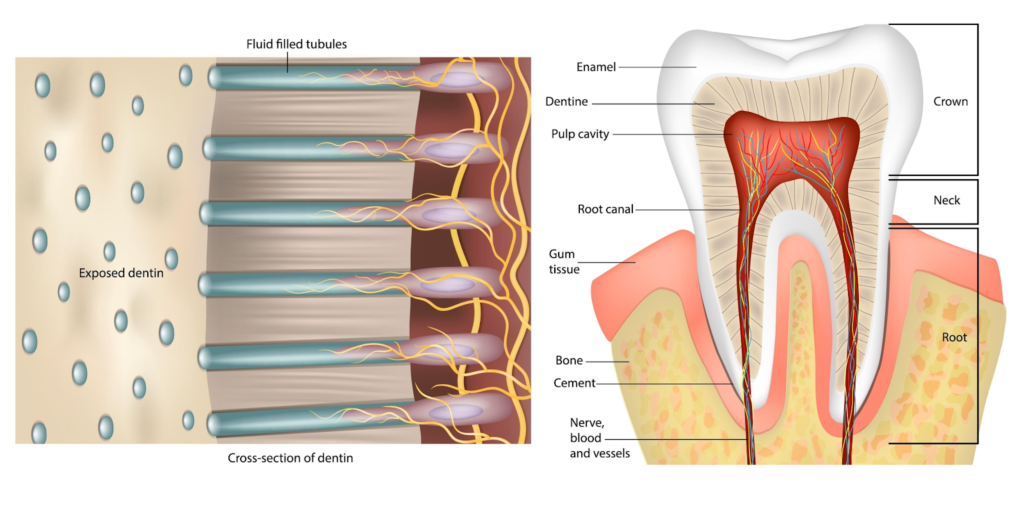
There are three main layers in your teeth. The first layer that you can see is the enamel. The dentin layer lies under the enamel layer. It consists of softer materials than the enamel layer and tiny tubules. These tubules connect straight to the pulp. The pulp is considered the nerve center of the teeth.
Under normal conditions, it’s protected by enamel and gums. But when the enamel erodes or the gums recede, the dentin layer becomes exposed. Now, when any hot or cold or acidic substance comes in contact with the dentin layer, fluid in the dentin tubules moves. It excites the nerves, and as a result, you feel that sharp, electric sensation.
Common Oral Health Issues-Causes and Myths
Several every day habits and dental concerns contribute towards reducing the protection your teeth get. Identifying these factors can help you tackle the issue at its root.
- Aggressive Brushing: Overuse of the toothbrush with hard bristles or brushing too vigorously can erode your enamel slowly and cause your gums to recede. In fact, aggressive brushing can cause your dentin to surface at the speed of lightning.
- Strongly Acid Foods and Beverages: Soda, citrus fruits, wine, and coffee are all very high in acids. Acids will erode the enamel layer gradually. The greater your consumption, the weaker your shield against cavities.
- Bruxism: Grinding or clenching your teeth can occur, especially when you are sleeping. Applying constant pressure to your teeth causes worn surfaces and micro-cracks in the teeth. The enamel layer covering the teeth becomes thin due to the constant grinding.
- Receding gums: Gum disease (gingivitis) or overly aggressive brushing can cause the gums to recede from the tooth surface, exposing the roots of the teeth. The roots lack a robust layer of enamel to shield them from damage.
My teeth all of a sudden feel sensitive. Why?
It can feel like the pain appears out of nowhere. Sudden sensitivity usually indicates that something has happened in the recent past that has compromised the barrier around the tooth.
- New Cracks or Chips: You could have damaged your tooth through the act of biting ice or hard candies. It takes merely a small crack for something cold or hot to reach the nerve immediately.
- Lost or Worn Fillings: When an old filling breaks or comes out, there is abrupt exposure of dentin.
- Recent dental work: It can cause some sensitivity when having a new filling or tooth whitening, but this should settle after a few days as the nerve stabilizes. If it persists, make sure to go to your dentist.
- Acid Reflux: Stomach acid flowing back up into the mouth frequently can cause widespread erosion; hence, many teeth can rapidly become sensitive.
Long-Term Daily Care: Your Sensitive Teeth Routine
Sensitive teeth care involves long-term prevention. After forming good habits and using the right materials, you can ensure that the sensitive teeth do not come back. The following section presents the daily care routine that must be adopted to ensure long-term protection.
Selecting the Right Products
Using your own toothpaste and brush matters most. Don’t settle for regular toothpaste; search out things designed especially for dealing with sensitive teeth. Seek these essential elements that work to prevent the ache signal.
- Potassium Nitrate: It takes action by entering the dentin tubules. It numbs the nerves in the tooth pulp, preventing them from responding to both hot and cold stimuli. In two to four weeks, you can enjoy its complete benefits since you will apply it regularly.
- Stannous Fluoride: It works in preventing the tubules by forming a protective barrier around them. In addition, it helps in fortifying your enamel against acids.
- The Soft-Bristled Toothbrush Is a Must: Discard any toothbrush that is marked medium or hard. Any brush with hard bristles will damage your enamel and push your gums back, which worsens sensitivity. If you have an electric toothbrush, turn your pressure sensor on and let the brush do all the work.
Mastering Gentle Technique
It’s not what you use; it’s how you use it. Using your brush in the incorrect manner can cause greater sensitivity than many other factors combined. You have to alter your brushing habits.
Proper Angle and Pressure
Hold your soft brush at a 45-degree angle to your gum line. Brush in small circular motions. Don’t brush using hard back-and-forth motions. Remember to massage your teeth and gums rather than sanding them.
Flossing without Irritation
Flossing every day helps prevent gum disease, which causes the gums to recede. Flossing needs to be done gently. To floss, curve the thread around the base of every tooth and push it gently against the gum line. Don’t push the floss against the gums sharply.
Diets & Prevention
Foods eaten and when you brush after eating these foods can help maintain or ruin your teeth. Be aware of the acidic foods.
The Acidic Triggers to Limit
Soda, sports drinks, juices like grape or grapefruit juice, and wine can erode your enamel. Just cut back on how many times per week you have these things. Or when you drink these, try using a straw so you aren’t hitting your front teeth.
Why You Must Wait 30 Minutes to Brush After Eating Acidic Foods
When you consume an acidic food or drink, the enamel in your teeth is being temporarily softened by the acid. Brushing your teeth at this point means you are brushing away enamel that has already been softened. After consuming an acidic food or drink, you need to rinse your mouth out with water. Wait at least 30 minutes before brushing your teeth after you have done so. This will give your saliva time to harden your enamel.
Professional Treatments and Lasting Solutions
But in case the issue can’t be resolved at home using the toothpaste and brushing, you will need to consult a dentist. In many cases, the issue of sensitive teeth can result from other issues such as cracks in the teeth or cavities. In such cases, your dentist can offer you other effective solutions at the office.
In-Office Procedures
Your dentist has specialized materials and equipment to deal with long-lasting sensitivity. These are much more protective than anything you can get at the drugstore.
Professional Fluoride Varnish or Gel
The dentists will make use of the highly concentrated fluoride varnish. It is applied directly onto the sensitive teeth. The high quantity of fluoride helps to seal the dentin tubules much effectively than the toothpaste. It helps to immediately increase the strength of the enamel.
Dental Bonding or Sealants
In cases where there is extensive root exposure due to gum recession, the dentist can apply a plastic sealant or white fillings to bond to your root surface. The main purpose of this process is to cover up the root exposure and prevent any contact with hot or cold objects.
Gum Grafting
It is a small surgery and can be considered as an option in cases when gum recession is at its worst. The procedure involves taking some gum tissue from any area of your mouth and using it to cover exposed roots. It helps restore the gum completely.
Advanced Options
In some cases, sensitivity can reveal issues with the nerve in the tooth itself. These modern treatments are employed when the pain experienced is sharply intense and persistent.
Root Canal Therapy
In cases where the sensitivity arises due to advanced cavities or infections that affect the nerve or pulp in the tooth, the dentist could consider root canal surgery. Root canals involve eliminating damaged nerve tissues in the teeth. It usually happens as the final means of treatment in cases of unwavering tooth sensitivity.
When to See a Dentist Immediately
Although most cases of sensitivities can be treated at home, there are other pains that are warnings of an emergency situation. Don’t delay treatment when these symptoms occur.
- Pain while biting or chewing: Pain in the tooth when biting or chewing can signify that there might be a cracked or broken tooth or cavities in the tooth.
- Throbbing or Excessive Pain: Pain that persists or throbs after several minutes when the cause or stimulating factor disappears usually means that there is inflammation or infection in the nerve.
- Pain After Trauma: If you’ve experienced losing a filling, achip in the tooth, or being struck in the mouth area, get to the dentist as soon as you can. All these make the tooth prone to becoming infected.
Conclusion
Being consistent is the key when it comes to taking care of sensitive teeth. You have all the knowledge you need to fight the pain yourself. These are the most important things to keep in mind: brush with a soft toothbrush, change to a toothpaste designed for sensitive teeth, and exercise extreme caution when eating or drinking anything acidic.
By following this routine, you can begin to notice amazing results in no time. But in cases where the pain definitely lingers or when signs of further issues appear, such as when you bite, do not delay in scheduling an appointment with your dentist. Using these guidelines, you can enjoy your favorite warm and cold foods without experiencing the sharp shock of pain.
Frequently Asked Questions (FAQs)
What Is The Fastest Way To Stop A Toothache?
The quickest fix might be to take an appropriate over-the-counter analgesic based on your condition and wash your mouth with warm saltwater. The cold compress applied to the cheek beyond the area where you feel the ache can help deaden the ache in addition to reducing any swelling.
Why Does My Tooth Hurt So Bad During Pregnancy?
Pregnancy hormones cause inflammation, which can exacerbate already existing issues like cavities or gum disease. In addition, blood flow and morning sickness can cause someone to have sensitive teeth and gums. It can make someone feel like they need to go to the dentist.
Can Sensitive Teeth Be Treated?
Yes, with proper home care and dental treatment. Many cases of sensitive teeth can often be alleviated or eliminated. Sensitive teeth can usually be relieved through desensitizing toothpaste, brushing habits. And fluoride or bonding in some cases.
How Can I Reduce Sensitivity In My Teeth?
Make the gums less sensitive by using a soft bristle brush and sensitive toothpaste, which can be Potassium Nitrate or Stannous Fluoride. Also, avoid eating too much acidic food and drinks because they tend to reduce the protective layer of enamel.
What Is The 2 2 2 Rule For Teeth?
“2-2-2” Rule applies to the basic oral guideline related to brushing. Brush your teeth 2 times per day, brush each time for 2 minutes, and see your dentist 2 times per year.
How To Treat Toothache During Pregnancy?
Toothache can The most appropriate treatment that can be taken when there is a toothache during pregnancy is rinsing the mouth using warm salt water. And then flossing the mouth in order to eliminate any food that might be stuck there. One also needs to visit the dentist as soon as possible because dental procedures are usually considered absolutely safe during pregnancy.
What Is The 3-3-3 Rule For Toothache?
It is a guideline when dealing with dental pain or infection. It represents taking appropriate amounts of antibiotics thrice daily for a period of three days.
How Can Sensitive Teeth Pain Be Stopped Immediately In Pregnancy?
Stop the pain immediately by staying away from the cold or hot stimulus and by rinsing with warm-salted water. Also, since you are pregnant, you can use acetaminophen to relieve the pain but make sure to ask your doctor first.