
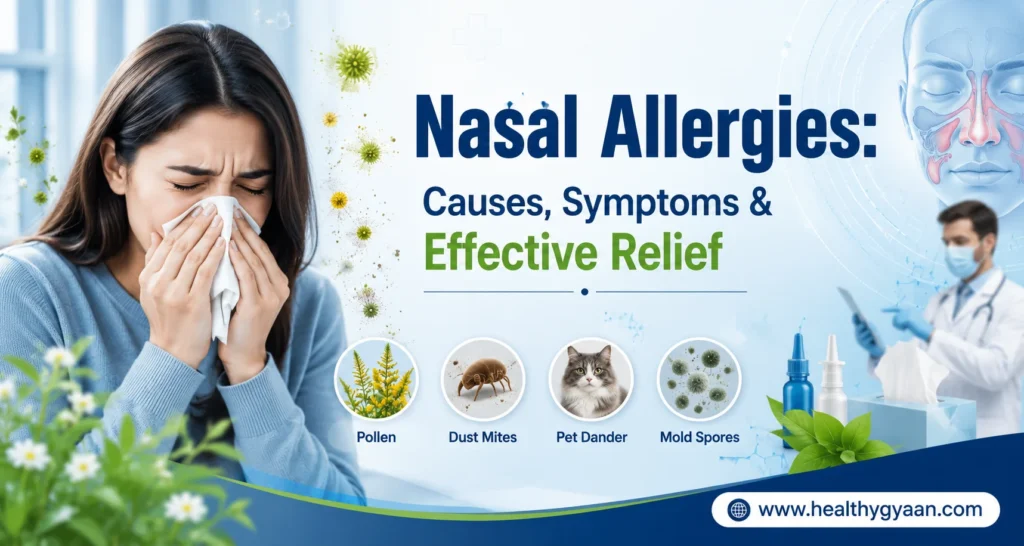
Essential tips and overviews to get rid of nasal allergies
Every human in the world might face nasal problems in their life.If you regularly have sneezing and a runny nose, allergic rhinitis may be one of the common causes.Though allergic rhinitis can be uncomfortable, there are simple and useful ways to manage these symptoms effectively at home.

You usually face allergic rhinitis when your immune system reacts to certain allergens.These allergens comprises pollen, dust, or pet dander and it can lead to irritation and nasal congestion.If you pursue proper care and actual guidance, you can find relief and regain more control over your daily life.
Our goal is to help you manage nasal allergies in a simple and effective way. From easy home remedies to practical lifestyle changes, there are several steps you can take to breathe more comfortably. These can help you reduce your exposure to triggers of nasal issues.In this article we try to provide you the important overviews and some special tips that can certainly help you to relieve the nasal problems you face in your daily life.
How can we understand allergic rhinitis in simple terms?
Allergic rhinitis occurs when the nasal passages and mucous membranes become inflamed due to an allergic reaction.These inflammation in the nose can cause some symptoms.These symptoms comprise runny nose, stuffy nose, nasal congestion with itchy sensation and postnasal drip.There are some certain distinct differentiations between sinusitis and allergic rhinitis.
Allergic rhinitis is due to exposure of some where the immune system overreacts with these allergens.When your body overreact with these allergens,they force your body to release inflammatory cells namely histamine and mast cells.These can further induce development of nasal irritation and cause nasal allergies ultimately.In contrast, nasal sinusitis are mainly due to presence of any form of infections in the nasal mucosa.
How many types of allergic rhinitis?
There are mainly two types of allergic rhinitis namely perennial and seasonal rhinitis.There are some outdoor allergens like pollen from trees, grasses, and weeds which can particularly trigger nasal allergies.Specific type of allergic rhinitis has seasonal variation as they are more common in spring and fall.The reason behind this seasonal variation is the presence of high percentage of outdoor mold spores and pollen counts.
In contrast perennial allergic rhinitis is mainly due to some specific indoor allergens.House dust mites, pet dander as well as indoor mold remain as those indoor allergens which can potentially lead to year-round allergy symptoms.
How Symptomatically Allergic Rhinitis Affects Patients
Though there are specific tests available to detect nasal allergy,there are some signs you can check for in your body whether you face nasal allergy problems or not.These common features comprises:
Features in the eyes: If you have allergic rhinitis ,your eyes may be often itchy, watery, red and also possess swelling sometimes.
Issues in Throat and Ear: You can definitely face an itchy throat, chronic coughs with frequent throat clearing and sometimes a bacterial infection in the ear as well.These issues can also make you feel fullness in your ear and produce earaches which can make you uncomfortable to live a healthy life.
Headaches with Facial Pain:As you experience nasal congestion,it can further help develop sinus headaches.These can also produce pain in your face as well.
Can you have Fatigue and Sleep Disturbances in allergic rhinitis?
Yes,you can.Allergic rhinitis can cause disruption in your sleep that can lead to fatigue development.It can also help reduce your concentration level in work during the day.You can also face problems breathing normally if you have severe allergic rhinitis.
Can allergic rhinitis create Smell and Taste Disorders in you?
Yes.You can certainly face smell and taste disorders when you experience nasal congestion due to nasal allergies.This is because the ongoing inflammation in your nose affects your smell sensation and helps alter your sense of taste at times. Nasal congestion and inflammation of the blood vessels can interfere with the sense of smell, which in turn may affect the sense of taste.
Practical Home Care Tips for Allergic Rhinitis Relief

Although allergic rhinitis may not have a permanent cure, several home remedies can help manage its symptoms and improve daily comfort.We try to discuss some effective and useful home remedies to get rid of allergic rhinitis.
The effectiveness of steam Inhalation on allergic rhinitis control
When you practice steam inhalation regularly,it can help soothe your nasal passages with reduction of nasal inflammation and alleviate common symptoms of allergic rhinitis.In order to perform steam inhalation accurately and effectively,you can pour hot water into a bowl and add a few drops of eucalyptus or peppermint essential oil.
After that,you can place a soft towel over your head to help trap the steam, then lean over the bowl at a safe distance and inhale the steam gently.You usually practice it for 10-15 minutes.
Steam inhalation is mainly helpful in allergy season when the airborne pollen counts are relatively high in comparison with the other season.In those seasons the symptoms of nasal allergies may be very severe in form.
Honey makes you healthy from allergic rhinitis
When you consume local honey on a routine basis,it may help build your immune system to exposure to pollen allergens.This may effectively help reduce your allergic reactions over the duration of time. This natural remedy has its main impacts on those individuals who generally suffer from seasonal allergies.
Furthermore it helps decrease your chances of getting severe symptoms.That is why,it is always advisable for you to take one tablespoon of local and raw honey daily which can effectively improve your overall health status and combat against nasal allergies.
The impacts of Turmeric in the control of your allergic rhinitis
Turmeric has both anti-inflammatory and antioxidant impacts on your health.This impacts help you reduce inflammation of the nasal mucosa which can make you able to control the features of allergies rhinitis.Turmeric can be an effective addition to your daily routine.You can mix approximately one teaspoon of turmeric powder into a glass of warm pure milk and take it as your doctor advised.
You should practice this consumption on a routine basis.However,this natural remedy is especially beneficial for individuals who have nonallergic rhinitis or those who experience common cold symptoms.
The effectiveness of Probiotics in diet
Fermented foods like yogurt and kefir generally contain probiotics which can help strengthen your immune system.These can further help you reduce allergic reactions.These probiotics are specially effective in those cases if you have atopic diseases namely asthma and food allergies and also ensure your overall quality of life.
How Saline Nasal Irrigation helps you relieve allergic rhinitis?
Nasal saline irrigation remains as another effective home remedy if you want to treat nasal allergies.For nasal saline irrigation, you will typically need a neti pot or a nasal rinse bottle filled with saline solution. However you should carefully mix 1/4 teaspoon of non-iodized salt with 8 ounces of warm distilled water to make it perfectly.
You can then gently irrigate your nostrils with this saline solution once or twice a day in order to get rid of nasal allergic symptoms.
Essential and effective Herbal Remedies for Allergic Rhinitis
Natural remedies such as butterbur, quercetin, and stinging nettle may help reduce nasal inflammation and support relief from symptoms associated with both allergic and nonallergic rhinitis.Though Yarrow can be a good option in this case,experts do not recommend it to use for more than 2 consecutive weeks.
You must consult a healthcare provider before the intake of any kind of herbal remedies and supplements which can ensure you the proper safety and also guide you use those appropriately.
Top Essential Oils to Help Manage Rhinitis Symptoms Naturally
Essential oils may help ease symptoms of allergic rhinitis while also supporting overall well-being. Top oils for nasal allergies relief comprises:
| Name of essential oils | Health impacts |
| Eucalyptus oil | Reduces inflammation and thereby alleviate nasal congestion |
| Peppermint oil | Relieves nasal irritation and itchy sensation |
| Lavender oil | Help soothe the nasal passages and promotes relaxation |
| Tea tree oil | Reduces allergy symptoms and alleviates nasal irritation |
| Lemon oil | Help boost your immune system and also reduce nasal inflammation |
How effectively can you use essential oils?
Essential oils may help create a soothing environment for people dealing with rhinitis symptoms. You can use a few drops in a diffuser or humidifier if the device is safe for essential oils. For skin application, dilute the oil properly with a carrier oil first. Another simple option is to inhale the scent gently from the bottle or from a prepared essential oil blend.
You must consult a healthcare provider before you use any of those essential oils.This consultation is especially inevitable in some conditions like pregnancy,lactation phase of a mother and pre-existence of any medical conditions.
When to seek medical professionals advices
Home remedies and over-the-counter medications can often ease the symptoms of allergic rhinitis, but there are times when it is best to consult a healthcare professional for proper advice and treatment.These situations may comprises:
- If you suffer from persistent nasal issues or your symptoms worsens gradually despite using continuous home remedies and oral medications or nasal decongestants.
- If you frequently experience shortness of breath along with symptoms that disrupt your normal daily life, it is important to speak with a doctor.
- Frequent occurrences of sinus infections with middle ear infections and exacerbations of asthma are also among the symptoms or other medical conditions that medical professionals advise.
A medical evaluation can be helpful if you are dealing with ongoing nasal symptoms.Your healthcare provider can examine your nasal passages for polyps and determine how severe your condition may be.They also can determine whether allergies are contributing to your symptoms.
Depending on the diagnosis, treatment may include nasal corticosteroids, intranasal antihistamines, or allergen immunotherapy to help improve your quality of life and reduce discomfort from nasal allergies.
FAQs
What are the different classifications of allergic rhinitis?
There are usually two forms of allergic rhinitis.The two primary types of allergic rhinitis are seasonal allergic rhinitis and perennial allergic rhinitis. Seasonal allergic rhinitis generally occurs at certain times of the year when chances of plant pollen exposure remain high.In contrast,perennial allergic rhinitis develop due to exposure of indoor allergens, such as pet dander and dust mites.
How allergy shots act in our body to treat allergic rhinitis?
Allergy shots are a very effective long-term treatment for nasal allergies. Doctors prescribe them in low doses at first and increase until the maximum dose needed is reached.Doctors usually prescribe them every 1 to 4 weeks once the maximum dose is achieved.
These shots can provide relief for years, even after you stop the intake of allergic shots.Experts usually recommend discontinuation around the end of the fourth year of use.
What natural or herbal options may help reduce allergic rhinitis symptoms?
Studies suggest that some herbs are useful to treat the allergic rhinitis as herbal remedies.Stinging nettle, perilla, sea buckthorn, and ginger are among those herbal remedies that may help alleviate the symptoms of allergic rhinitis.
What complications can arise from allergic rhinitis?
There are some certain complications that can arise from long term allergic rhinitis.Chronic ear infection,sinusitis and growth of nasal polyps are among these complications.Some secondary infections can also develop from allergic rhinitis.Sleep apnea,loss of smell and severe asthma symptoms are the common examples of secondary complications from nasal allergies.
Conclusion
Allergic rhinitis can make daily life uncomfortable. It may cause sneezing, congestion, itchy eyes with throat irritation, poor sleep, and fatigue. Simple home remedies may help reduce mild symptoms. Saline nasal irrigation, steam inhalation, probiotics, turmeric, honey, and some essential oils may offer support.
Avoiding common triggers like dust, pollen, mold, and pet dander is also important in the journey against nasal allergy. A healthcare provider can check for nasal polyps, infections, or other related conditions.A doctor can help you find the treatment that works best for your symptoms and daily needs. With the right care, healthy lifestyle changes, and ongoing support, nasal allergies can be managed well.