
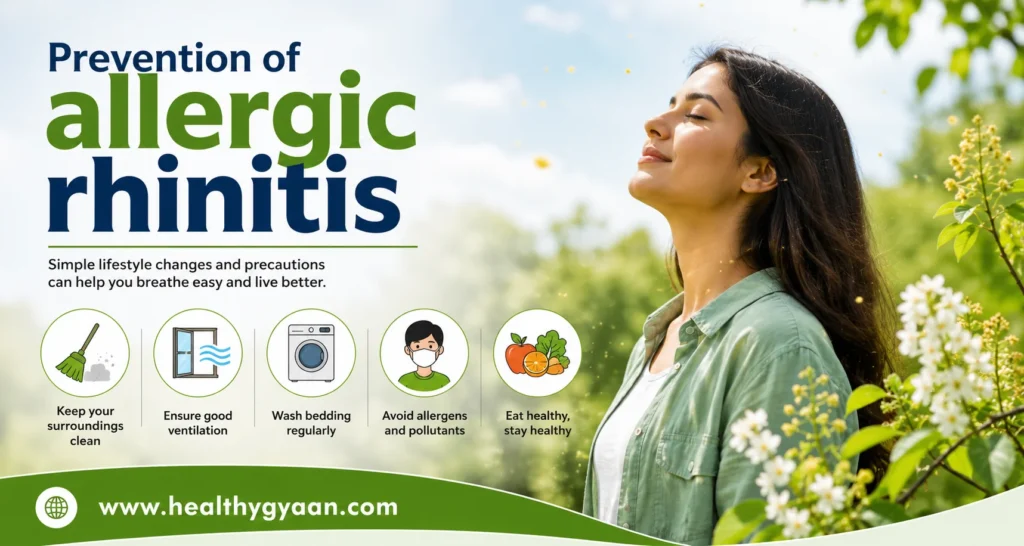
All the things you know to achieve the prevention of allergic rhinitis
Every human in the world might face nasal problems at least once in their life.If you regularly have sneezing and a runny nose, allergic rhinitis may be one of the common causes.Allergic rhinitis can be uncomfortable and frustrating at the same time, but its symptoms can often be managed effectively with simple care at home.
It usually happens when your immune system overreacts to certain allergens, such as dust, pollen, mold, or pet dander.These allergens comprises pollen, dust, or pet dander and it can lead to irritation and nasal congestion.If you pursue proper care and actual guidance, you can find relief and regain more control over your daily life.
Our goal is to provide you with the facts that help you achieve the prevention of allergic rhinitis. From easy home preventive remedies to practical lifestyle changes, there are several steps you can take to breathe more easily and comfortably. These can help you reduce your exposure to triggers of nasal issues.In this article we try to provide you the important overviews of allergic rhinitis and some special tips that are helpful for the prevention of allergic rhinitis and also proper management of it.
Epidemiology with incidence rate of allergic rhinitis
When examining the epidemiology of allergic rhinitis, several key factors deserve attention.These include its prevalence, classification, allergen sensitization patterns as well as its association with co-morbidities, risk factors, genetic influences, and economic burden.
The prevalence of allergic rhinitis continues to rise globally, with a particularly noticeable increase in low- and middle-income countries.Environmental exposure, urbanization, and limited access to healthcare may contribute to the growing impact of the disease in those areas.The usual prevalence rate of AR ranges from 1.0% to 54.5% worldwide.
Though the prevalence of AR is roughly about 5% in young children who are 3 years of age,it surprisingly increases with age from 8.5% of 6–7 year-olds.The rate can be about 14.6% of 13-14 year-olds, and can also exceed more than 11.8% to 46% in people who are aged 20–44 years.
Incidence rate of allergic rhinitis
Importantly, the incidence of allergic rhinitis remains higher in males in comparison with females before puberty.But the pattern of incidence rate reverses after the end of puberty period.Recent study indicate boys under 11 years of age get the impacts of allergic rhinitis more than the girls of this age.But in adolescent period from 11 to 18 years of age,allergic rhinitis affect females more than the males and make the male-female ratio about 0.90.Antibiotic use, air pollution, and passive tobacco exposure from maternal and paternal remain as the potential triggering factors of allergic rhinitis development.However,we need to implement strategies effectively in order to achieve the prevention of allergic rhinitis.
How can you prevent allergic rhinitis?
The prevention of allergic rhinitis starts with taking simple, proactive steps to limit allergen exposure and support a healthy lifestyle. The following tips can help reduce symptoms and manage allergic rhinitis more effectively:
Reduction of Exposure to Allergic Rhinitis Triggers
- It is important to identify the allergens that may be triggering your rhinitis symptoms. You must take measures to minimize your triggering factors exposure. Some practical and useful ways in order to avoid allergens comprise:
- Use air purifiers and HEPA filters to reduce the levels of indoor allergen.
- Bedding and curtains should be cleaned frequently to prevent dust buildup and support a healthier home environment.This practice can help you to remove dust mites from your room.
- You can also Vacuum frequently with a vacuum cleaner that is usually equipped with a HEPA filter on a routine basis.
- Use air conditioning in your house to reduce indoor allergen exposure.
- Another helpful step is to keep pets out of your bedroom and off your furniture.This ensures you minimize pet dander and help you achieve the prevention of allergic rhinitis.
The importance to maintain a Healthy Lifestyle
When you have a strong immune system,this can help you reduce the severity of nasal allergies.To maintain a healthy immune system, it is important for you to incorporate effective daily habits into your routine.These involve:
 Prioritize a healthy, balanced diet with a variety of fruits, vegetables, and whole grains.
- You should also practice regular exercise to boost overall health status and your body’s natural defence.
- You should also manage stress through some relaxation techniques. Meditation or yoga can be a better choice..
- You must also ensure adequate sleep on a routine basis.This can allow your body to recover from any kind of nasal allergies as well as help you achieve the prevention of allergic rhinitis.
Diagnostic Methods for Allergic Rhinitis: What you must Know
Doctors usually diagnose allergic rhinitis by looking at a person’s symptom history along with relevant diagnostic tests. Allergic rhinitis may be suspected when someone has two or more common symptoms.These symptoms comprise a watery runny nose, sneezing, blocked nose, or nasal itching.
Doctors consider it especially when these symptoms continue for at least one hour on most days.Then the experts follow ARIA guideline for a confirmatory diagnosis and severity assessment.Some important tests and clinical parameters to diagnose allergic rhinitis are discussed below.
Skin tests help in allergic rhinitis diagnosis
Skin testing remains one of the most important methods for identifying the allergens responsible for allergic symptoms. Healthcare providers may use different types of allergy tests, including scratch tests, skin prick tests, intradermal tests, and patch tests.This actually help to evaluate reactions to specific allergens.
Although false-positive and false-negative results can occur and may sometimes lead to diagnostic uncertainty, interpreting the test results alongside the patient’s clinical history can be very helpful in diagnosing allergic rhinitis. The positive reactivity of the skin test is about 70%-80%.
The skin test also has some other issues as some drugs like antihistamine and some skin disease can influence the ultimate diagnosis.Inspite these weak points,experts regard skin tests as the most reliable one to diagnose allergic rhinitis which can eventually help for the prevention of allergic rhinitis.
Discover more here: Nasal allergies
How Serum specific IgE level assists rhinitis diagnosis
RAST was one of the earliest techniques for detecting serum-specific IgE.However, its use has declined over time due to the need for radioactive materials and expensive laboratory equipment.Moreover it can not detect multiple antibodies at the same time.
Experts also use the multiple allergen simultaneous test, or MAST, because of its several benefits over RAST. It actually uses a photo reagent instead of radioactive material.This criteria make it safer and easier to perform. It can also test many allergens in a simultaneous manner.Luckily,antihistamines can not affect MAST and it is also useful for patients with dermographism. However, it has less sensitivity than the skin prick test. The CAP system is a more accurate blood test because it measures allergens more quantitatively by using a special solid surface.
Has asthma a close association with allergic rhinitis?
Yes,asthma has a close association with allergic rhinitis (AR).People with more severe allergic rhinitis appear to be at a higher risk of developing asthma. This association becomes stronger when serum IgE levels are extremely high.Nasal eosinophils may also give important clues in this case. A higher eosinophil count in the nasal cavity indicates bronchial hyperresponsiveness.
Research in children also supports this link of allergic rhinitis with asthma.Bronchial hyperresponsiveness actually remains more common in children with allergic rhinitis than those children who are healthy.The risk may increase further when patients are sensitive to both indoor and outdoor allergens at the same time.
What are the medications of Allergic Rhinitis
If you want to treat the allergic rhinitis fully,it actually demands a combination of treatment options.We try to provide you with some of the essential medication treatment of allergic rhinitis.
Impacts of antihistamine therapy
Antihistamines remain as the most reliable medication to treat all kinds of nasal allergies.They are available both in oral and nasal forms.They help reduce allergy symptoms by limiting histamine release during an allergic reaction. Unfortunately.most antihistamines have a potential side effect and that is drowsiness.
The effectiveness of decongestants and corticosteroids in allergic rhinitis
Decongestants are another important medication to treat the allergic rhinitis.The Oral and Nasal forms of decongestants can shrink swollen nasal passages and thus they help for easier breathing.However You should use them cautiously as they can potentially develop rebound nasal congestion.
Corticosteroid Nasal Sprays can also be another medication option.They actually reduce inflammation of the nose and can provide long-term efficacy.You must consult your doctor before you start any of the corticosteroids to treat the allergic rhinitis and follow the correct prescription order.
Can you take leukotriene modifiers and immunotherapy to treat allergic rhinitis
Yes, you certainly take them as an effective treatment option of allergic rhinitis.Leukotriene modifiers are among less common medication for nasal allergies.They help block leucotrienes which is an another important chemical in the onset of any allergic reaction.Experts usually recommend this drugs to those individuals who can not tolerate antihistamines or have experienced side effects while using any nasal corticosteroids.
On the other hand,Immunotherapy is the medication that gradually builds tolerance to allergens.They remain in two distinct forms namely allergy shots and sublingual tablets.
Though most of the individuals recover fully with a single medication use,some require a combination of therapy.You should consult the medical professionals before starting the combination therapy to get the best outcomes of your treatment courses.
How desensitization treatment helps children to prevent allergic rhinitis?
Desensitization therapy is actually a special allergy treatment. It uses allergen vaccines which healthcare providers give as an injection under the skin or as drops under the tongue. The dose demands to increase slowly over the course of time.
This helps the body’s immune system become less reactive and rebuild tolerance to the allergen which helps to treat the allergic rhinitis.Early desensitization may be especially helpful to treat AR in the children. It can reduce the risk of allergies to develop into asthma and may provide long-term protection from asthma as well.
However, this treatment still possesses some limitations. There are only a few standardized allergen vaccines available which mainly provide protection from house dust mites and dust mites.After all,if we adopt desensitisation therapy early in children,we become successful in the journey of prevention of allergic rhinitis.
Conclusion
Allergic rhinitis can be frustrating, especially when symptoms like sneezing, a runny nose, itching, and nasal congestion interfere with your daily routine. The good news is that with the right care and preventive steps, it can often be managed effectively.
A helpful first step is to identify the triggers that make your symptoms worse.Dust, pollen, pet dander, mold or strong smells are among those triggers.If you Keep your home clean, wash bedding regularly, and use air filters when possible,it can also help reduce exposure to allergens.
Healthy daily habits can support your immune system and may help lessen the severity of symptoms. However, if symptoms continue for a long time or affect your quality of life, proper diagnosis is very much important. Depending on your condition, a healthcare professional may recommend you medicines, nasal sprays, or immunotherapy as well.
So,with early care, medical guidance, and smart prevention, allergic rhinitis can become much easier to control.